Common Problems with Epoxy Garage Floors in Arizona

Corey Parker • April 21, 2026

Share this article

Common problems with epoxy garage floors in Arizona include yellowing under UV exposure, hot tire pickup, peeling and delamination, and bubbling from moisture vapor. The desert climate punishes coatings differently than other regions—140°F+ slab temperatures, 110°F summer heat, and intense year-round UV all stress epoxy past what most consumer-grade systems can handle. Floor Shield Phoenix has been installing concrete coatings across Phoenix, Mesa, and Gilbert and explains what really fails on Arizona garage floors below.

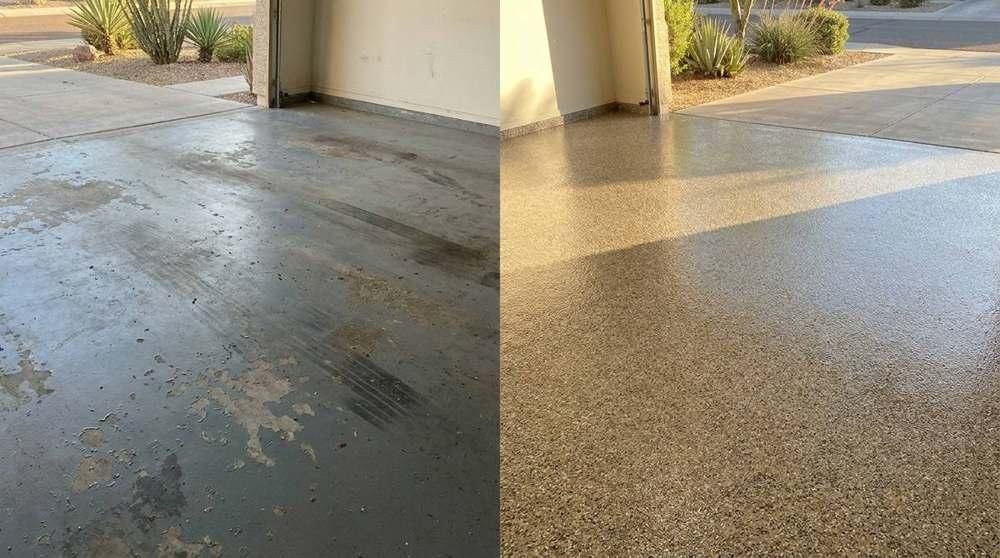
You bought your house with a freshly coated garage floor. Two summers later, the floor looks 10 years old: yellowed in the sun-exposed areas, peeling near the door, and tire-tracked where you park. That's the reality of standard epoxy in Arizona, and it's why most homeowners in our climate end up replacing their first coating system within 3-5 years. Knowing why this happens (and what coating actually survives Phoenix summers) saves you from doing it twice.

Why Standard Epoxy Fails Fast in Arizona

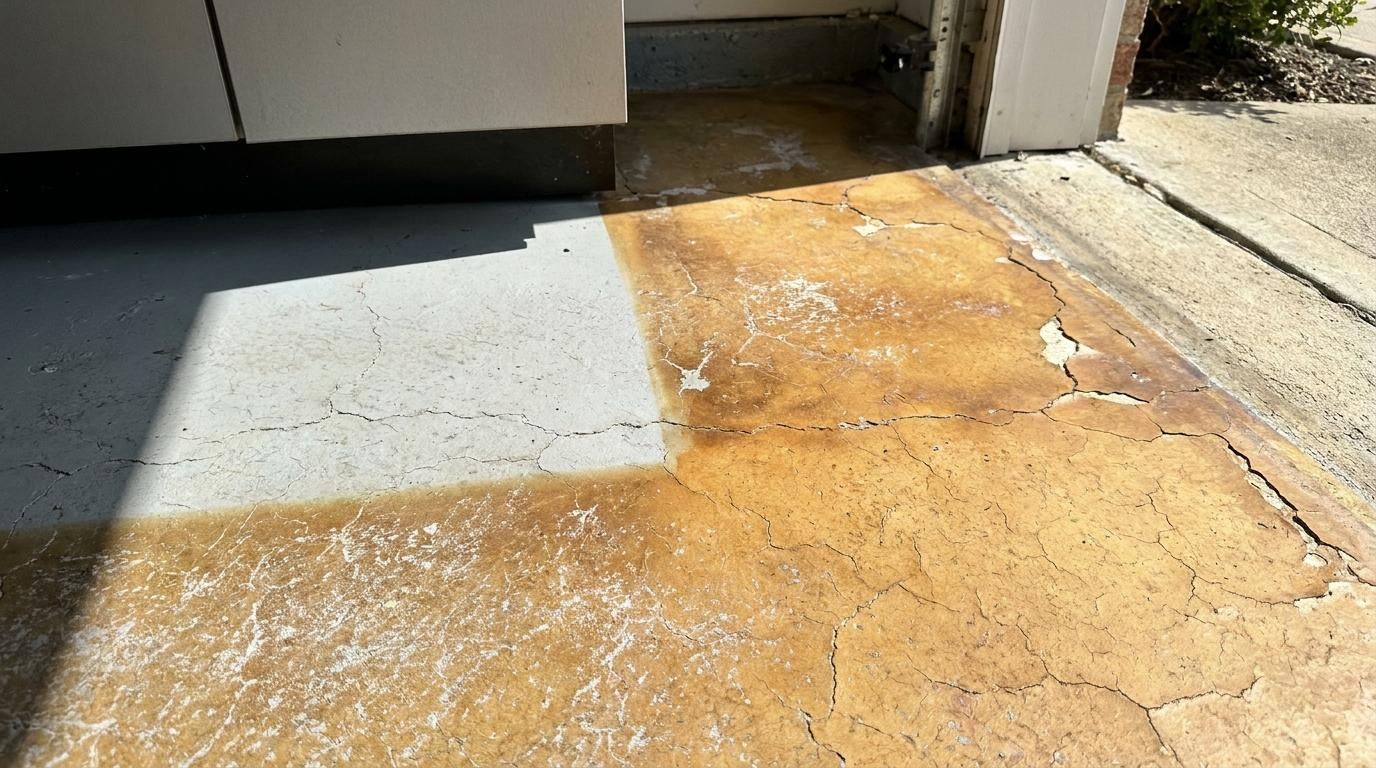
Damaged concrete courtyard with peeling yellow coating, leading to a sunlit apartment building in the distance

Epoxy is a rigid, two-part resin that bonds chemically to concrete. It works well in moderate climates but runs into three Arizona-specific issues that shorten its lifespan dramatically.

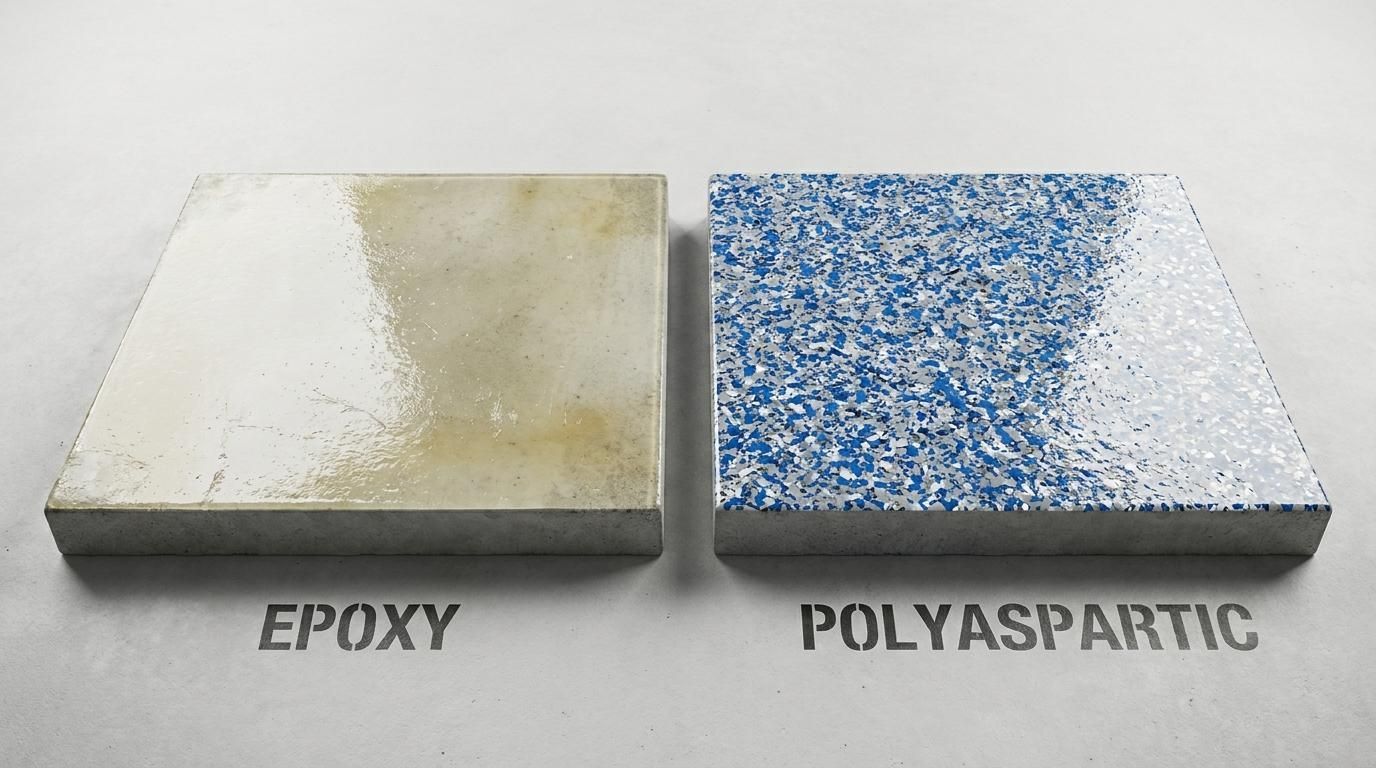
UV exposure is the first problem. Standard epoxy resins aren't UV-stable. Sustained ultraviolet light causes the resin to "amber"—yellowing, chalking, and losing gloss. In Phoenix, where the sun reaches the garage floor through any open door for 9-10 months a year, ambering starts within 6-12 months. South- and west-facing garages see this fastest.

Heat is the second issue. Arizona slab temperatures regularly exceed 140°F in summer. Rigid epoxy doesn't flex with thermal expansion, so the constant cycling between cool overnight temps and extreme afternoon heat creates micro-stresses at every seam, joint, and edge. Over time, these become visible cracks and lifting points.

Moisture vapor transmission is the third killer. Caliche soil under most Phoenix-area slabs traps groundwater. That moisture pushes upward through the concrete, and when an epoxy coating blocks it from escaping, hydrostatic pressure builds underneath—causing bubbling, white "blushing" patches, and full delamination.

Hot Tire Pickup: The Most Common Complaint

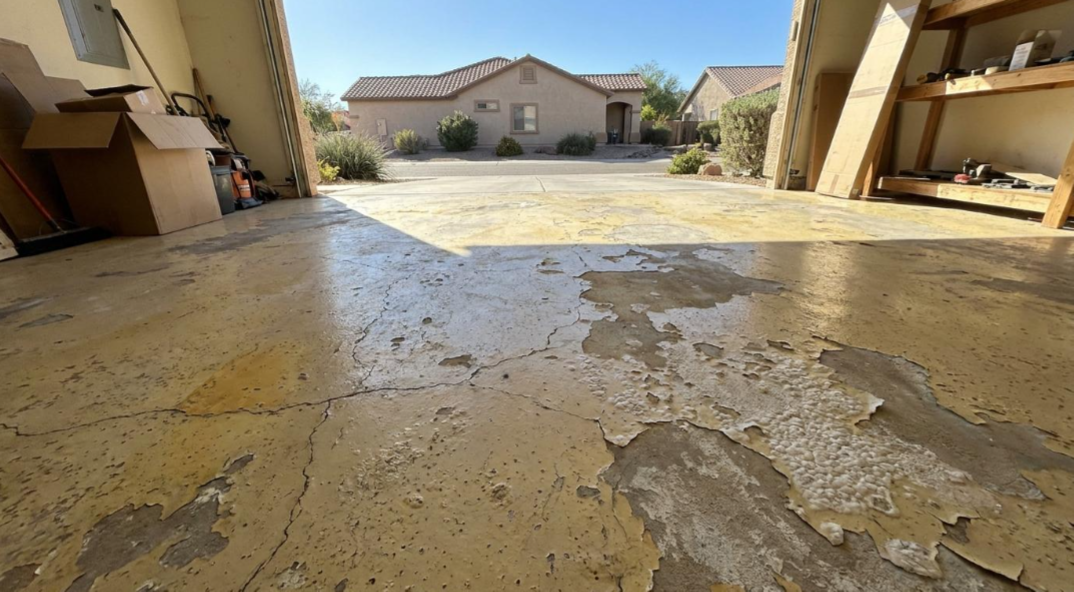
Damaged concrete floor with peeled-up layer and cracks near a garage or driveway area

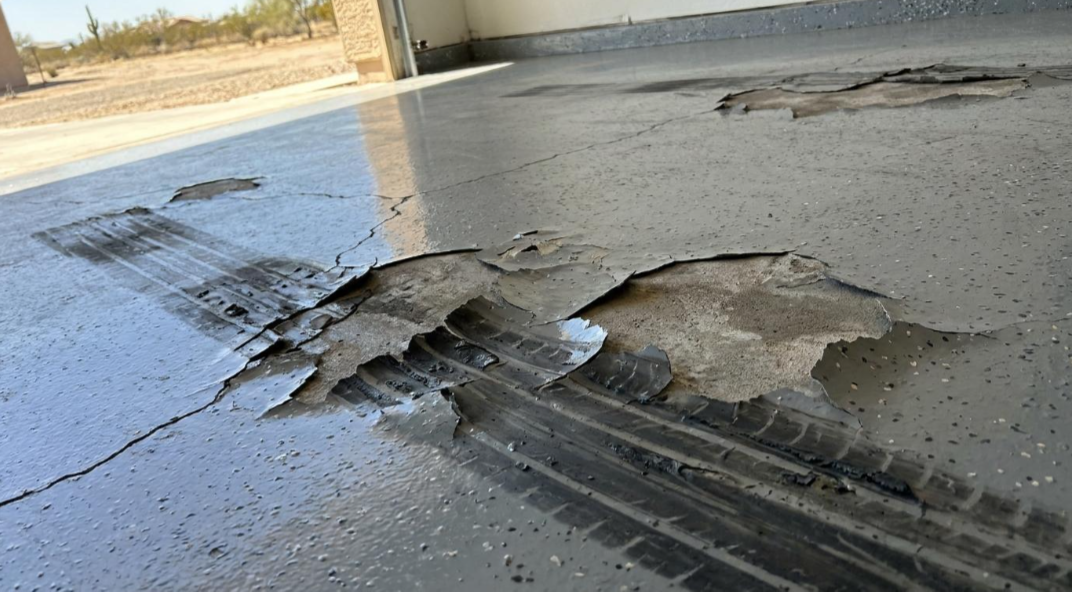
Hot tire pickup is the failure mode Phoenix homeowners notice first. After a summer drive, your tires hit the garage floor at 150°F+. That heat softens the epoxy directly under the tread, and as the rubber cools, it bonds to the coating. When you back out the next morning, chunks of epoxy come with the tires.

This is why DIY epoxy kits and single-coat consumer systems consistently fail in Arizona. They simply aren't hard enough at the surface to resist the bond rubber forms when it sits hot for hours. The fix is a topcoat with high Shore D hardness—a measure of rigid surface resistance—which prevents the surface softening that allows tire bonding in the first place.

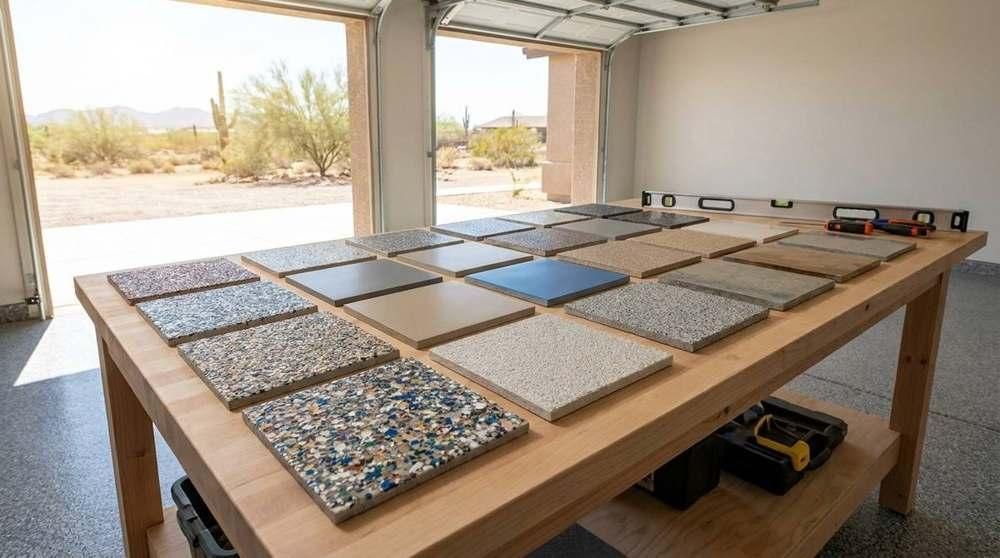
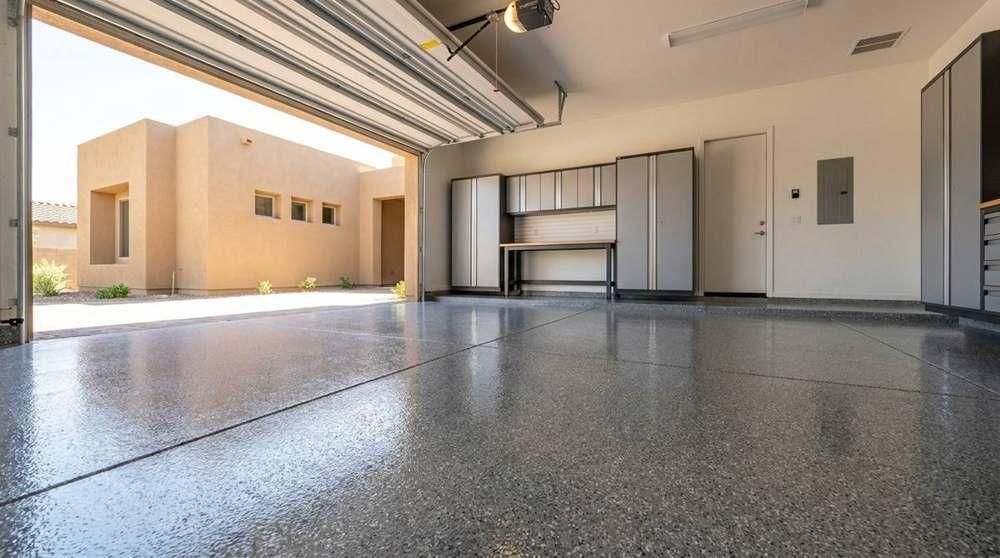
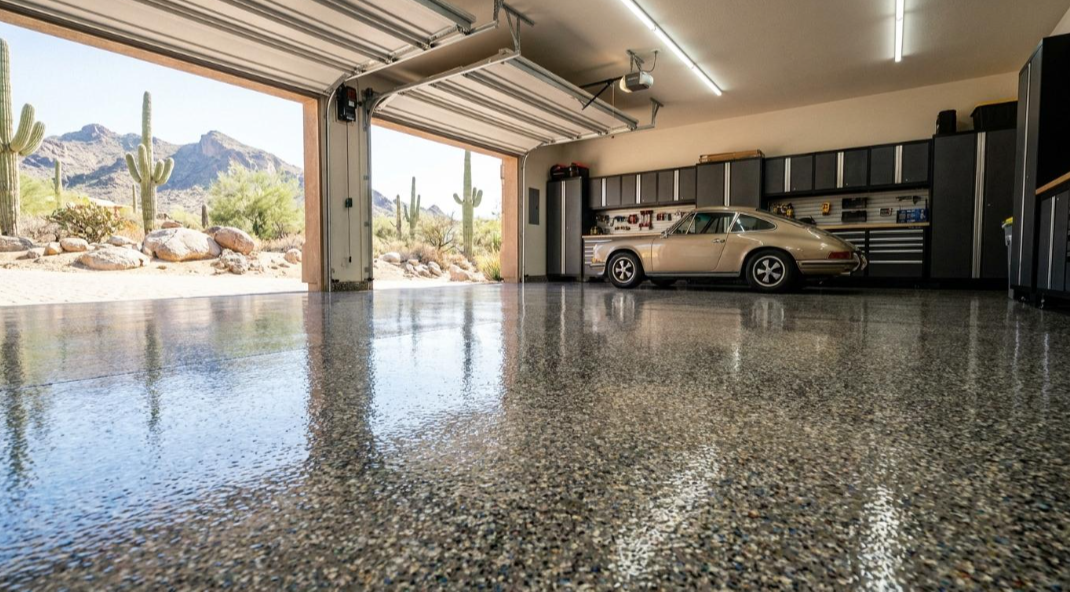
For Arizona garages, the most reliable solution is a polyaspartic topcoat over a polyurea base. We cover the full system in our garage floor coating guide.

Surface Prep: Where Most Failures Actually Start

Most epoxy failures in Arizona trace back to one decision made before any coating goes down: how the concrete was prepared. Epoxy bonds mechanically to the substrate, which means the concrete has to be properly profiled to give the coating something to grip.

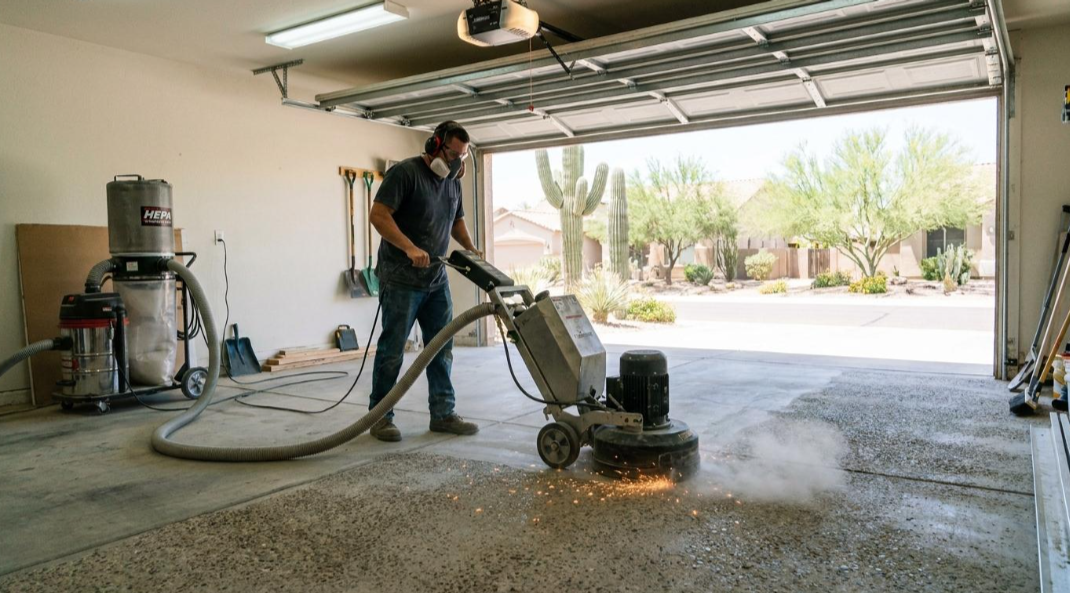
Diamond grinding is the professional standard. It mechanically opens the surface, removes the smooth top layer, and creates a uniform texture the coating can lock into. Floor Shield Phoenix uses commercial diamond grinders with HEPA-filtered vacuum systems on every install to keep the dust contained.

Acid etching, the shortcut DIY kits use, leaves a chemically altered surface that bonds poorly. The coating may look fine on day one, but it's adhering to a weakened layer that fails within 12-18 months. Most peeling coatings in Phoenix garages started with acid etching instead of grinding.

Crack repair and joint filling matter too. Caliche-related slab movement creates hairline cracks in most older Phoenix-area garages. A coating applied over an unrepaired crack will telegraph the crack to the surface within a few seasons. Professional installations fill cracks and joints with flexible mender materials before any coating goes down.

Frequently Asked Questions

Can a failed epoxy floor be repaired or does it need full replacement?

Spot repairs work when the failure is isolated—a small bubbled patch or a single peeled section with intact bond around it. When peeling, yellowing, or moisture issues span more than 30% of the floor, full strip-and-recoat is more reliable. Floor Shield Phoenix assesses every floor before recommending repair vs. replacement.

How long should a properly installed concrete coating last in Phoenix?

A professionally installed polyurea/polyaspartic system in a Phoenix garage typically lasts 15-20 years with proper maintenance. The lifespan depends heavily on surface prep quality, system depth, and whether a UV-stable topcoat was used. Standard consumer epoxy in Arizona often fails within 3-5 years for the reasons covered above.

What's the cost difference between consumer epoxy and a professional coating in Arizona?

DIY epoxy kits run $150-$400 for materials. Professional polyurea/polyaspartic systems for a typical two-car Phoenix garage run $2,500-$5,000+ installed. The cost gap looks large until you factor in that the DIY system fails in 2-3 Arizona summers, while the professional system lasts 15+ years. Over a decade, the professional install often costs less per year.

Don't Replace Your Epoxy Floor Twice

Standard epoxy isn't built for Arizona's climate. UV degradation, hot tire pickup, and moisture vapor failures are all predictable in our environment, and they're all preventable with the right system and proper installation. Floor Shield Phoenix specializes in coatings designed specifically for Phoenix-area garages.

 Contact Floor Shield Phoenix or call (602) 890-3194 for a free on-site assessment of your garage floor.

Recent Posts

Garage with several bicycles, white walls, and a split epoxy floor of smooth gray and speckled tan.
By Corey Parker April 29, 2026
Get an honest review of polyaspartic coating's drawbacks, including its cost, fast cure challenges, and DIY limits. Here's what Arizona homeowners should know.
Worker smoothing concrete floor in an open garage, with tools and equipment nearby.
By Corey Parker April 10, 2026
Learn about Floor Shield Phoenix polyaspartic coating costs, installation steps, and system options. Offering one-day installations with a 15-year warranty.
By Corey Parker April 1, 2026
See how we installed a polyaspartic garage floor coating in Phoenix, AZ for a 1,750 sq ft shop. UV-stable and durable, the floor returned to use in 5–6 hours.
By Corey Parker January 5, 2026
Upgrade your property with professional Phoenix concrete coatings. Our polyaspartic system is significantly stronger than epoxy and perfect for the Arizona sun.