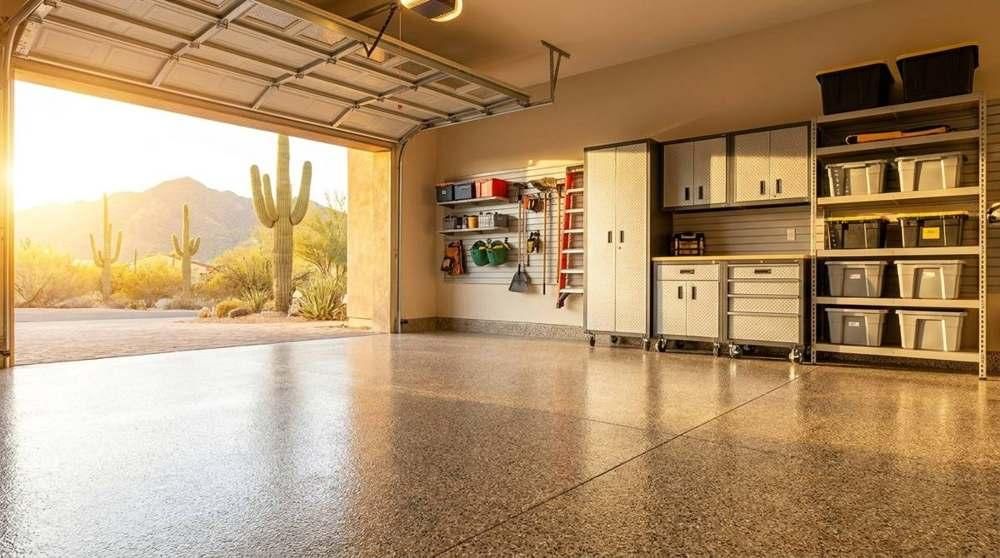
Complete Guide To Floor Shield Phoenix: Cost & Installation

Corey Parker • April 10, 2026

Share this article

Your garage floor takes more abuse than almost any other surface in your home, and in Phoenix's 160°F summer slab temperatures, that abuse compounds fast. Homeowners asking us "how much does a polyaspartic floor coating cost in Phoenix?" deserve a straight answer, so here it is.


Professional polyaspartic coatings in the Phoenix metro typically run $5 to $12 per square foot installed, putting a standard two-car garage (400 to 600 square feet) between $2,000 and $7,200. We want to be upfront about the range, because every slab is different and a number pulled from a competitor's website rarely matches what your floor actually needs.


At Floor Shield Phoenix, we don't publish a flat rate. Every quote starts with a free on-site assessment, so the price reflects the real condition of your concrete, not a generic square-foot multiplier.

What Affects the Cost of a Floor Coating in Phoenix?

Before you compare quotes, it helps to understand what actually drives the price. Several factors shape your final cost, and floor size is only the starting point. A 400-square-foot two-car garage costs less than a 600-square-foot three-car setup, but square footage alone doesn't tell the full story. A low per-square-foot number from one contractor often means cheaper materials or skipped prep steps rather than a better deal.

Concrete Condition

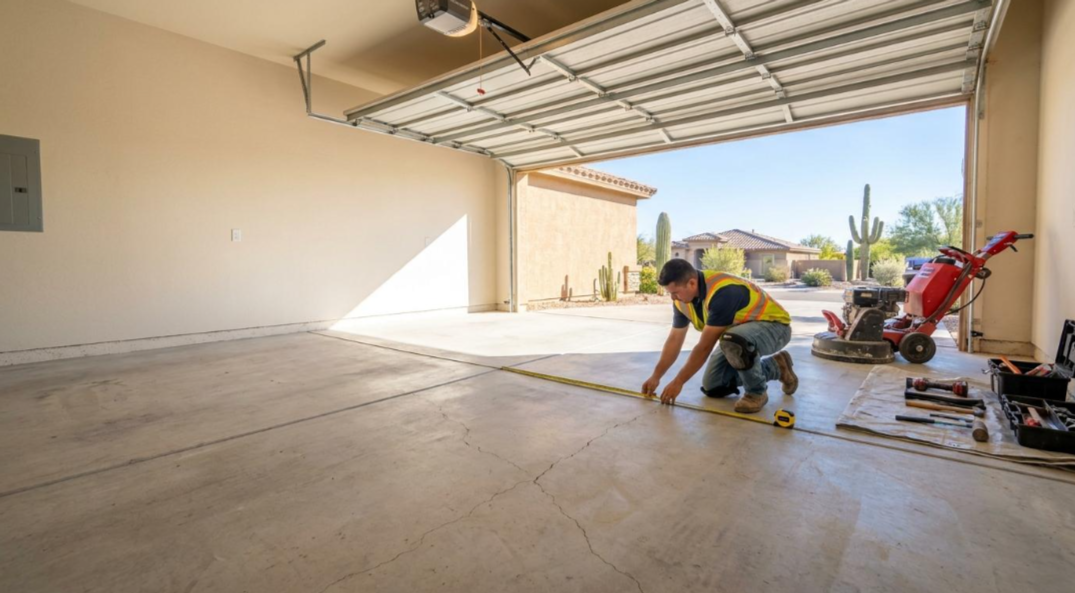
Cracks, spalling, or leftover coatings require additional prep work. Diamond grinding removes old sealers and opens the concrete pores for proper adhesion. Floors with heavy damage may need patching or leveling, which typically adds a few hundred dollars to the total project cost.

Coating System

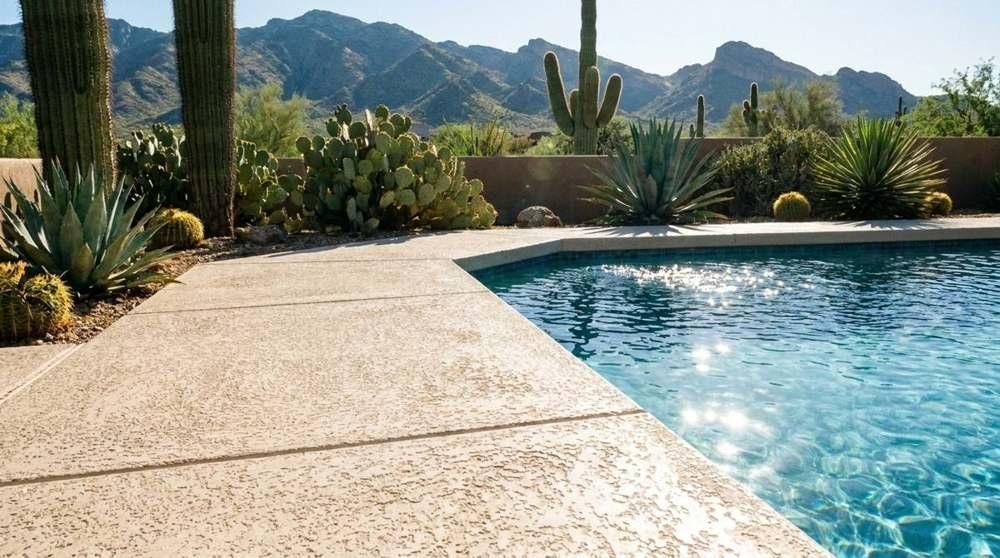
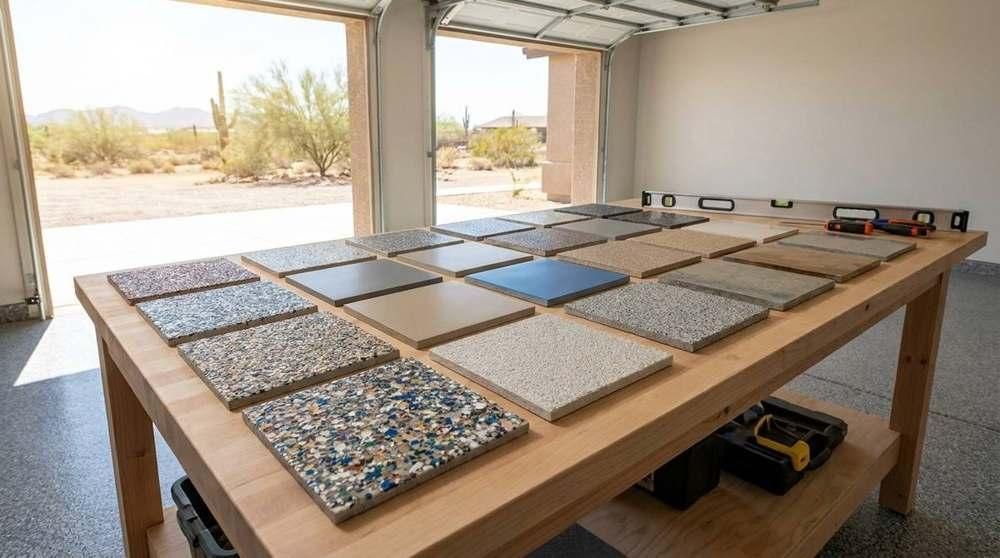
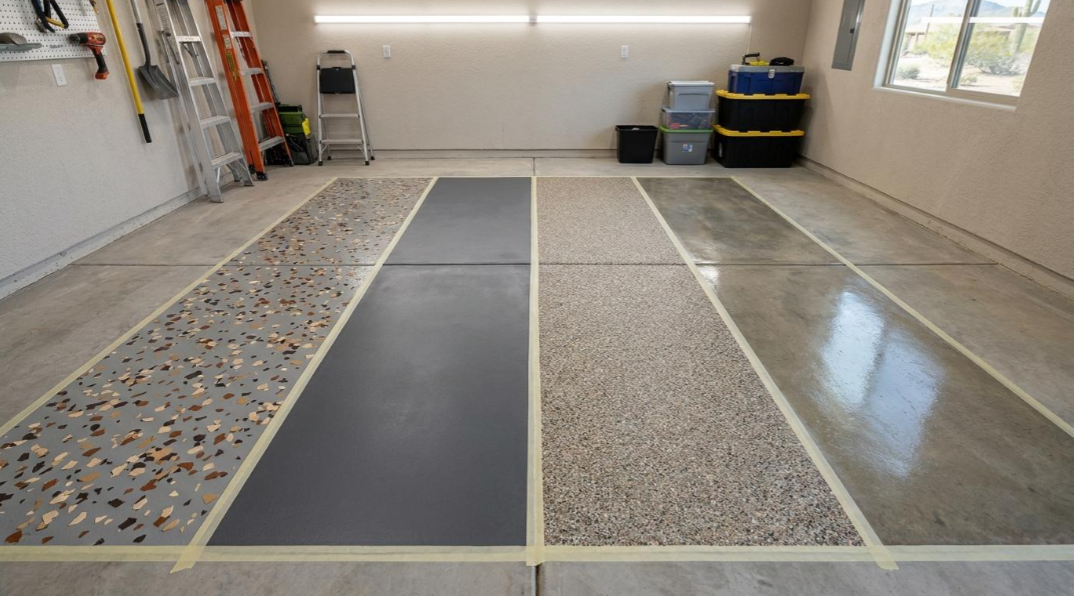
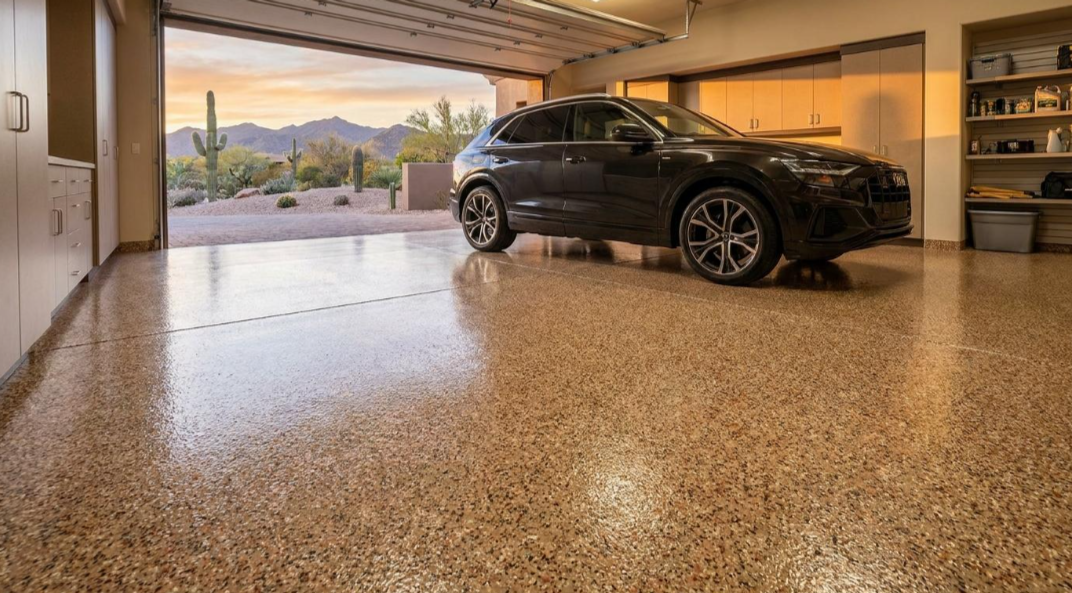
Floor Shield Phoenix offers four polyaspartic systems: flake, solid color, quartz, and clear. Flake coatings are the most popular residential choice and fall mid-range in pricing. Quartz systems cost slightly more due to the use of aggregate but deliver maximum slip resistance for pool decks and wet areas.


Pricing differences between the four systems are modest. Your final cost depends more on square footage and your concrete’s condition than on which finish you choose. That's why we recommend skipping online calculators and starting with a free on-site visit, where we can look at your slab, ask how you actually use the space, and match a system to both.

How Floor Shield Phoenix Installs a Polyaspartic Coating

Every polyaspartic garage floor coating project follows a four-step process completed in a single visit.


  • Diamond Grinding: Industrial grinders remove the top layer of concrete, creating a rough profile that bonds mechanically with the coating. This replaces the acid-etching method used in DIY kits, which doesn't penetrate deep enough for lasting adhesion in Arizona's heat.
  • Crack and Joint Repair: Visible cracks are filled with flexible polyurea filler that moves with the concrete through Phoenix's daily thermal cycling between 70°F interiors and 140°F+ garage slabs.
  • Base Coat Application: The polyaspartic base coat is rolled onto the prepared surface. For flake systems, decorative chips are broadcast into the wet base layer at full coverage.
  • Clear Top Coat: A UV-stable polyaspartic top coat seals everything. The full system cures in 5–6 hours, meaning your garage is back in service the same day.


Phoenix concrete coating professionals use polyaspartic specifically because it cures reliably above 100°F. Standard epoxy slows down or fails to bond properly when temperatures climb past 85°F.

Which Coating System Fits Your Budget?

Choosing between Floor Shield Phoenix's four systems comes down to where the floor is and how you'll use it.


Flake coatings work for most residential garages because they hide minor imperfections, provide built-in texture for grip, and come in dozens of color blends. Solid color systems cost slightly less and deliver a clean, modern aesthetic — but they show tire marks and dust more quickly than textured options.


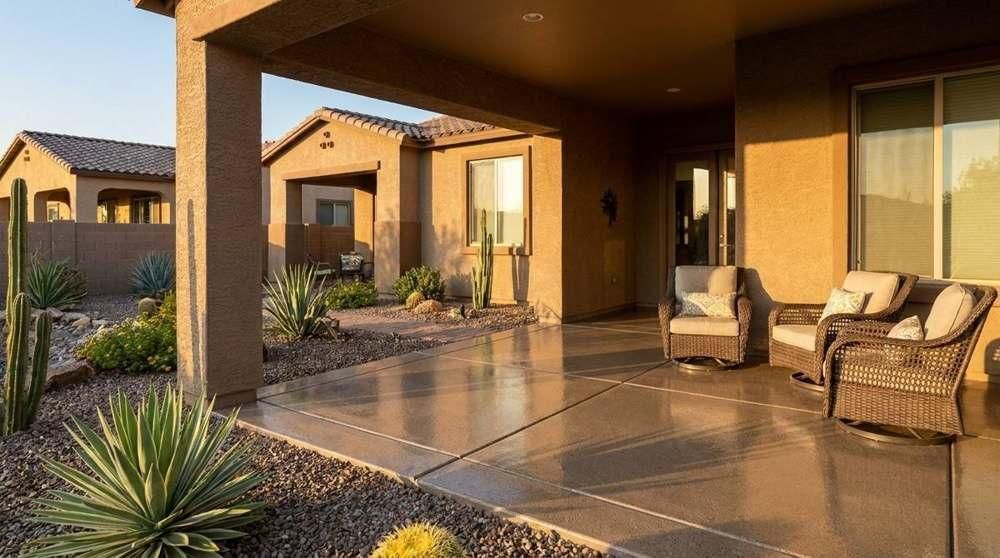
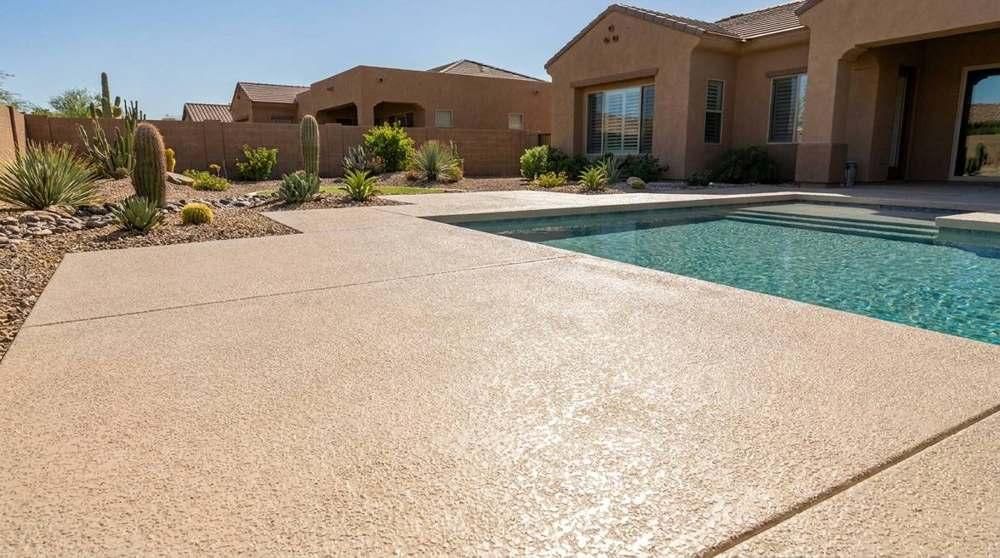
For outdoor surfaces across Gilbert and the East Valley, quartz coatings handle moisture and bare-foot traffic better than flake. Clear coatings protect decorative or stained concrete without changing its appearance, making them the best option when the existing surface already looks good.

Frequently Asked Questions

Does Floor Shield Phoenix offer free estimates?

Yes. Floor Shield Phoenix provides free on-site estimates for all residential and commercial projects. A technician inspects the concrete, measures the space, and recommends a coating system before quoting a final price. Call (602) 890-3194 or request a quote online.

How long does a polyaspartic floor coating last in Arizona?

Polyaspartic coatings carry a 15-year warranty and are designed to perform for two decades or more when professionally installed with proper diamond-ground surface preparation. The UV-stable formula resists yellowing and chalking under constant sun exposure, which is why it outperforms standard epoxy in desert climates where UV degradation begins within the first year.

Can you coat a garage floor that has existing cracks or stains?

Most cracked or stained garage floors can be coated after proper preparation. Diamond grinding removes surface stains and old sealers, while cracks are filled with flexible polyurea filler before the base coat goes down. Only severe structural damage requires concrete repair before coating.

Get Your Free Floor Coating Estimate

Ultimately, the right coating for your garage depends on where the floor is, how you use the space, and what condition the concrete is in today. Professional polyaspartic costs more upfront than a hardware store epoxy kit (we're not going to pretend otherwise), but it delivers a floor that's ready the same day, holds up to Arizona UV without yellowing, and is backed by a 15-year warranty against peeling and chipping. Over 10 years, that math works out in your favor.


Contact Floor Shield Phoenix today at (602) 890-3194 for a free on-site estimate.

Recent Posts

Why polyaspartic fits Phoenix garages
By Corey Parker June 29, 2026
See why Phoenix homeowners choose polyaspartic garage floor coatings: UV stability, hot-tire resistance, a 5-6 hour cure, and a 15-year warranty built for Arizona.
What patio coatings need to handle in Phoenix
By Corey Parker June 25, 2026
See the best concrete patio coating options for Phoenix outdoor living. Compare flake, quartz, solid, and clear finishes built to handle Arizona sun, dust, and wear.
What Arizona pool decks need from a coating
By Corey Parker June 21, 2026
Learn what an Arizona pool deck coating needs to handle heat and UV: UV stability, slip resistance, and chemical resistance. See how to choose the right finish.
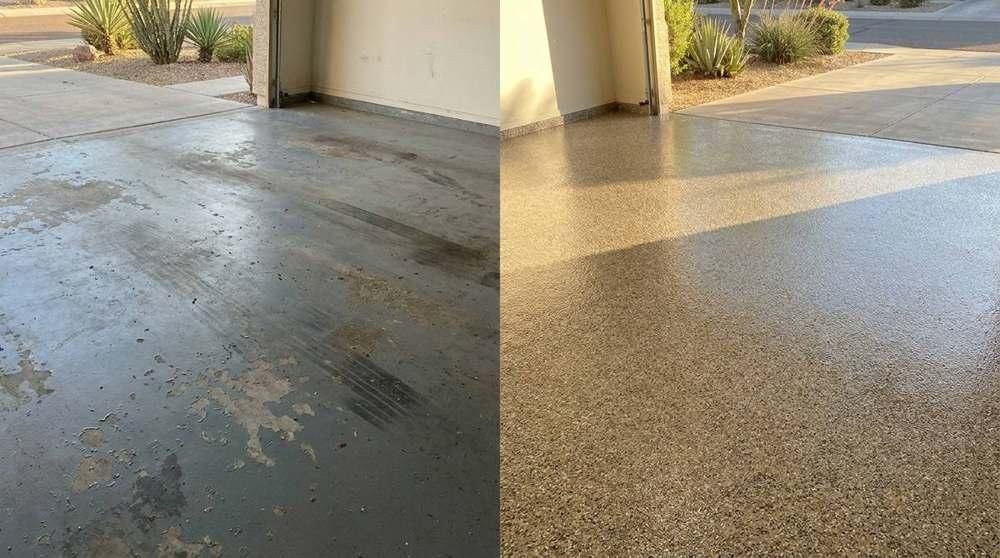
Paint, epoxy, and coating are not the same product
By Corey Parker June 18, 2026
Garage floor paint vs epoxy vs polyaspartic coating in Phoenix. See how each handles heat, UV, and hot tires, and why the coating upgrade pays off in Arizona.
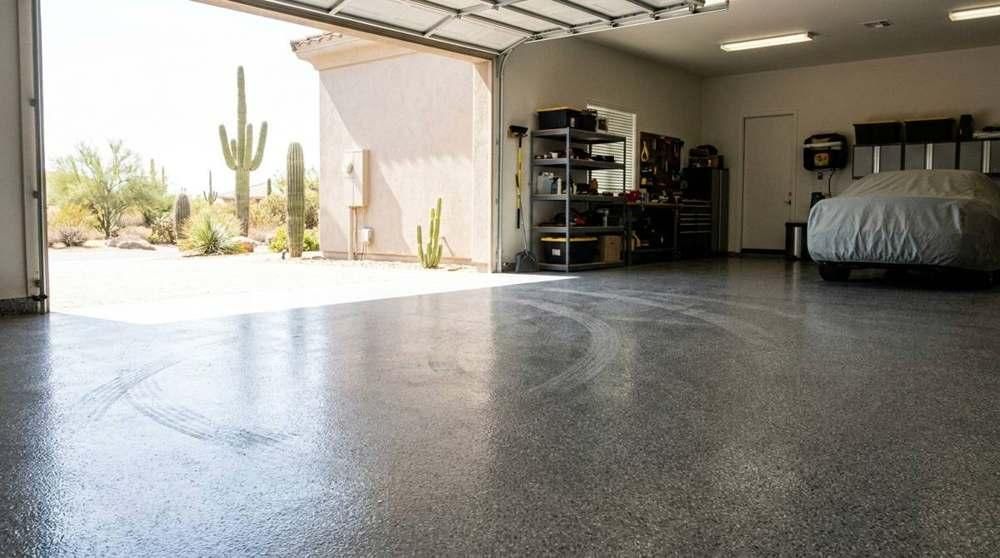
What makes a coating best for Phoenix
By Corey Parker June 15, 2026
Find the best garage floor coating for Phoenix homes. See why polyaspartic beats epoxy on UV, heat, and hot-tire stress, and how to match the finish to your garage.
Coating chemistry comes before color
By Corey Parker June 10, 2026
Explore the main types of garage floor coatings for Phoenix homes, from epoxy and polyaspartic to flake, quartz, and clear finishes. Learn which fits desert heat.
How the main pool deck options compare
By Corey Parker June 6, 2026
Compare Phoenix pool deck resurfacing options, including acrylic overlays, coatings, and replacement. See costs, heat and traction trade-offs, and when to use each.
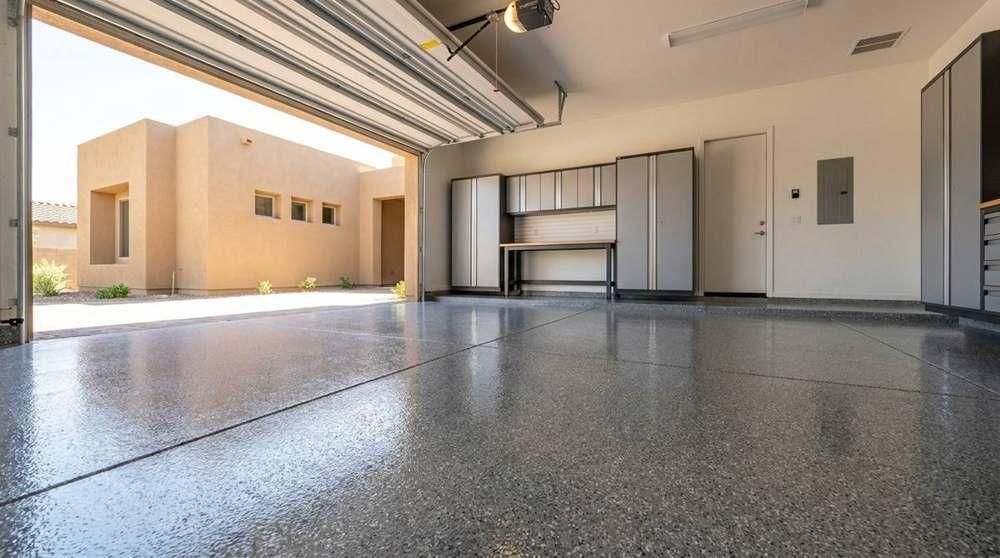
What drives garage floor coating cost in Phoenix
By Corey Parker June 3, 2026
See garage floor coating cost ranges in Phoenix for 2026, including prep, coating type, warranty, and how coatings perform in Arizona’s heat.
By Corey Parker May 28, 2026
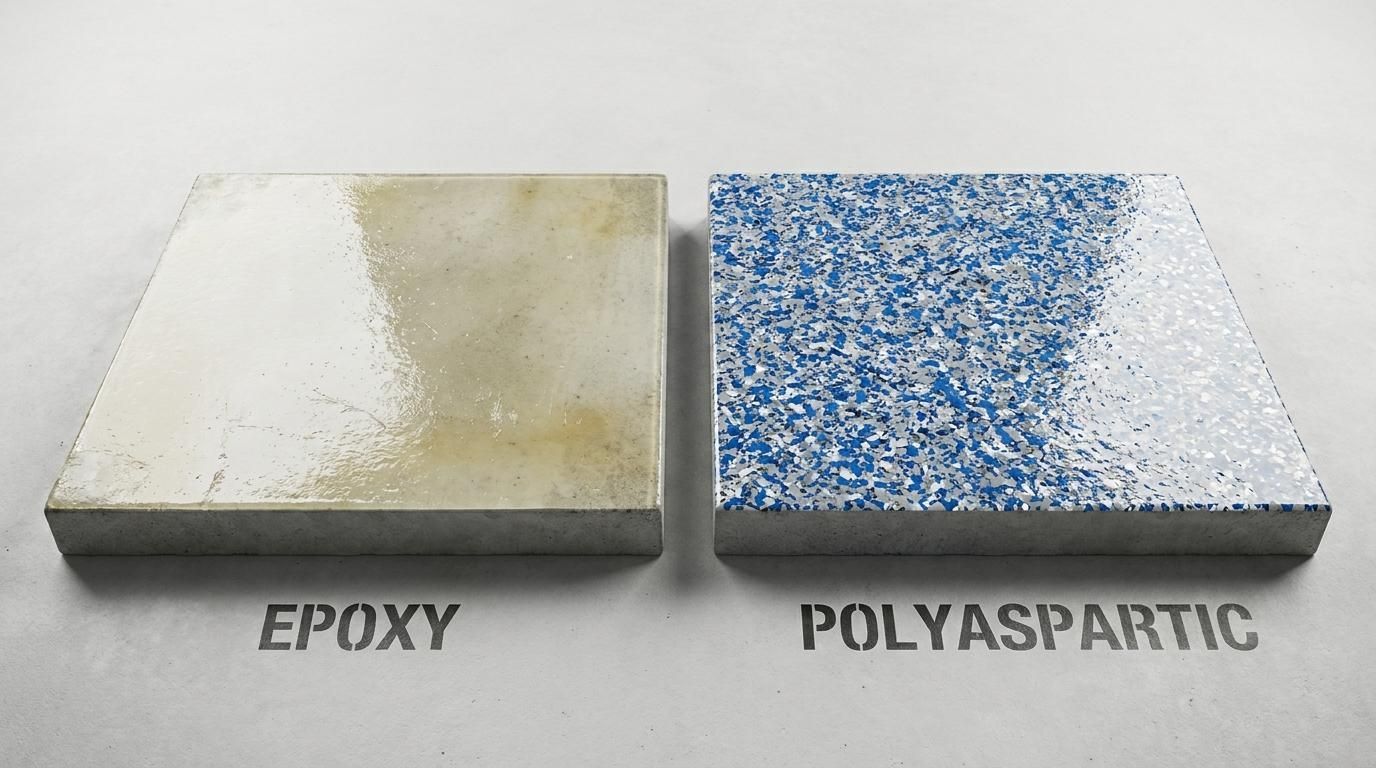
Compare polyaspartic vs. epoxy garage floor coatings for Arizona homes. Weigh their UV resistance, cure times, costs, and heat performance side by side.
By Corey Parker May 25, 2026
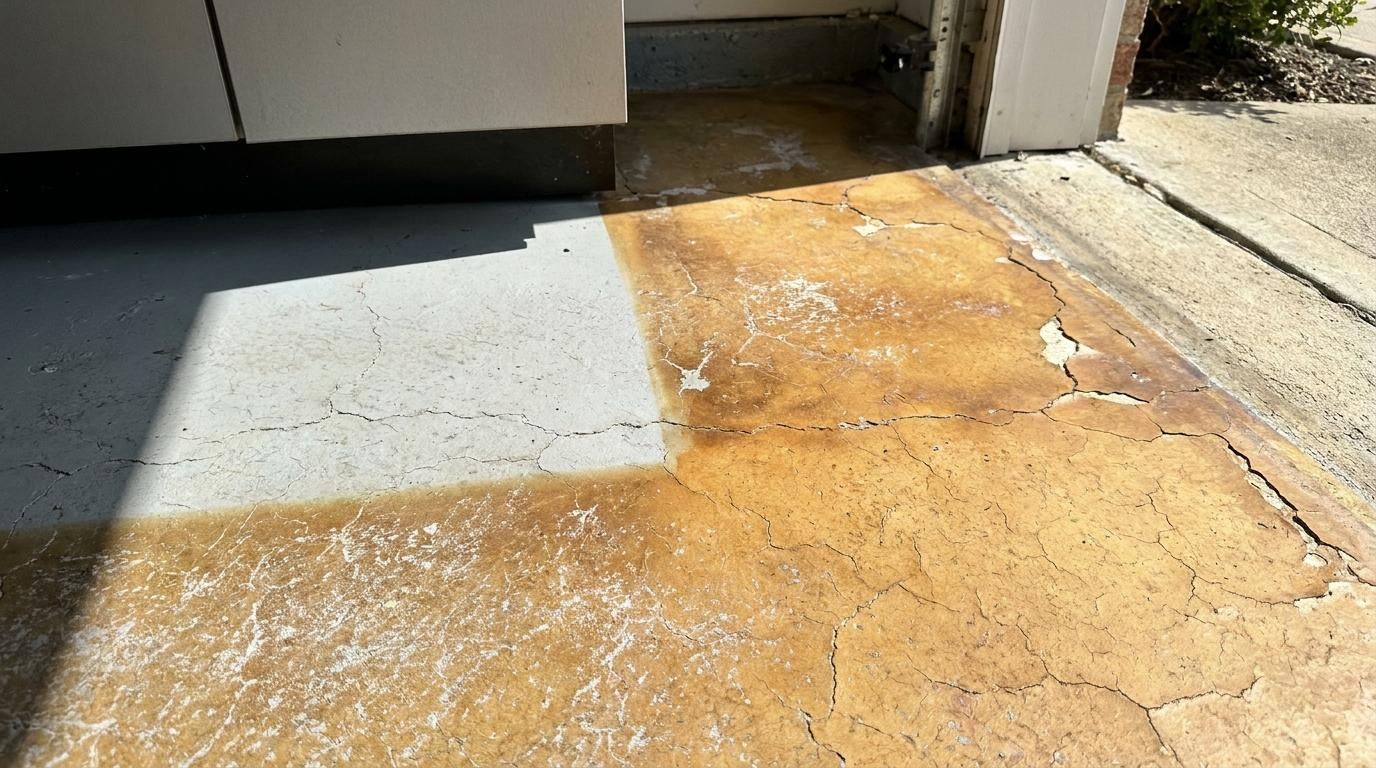
Epoxy garage floors yellow from UV exposure. Learn the chemistry behind epoxy yellowing, why Arizona accelerates it, and which coatings don't turn yellow.
Show More