Types of Garage Floor Coatings Explained: A Guide for Phoenix Homeowners

Corey Parker • June 10, 2026

Share this article

The types of garage floor coatings include epoxy, polyurea, polyaspartic, paint, and decorative finish systems such as flake, quartz, solid color, and clear coats. Floor Shield Phoenix installs residential concrete coating systems built around polyaspartic chemistry because Phoenix garages need fast cure times, UV stability, and strong adhesion.

Not every product that’s labelled as a garage coating belongs in the same category. Paint colors the surface, epoxy creates a harder film, and polyaspartic systems bond into a professional protective layer. This blog post discusses coating chemistry based on finish, which is the distinction most homeowners want to know about first.

Coating Chemistry Comes Before Color

The coating material determines how the floor handles heat, tires, sunlight, and cure time.

Paint and epoxy

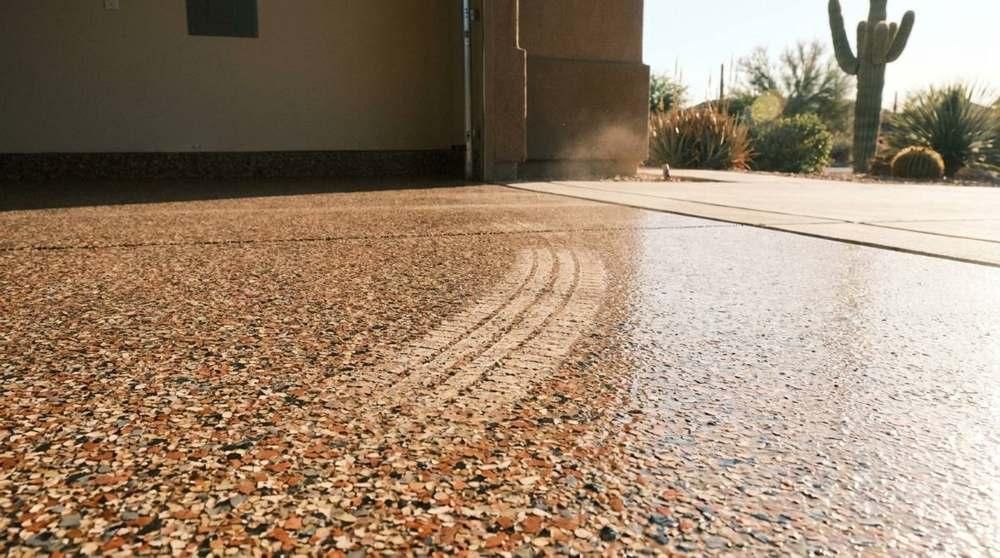
Garage floor paint is the lowest-build market option. It can improve color, but it offers limited protection against hot tires, oil, abrasion, and moisture. Epoxy is a common contractor and DIY option that creates a thicker film, but Arizona UV and high slab temperatures can make epoxy yellow, chalk, or soften sooner than homeowners expect.

Polyurea and polyaspartic

Polyurea and polyaspartic coatings cure faster and handle temperature swings better than many epoxy products. Floor Shield Phoenix installs polyaspartic systems only, with a 5- to 6-hour cure time and 15-year warranty. The common epoxy problems in Arizona are usually due to a mismatch between the coating chemistry and desert conditions, not simply from bad color choice.

Finish Systems Change Look, Texture, and Use

Once the chemistry is right, the finish dictates the floor’s appearance and traction.

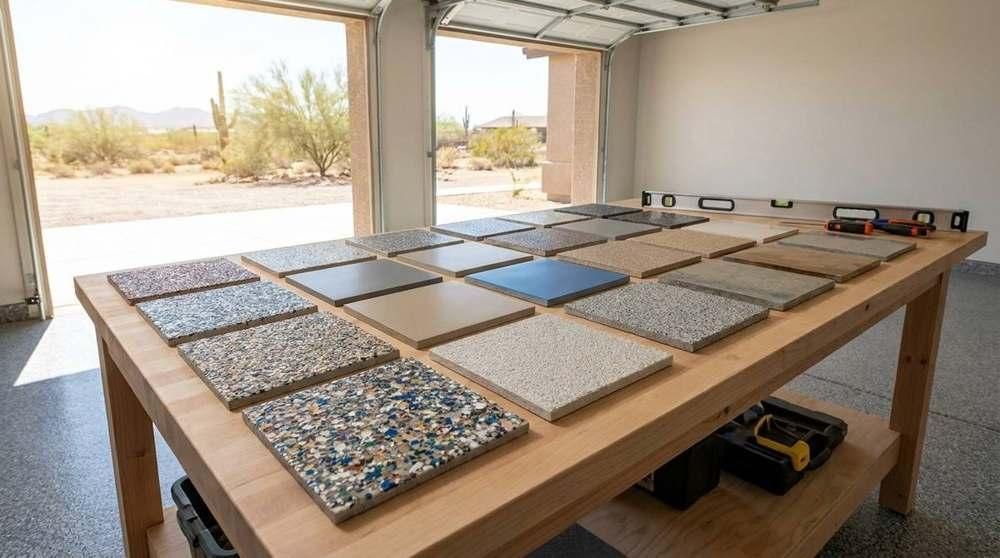
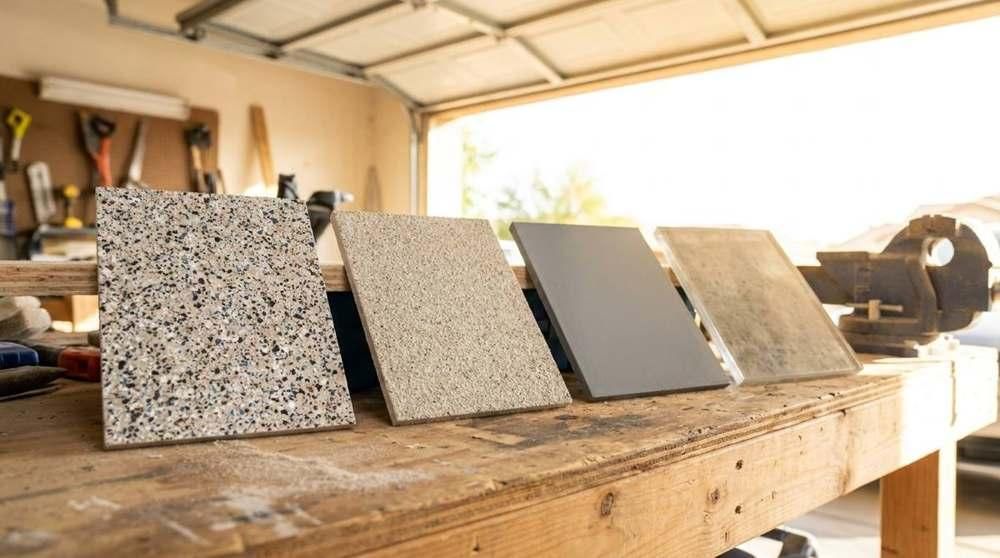
  • Flake coatings hide dust, minor concrete flaws, and tire marks.
  • Quartz coatings add more texture for wet or high-traffic areas.
  • Solid color coatings create a clean, modern look.
  • Clear coatings protect existing decorative concrete without hiding it.

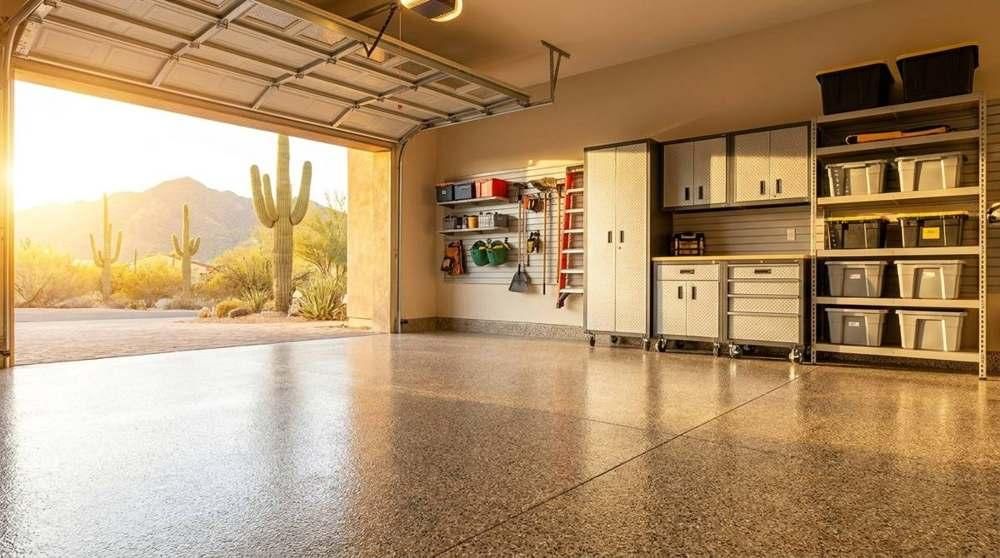
Floor Shield Phoenix offers each of these finish types through its polyaspartic system lineup. The flake floor coating system is often the most practical garage choice because the broadcast texture improves grip and helps the floor look clean between sweeping. Quartz may be better when traction is the priority, while solid or clear systems fit homeowners who want a simpler visual finish.

Homeowners comparing options in Mesa and nearby service areas should choose finish after they choose chemistry. A beautiful finish over the wrong base material still has to survive Phoenix heat.

Choosing Based on Practicality and Maintenance

The finish should also match how much visual variation you can live with. A clear system keeps the original concrete character, which means old color variation may still show through. A solid color looks clean but asks more from housekeeping. Flake and quartz are more forgiving because the texture and color blend disguise normal dust, small debris, and daily tire traffic.

Why the Installation Process Matters

Don’t choose a type by product name alone. Two coatings can both be called epoxy or polyaspartic and still differ in prep, thickness, broadcast coverage, and top coat quality. The installer’s process determines whether the material reaches the performance the label promises, especially on slabs that have already absorbed oil or dust.

In Phoenix, that process protects the floor from heat, dust, vehicle use, and open-door UV exposure.

Frequently Asked Questions

What type of garage floor coating is best for Phoenix heat?

A polyaspartic garage floor coating is usually the best fit for Phoenix heat because the chemistry cures fast and resists UV damage. Epoxy and paint are common market options, but they are more vulnerable to yellowing and hot-tire problems. The right surface prep still matters as much as the coating type.

Are flake coatings better than solid color coatings?

Flake coatings are better than solid color coatings when the garage needs texture, dust camouflage, and a more forgiving everyday finish. Solid color coatings can look cleaner and more modern, but they show tire marks and debris faster. Floor Shield Phoenix offers both as polyaspartic finish systems.

Does coating type affect installation time?

Coating type affects installation time because epoxy and polyaspartic cure at different speeds. Floor Shield Phoenix's polyaspartic systems are typically ready for full use in 5 to 6 hours. Many epoxy systems require a longer wait before vehicle traffic, which can disrupt a busy garage.

Start With Performance, Then Choose the Finish

A garage floor coating should be selected in two steps: first chemistry, then finish. Phoenix homeowners need the coating to resist UV, heat, tire pressure, and daily abrasion before deciding on color or texture.

For help choosing a polyaspartic finish system, request a garage floor quote from Floor Shield Phoenix. Call (602) 890-3194.

Recent Posts

Why polyaspartic fits Phoenix garages
By Corey Parker June 29, 2026
See why Phoenix homeowners choose polyaspartic garage floor coatings: UV stability, hot-tire resistance, a 5-6 hour cure, and a 15-year warranty built for Arizona.
What patio coatings need to handle in Phoenix
By Corey Parker June 25, 2026
See the best concrete patio coating options for Phoenix outdoor living. Compare flake, quartz, solid, and clear finishes built to handle Arizona sun, dust, and wear.
What Arizona pool decks need from a coating
By Corey Parker June 21, 2026
Learn what an Arizona pool deck coating needs to handle heat and UV: UV stability, slip resistance, and chemical resistance. See how to choose the right finish.
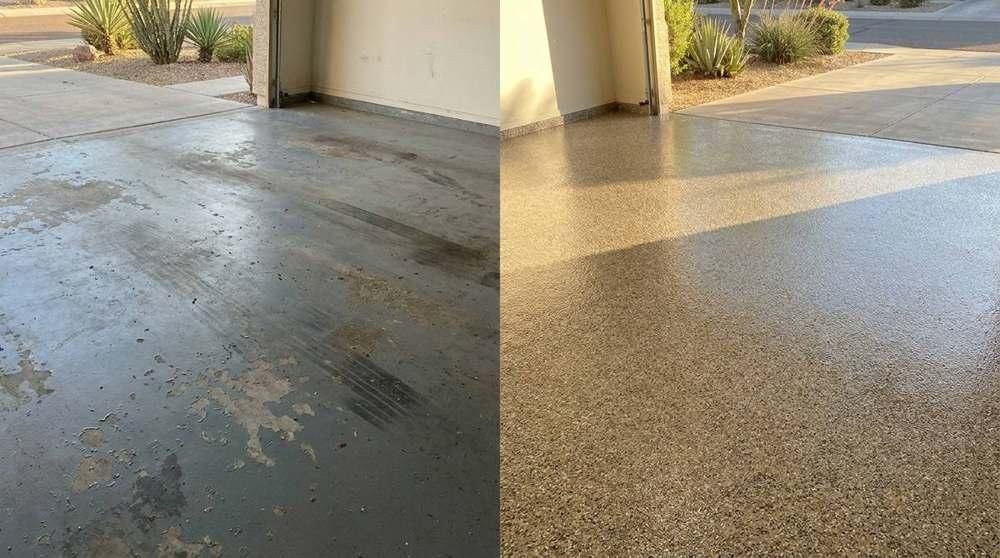
Paint, epoxy, and coating are not the same product
By Corey Parker June 18, 2026
Garage floor paint vs epoxy vs polyaspartic coating in Phoenix. See how each handles heat, UV, and hot tires, and why the coating upgrade pays off in Arizona.
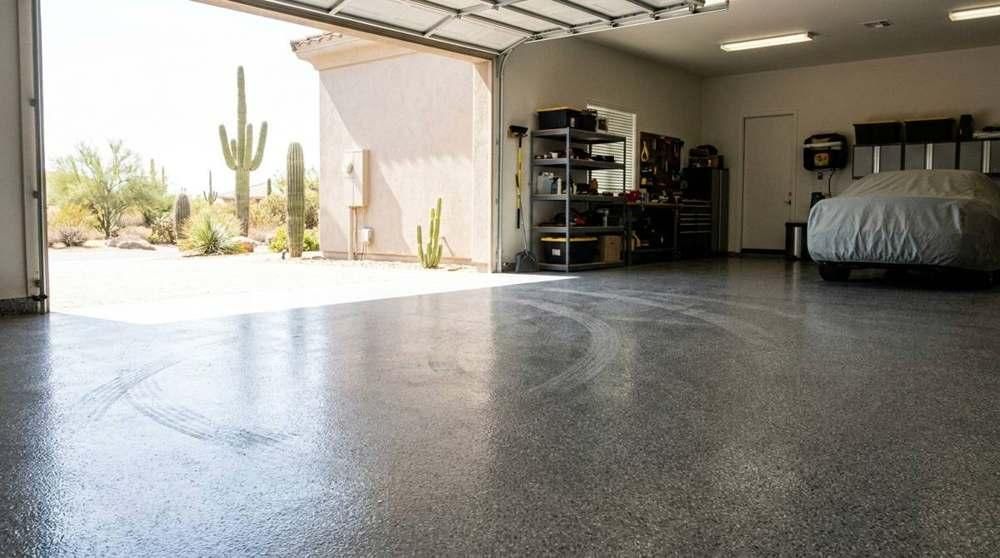
What makes a coating best for Phoenix
By Corey Parker June 15, 2026
Find the best garage floor coating for Phoenix homes. See why polyaspartic beats epoxy on UV, heat, and hot-tire stress, and how to match the finish to your garage.
How the main pool deck options compare
By Corey Parker June 6, 2026
Compare Phoenix pool deck resurfacing options, including acrylic overlays, coatings, and replacement. See costs, heat and traction trade-offs, and when to use each.
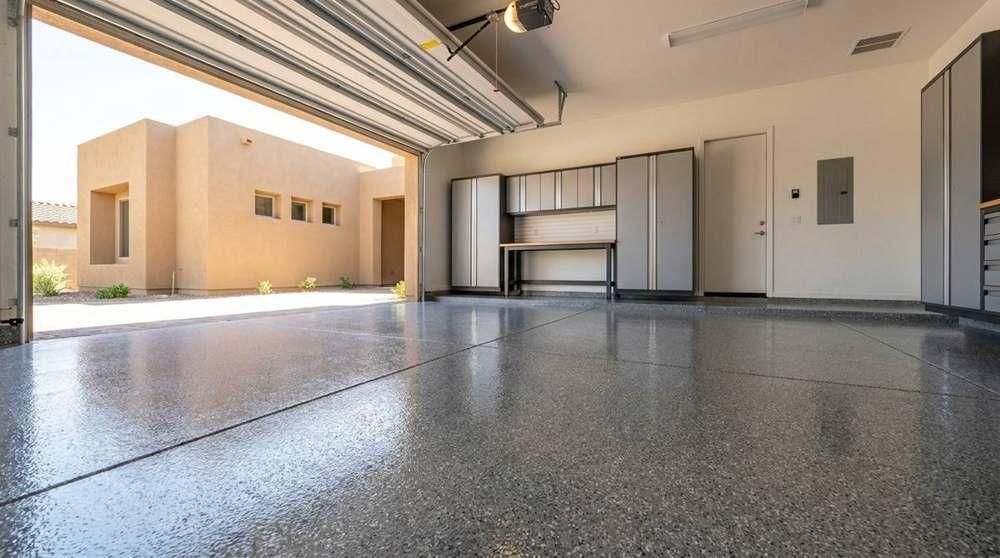
What drives garage floor coating cost in Phoenix
By Corey Parker June 3, 2026
See garage floor coating cost ranges in Phoenix for 2026, including prep, coating type, warranty, and how coatings perform in Arizona’s heat.
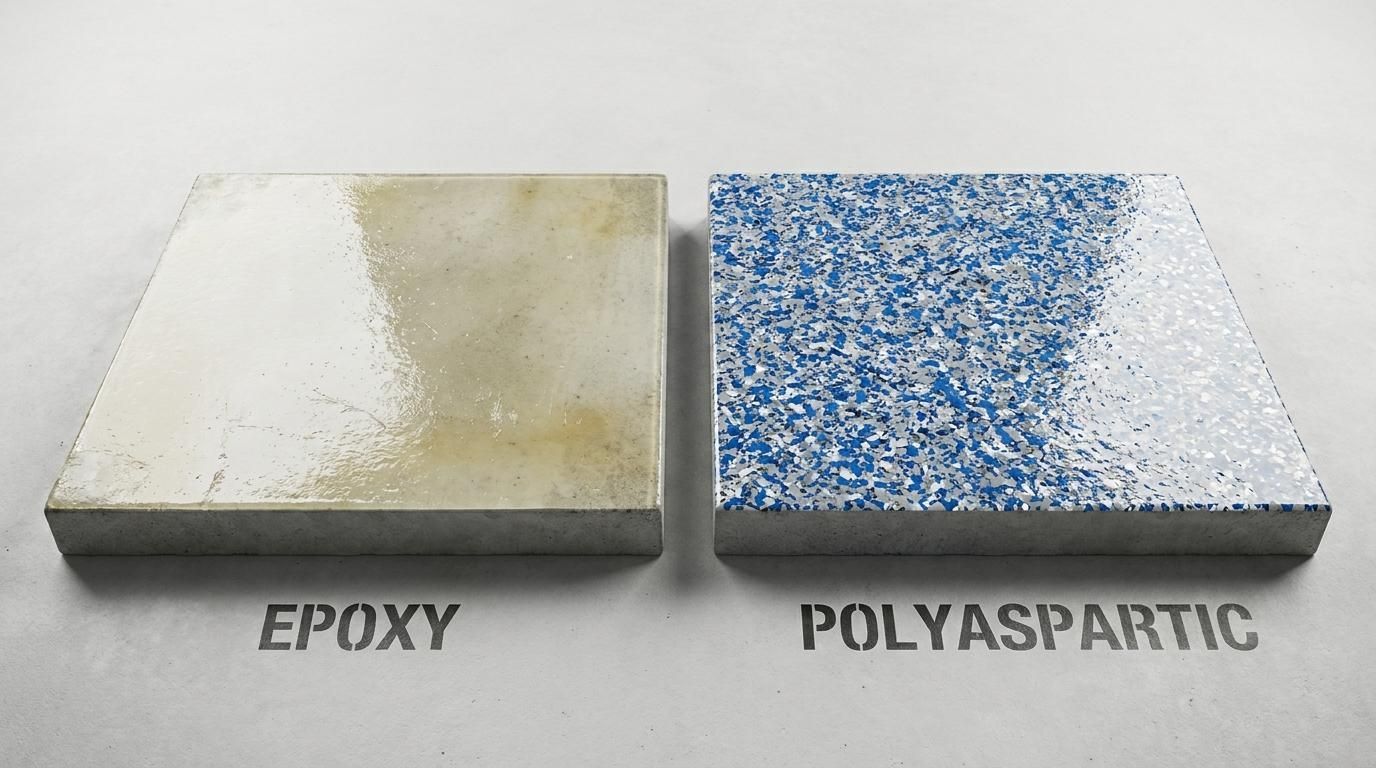
By Corey Parker May 28, 2026
Compare polyaspartic vs. epoxy garage floor coatings for Arizona homes. Weigh their UV resistance, cure times, costs, and heat performance side by side.
By Corey Parker May 25, 2026
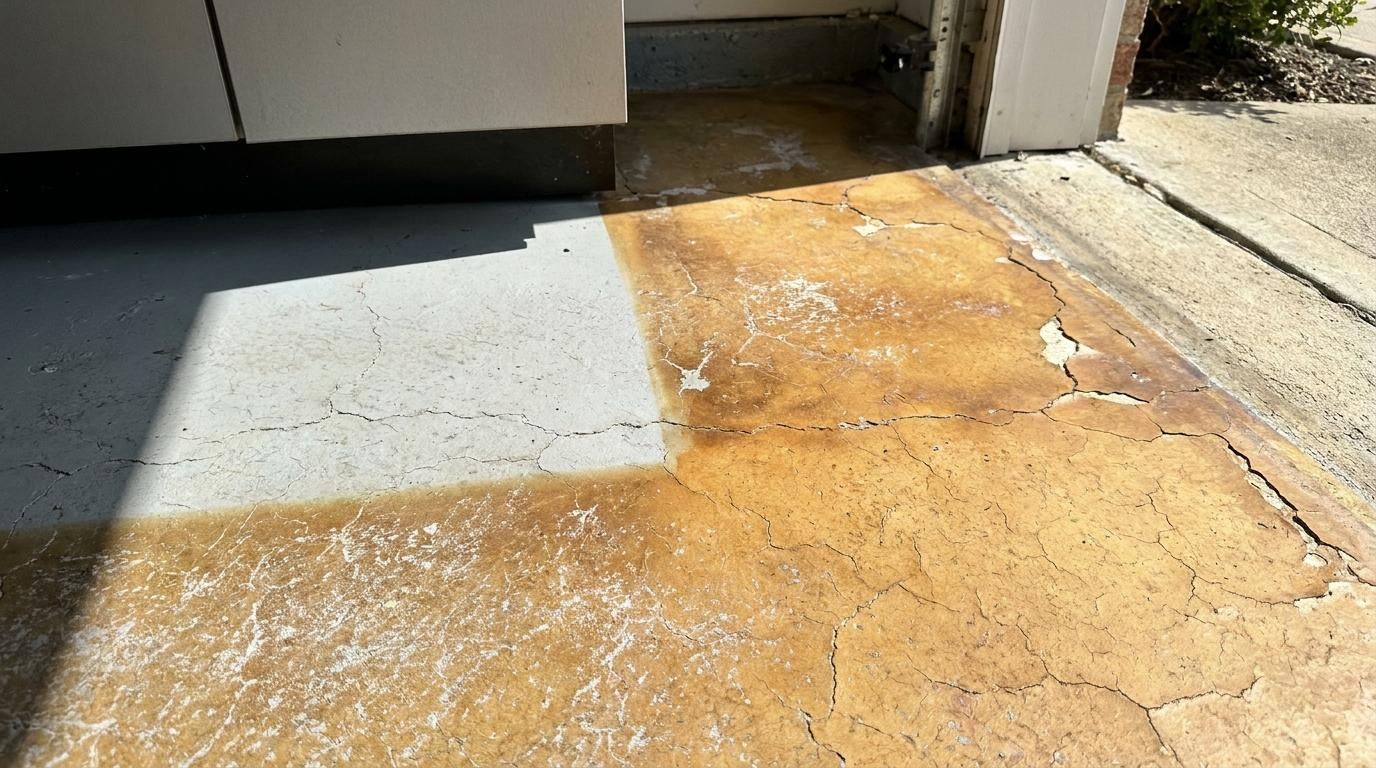
Epoxy garage floors yellow from UV exposure. Learn the chemistry behind epoxy yellowing, why Arizona accelerates it, and which coatings don't turn yellow.
By Corey Parker May 21, 2026
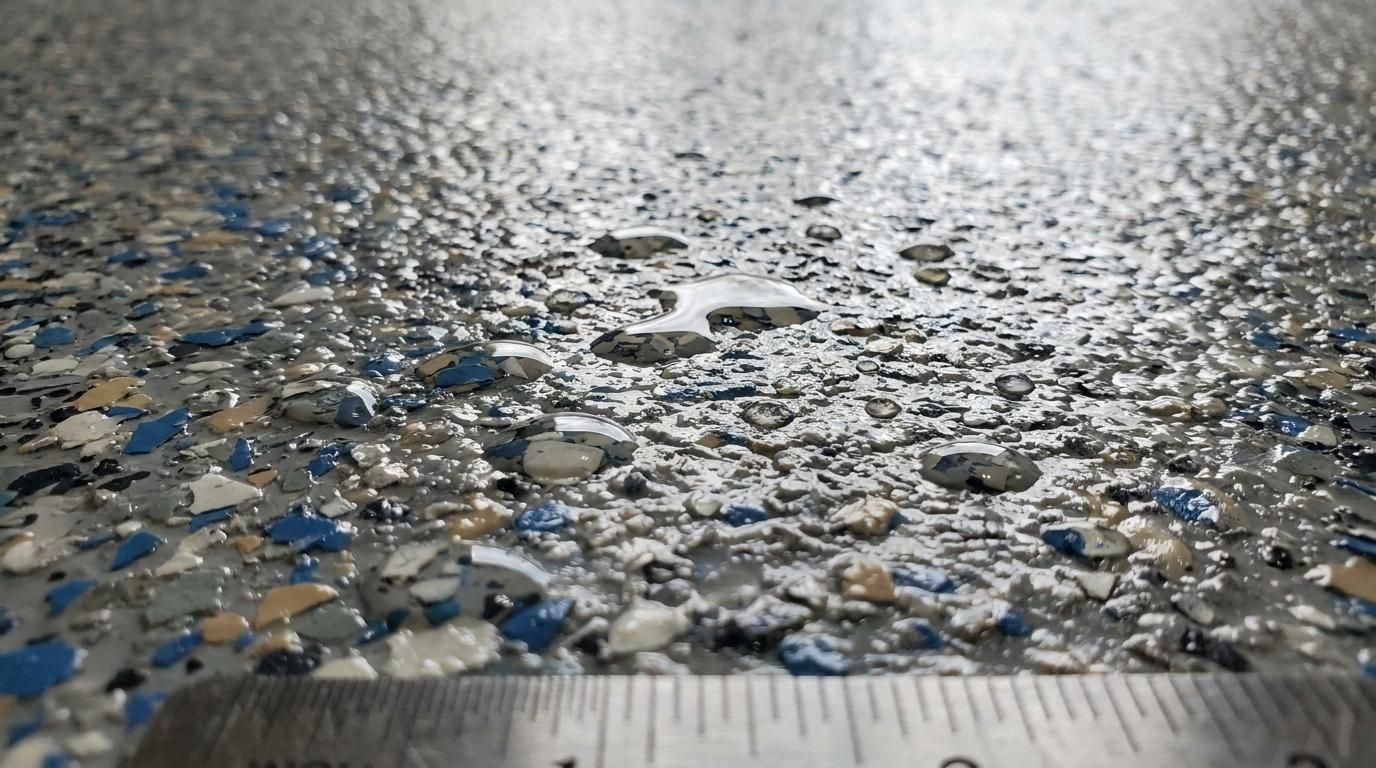
Are coated garage floors slippery? Learn how slip resistance works, what DCOF means, and which coating systems provide the best traction in Phoenix.
Show More