Why Does Epoxy Turn Yellow? UV Damage and AZ Garage Floors

Corey Parker • May 25, 2026

Share this article

Epoxy turns yellow because its aromatic resin structure absorbs ultraviolet light, which breaks down the polymer chains and causes a chemical reaction called ambering. In Arizona, where garage floors receive direct sunlight through open doors and windows for 299 days per year, standard epoxy can start yellowing within weeks of installation. Floor Shield Phoenix uses polyaspartic garage floor coatings with aliphatic resins that don't absorb UV and won't yellow regardless of sun exposure.

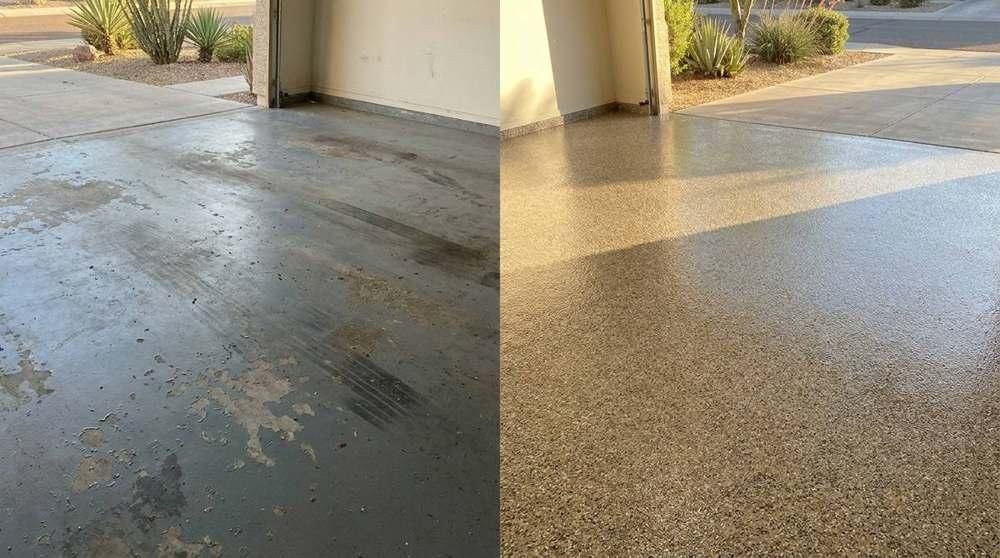
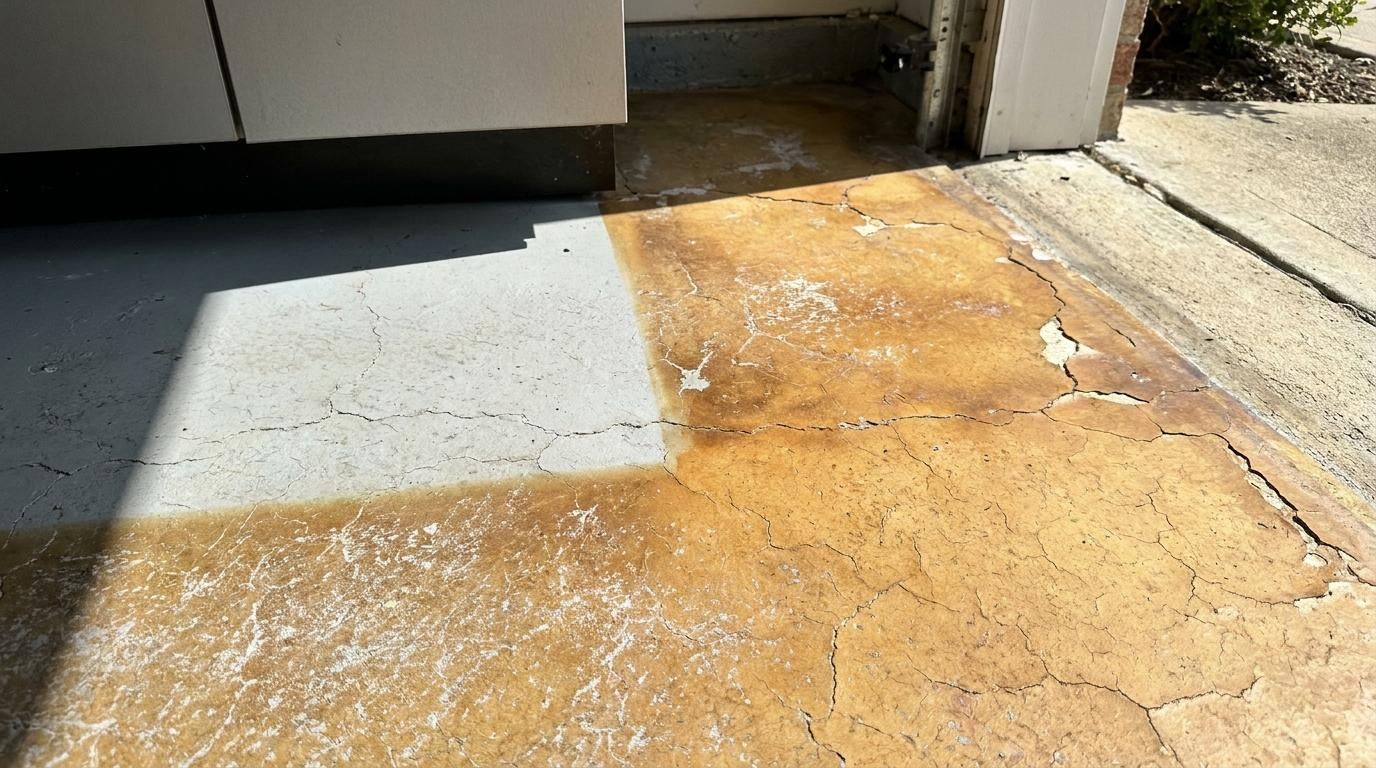
Six months ago, the epoxy floor looked bright and clean. Now the section near the garage door has turned amber while the shaded half stays gray. That uneven discoloration isn't a cleaning issue or a defect. It's UV-driven chemical degradation, and it only gets worse from here.

The Chemistry Behind Epoxy Yellowing

Epoxy coatings are built with aromatic resins, which contain ring-shaped molecular structures that absorb UV radiation. When UV light hits these structures, it breaks the chemical bonds that hold the polymer together. The broken bonds release chromophores, which are molecular fragments that absorb visible light and create a yellow or amber tint.

This process is called photodegradation, and it's irreversible. No amount of cleaning, buffing, or resealing restores the original color once the molecular structure has changed. The yellowing isn't on the surface. It happens within the coating itself.

The speed of yellowing depends on UV intensity and exposure duration. In a climate with moderate sun and short summers, an indoor epoxy floor might take years to show visible yellowing. Arizona is not that climate.

Why Arizona Accelerates the Problem

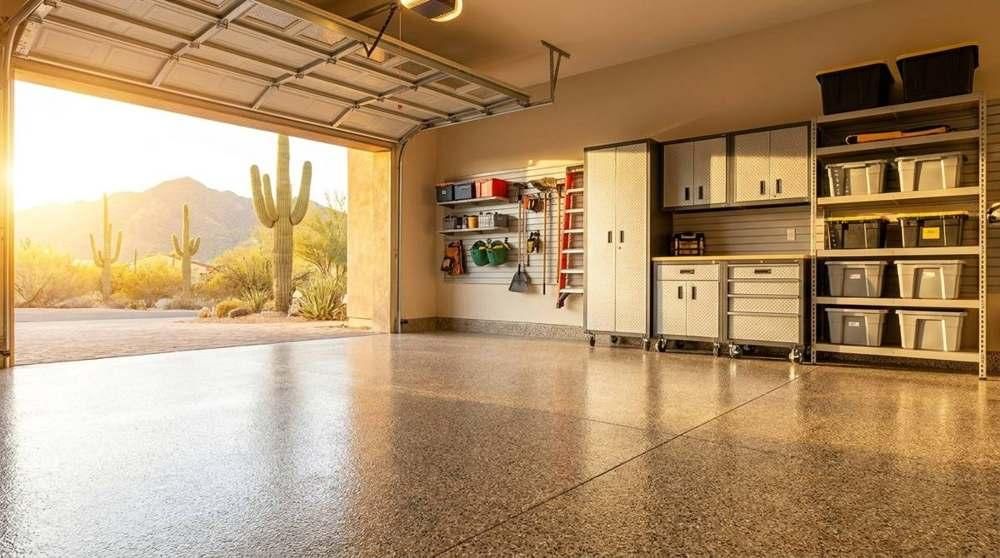
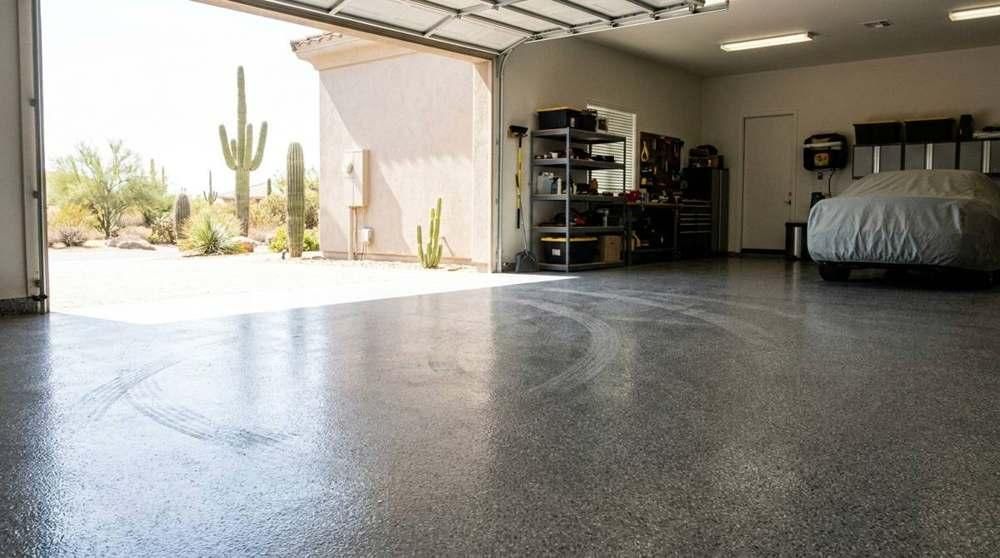
Phoenix receives 299 sunny days per year with some of the highest UV index readings in the country. Garage floors in the Phoenix and East Valley area are exposed to direct sunlight every time the garage door opens, and most Arizona garages face significant sun exposure during peak UV hours.

The combination of UV intensity and duration means epoxy degradation that takes 6–12 months in moderate climates can begin within weeks in Arizona. Homeowners report visible yellowing near garage door openings after just one summer. The pattern is almost always the same: amber near the light source, original color in the shade.

Heat compounds the UV problem. Arizona's concrete surface temperatures exceed 160°F in summer, which accelerates the chemical breakdown that UV initiates. The coating faces simultaneous UV bombardment and thermal stress, both attacking the same aromatic resin bonds.

UV-Stable Alternatives That Don't Yellow

Polyaspartic coatings solve the yellowing problem at the molecular level. Instead of aromatic resins, polyaspartic formulations use aliphatic resins. Aliphatic structures don't absorb UV light, which means there's no photodegradation, no chromophore release, and no color change regardless of sun exposure.

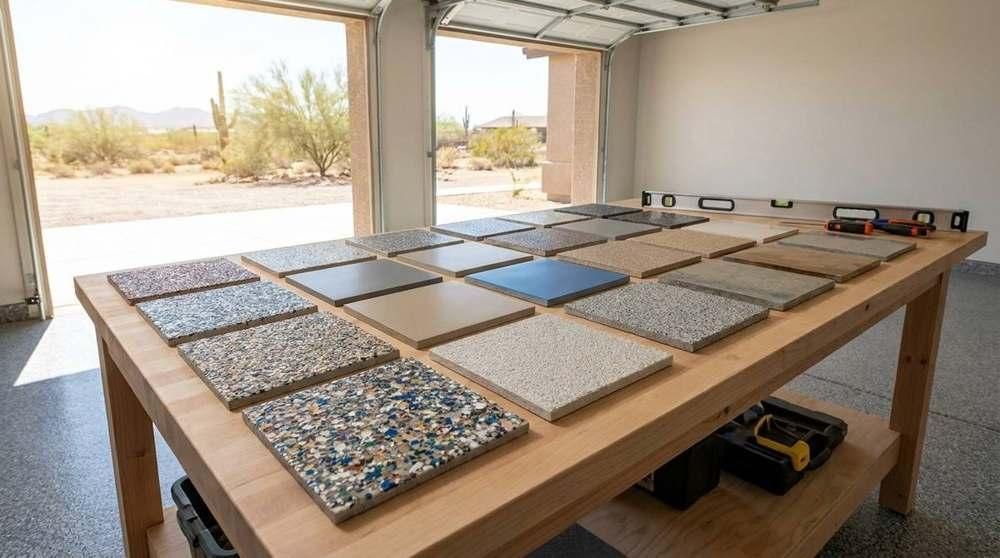
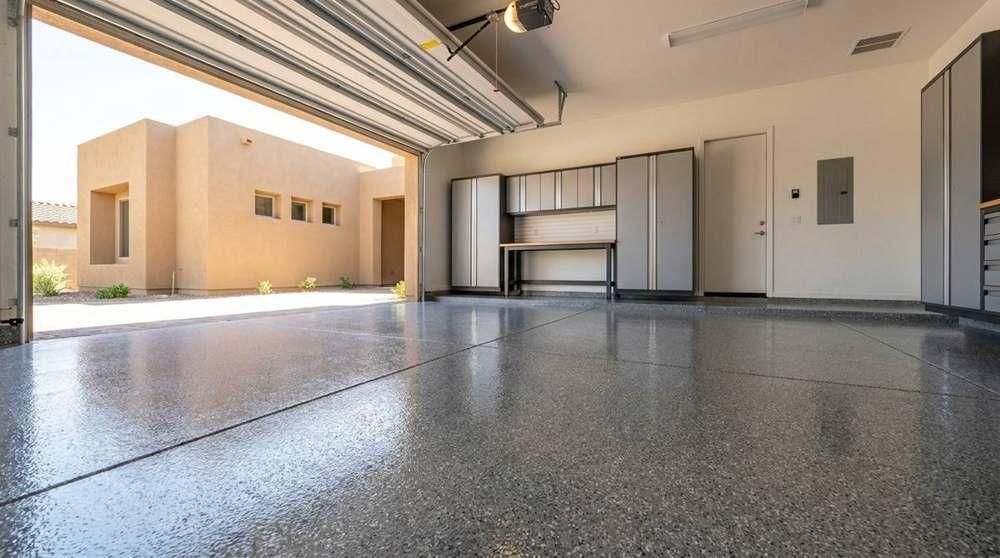
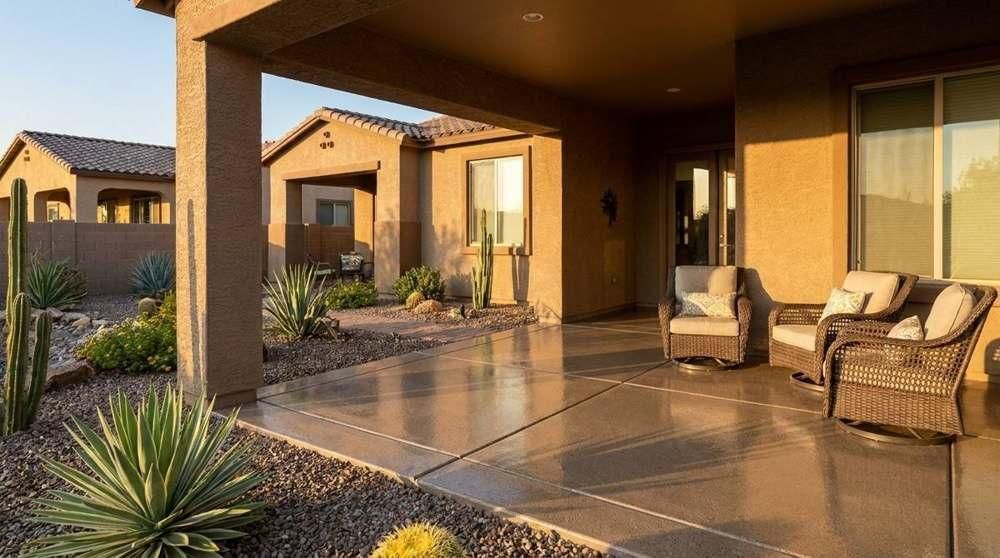
Floor Shield Phoenix installs polyaspartic coatings exclusively. The clear floor coating system preserves concrete's natural appearance without adding color, and because it's aliphatic, the clear coat stays optically transparent instead of yellowing over time. The flake system and solid color systems maintain their original color for the life of the coating.

Every Floor Shield Phoenix installation is backed by a 15-year warranty that covers adhesion failure, peeling, and delamination. UV damage is not an exclusion because the coating chemistry eliminates the failure mode entirely.

Frequently Asked Questions

Can yellowed epoxy be fixed without a full recoat?

No. Epoxy yellowing is a chemical change within the coating, not a surface stain. Scrubbing, polishing, or applying a new clear coat over yellowed epoxy won't reverse the discoloration. The only fix is removing the old epoxy and applying a UV-stable coating like polyaspartic.

Does all epoxy yellow, or just cheap brands?

All standard epoxy formulations use aromatic resins, which means all of them are vulnerable to UV-driven yellowing. Higher-quality epoxies may resist it longer, but none are UV-stable. Floor Shield Phoenix chose polyaspartic over epoxy specifically because aliphatic chemistry eliminates this vulnerability.

Will a UV-protective topcoat prevent epoxy from yellowing?

A urethane topcoat can slow epoxy yellowing by filtering some UV, but it doesn't eliminate the problem. The topcoat itself can degrade over time, exposing the epoxy underneath. Polyaspartic coatings don't need a separate UV layer because the entire system—including Floor Shield's clear, solid, and flake floor coatings —is UV-stable from base to topcoat.

The Fix for UV-Damaged Garage Floors

Epoxy yellowing is a chemistry problem with a chemistry solution. Aromatic resins absorb UV and degrade. Aliphatic resins don't. In Arizona, where UV exposure is among the most intense in the country, that distinction determines whether a garage floor keeps its color for 15 years or turns amber in one summer.

If your epoxy floor has already yellowed or you want a coating that won't, contact Floor Shield Phoenix at (602) 890-3194 for a free estimate on a UV-stable polyaspartic system.

Recent Posts

By Corey Parker May 28, 2026
Compare polyaspartic vs. epoxy garage floor coatings for Arizona homes. Weigh their UV resistance, cure times, costs, and heat performance side by side.
By Corey Parker May 21, 2026
Are coated garage floors slippery? Learn how slip resistance works, what DCOF means, and which coating systems provide the best traction in Phoenix.
By Corey Parker May 18, 2026
Hot tire pickup peels garage floor coatings when heated tires park on softened epoxy. Learn why Phoenix garages are vulnerable and how to prevent it.
By Corey Parker May 15, 2026
Compare DIY epoxy kits vs. professional polyaspartic garage floor coating in Phoenix. Learn their costs, lifespans, and what Arizona heat does to each option.
By Corey Parker May 10, 2026
Learn what Floor Shield Phoenix's 15-year floor coating warranty covers, what can void it, and how it compares to epoxy warranties in Arizona.
By Corey Parker May 6, 2026
Find out if concrete coatings are worth the cost for Phoenix homes. Compare polyaspartic's pricing, lifespan, and long-term value vs. bare concrete.
By Corey Parker May 2, 2026
Concrete coating lifespan in Arizona depends on chemistry. Compare epoxy vs. polyaspartic's durability, UV resistance, and heat performance in Phoenix.
Garage with several bicycles, white walls, and a split epoxy floor of smooth gray and speckled tan.
By Corey Parker April 29, 2026
Get an honest review of polyaspartic coating's drawbacks, including its cost, fast cure challenges, and DIY limits. Here's what Arizona homeowners should know.
Cracked concrete floor with a large broken patch and water puddles in a garage or driveway
By Corey Parker April 21, 2026
Epoxy garage floors fail fast in Arizona. Learn why yellowing, peeling, and hot tire pickup happen, and which coating lasts in our desert heat.
Worker smoothing concrete floor in an open garage, with tools and equipment nearby.
By Corey Parker April 10, 2026
Learn about Floor Shield Phoenix polyaspartic coating costs, installation steps, and system options. Offering one-day installations with a 15-year warranty.
Show More