Polyaspartic vs. Epoxy Garage Floor: Which Is Better for Arizona Homes?

Corey Parker • May 28, 2026

Share this article

Polyaspartic garage floor coatings outperform epoxy in Arizona on every metric that matters in desert conditions: UV stability, heat resistance, cure time, and long-term durability. Epoxy costs less upfront at $2–$4 per square foot versus $3–$6 for polyaspartic, but its 2- to 5-year lifespan in Phoenix conditions makes it the more expensive option over time. Floor Shield Phoenix installs polyaspartic garage floor coatings exclusively because the chemistry is engineered for Arizona's UV and heat.

With Arizona's summer approaching, the coating you choose this spring determines whether your garage floor survives the next five months of 160°F surface temperatures and daily UV exposure. That seasonal pressure makes this comparison more than academic for Valley homeowners weighing quotes right now.

How Epoxy and Polyaspartic Differ

Both epoxy and polyaspartic are resinous coatings applied to concrete, but their chemical foundations are fundamentally different.

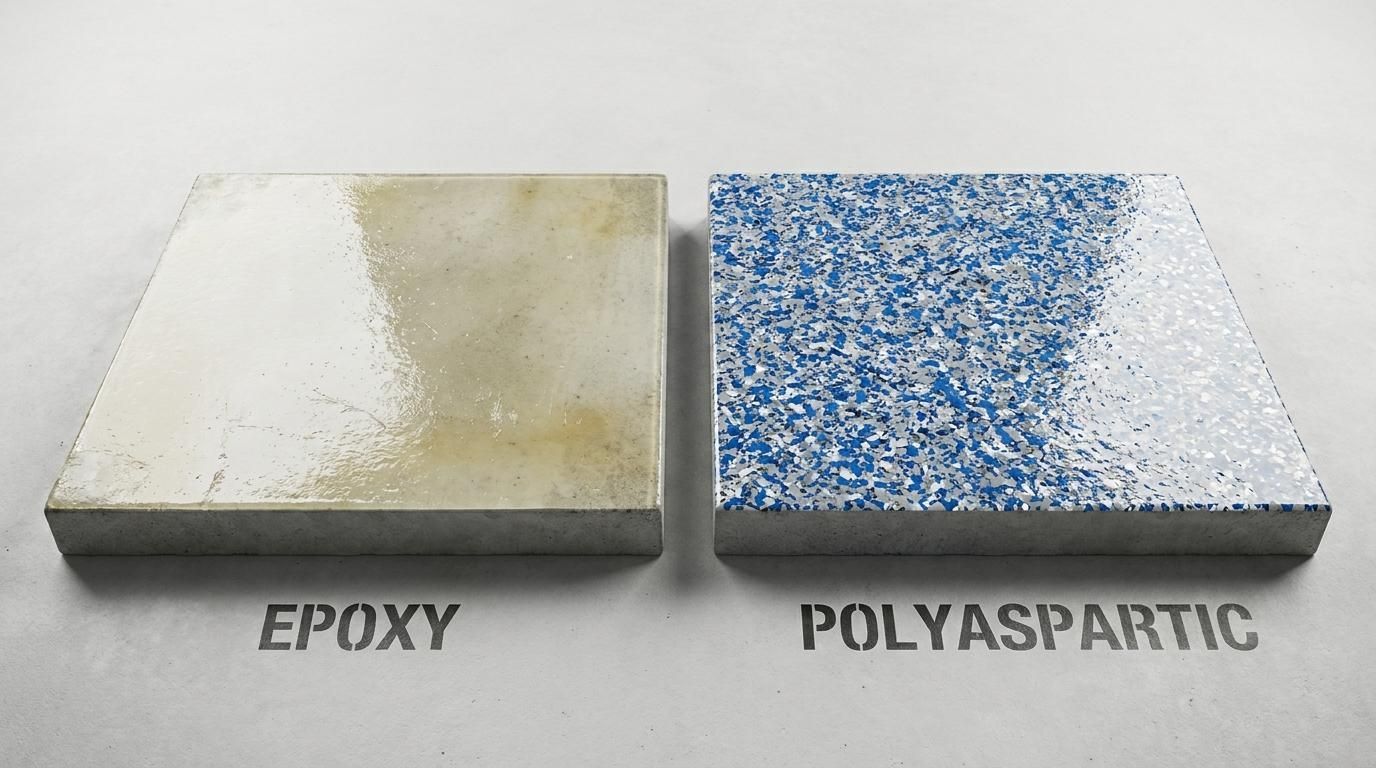
Epoxy uses aromatic resins. These molecular structures absorb UV light, which triggers photodegradation. The coating yellows, chalks, and eventually loses adhesion. Epoxy also cures slowly, requiring 24–72 hours before vehicle traffic and 5–7 days for full chemical cure.

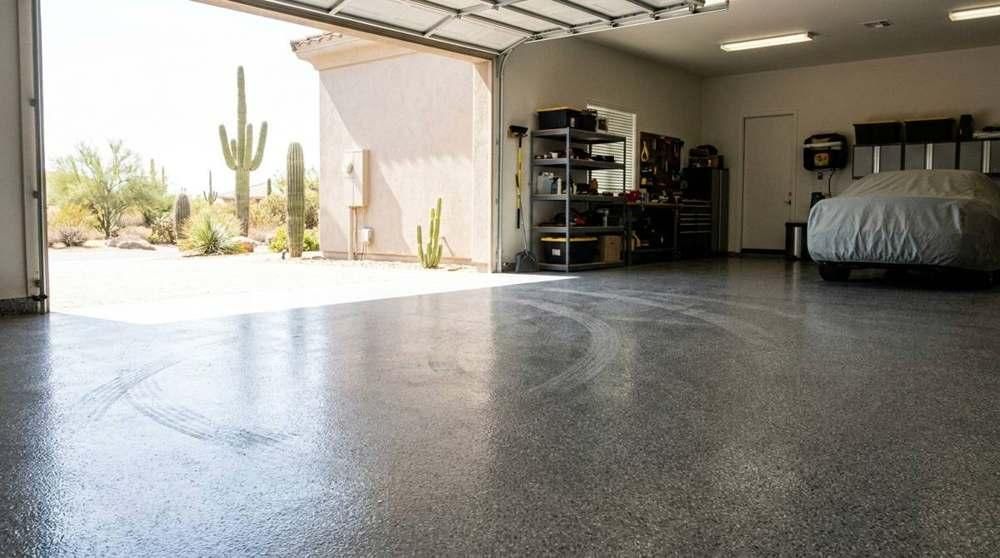
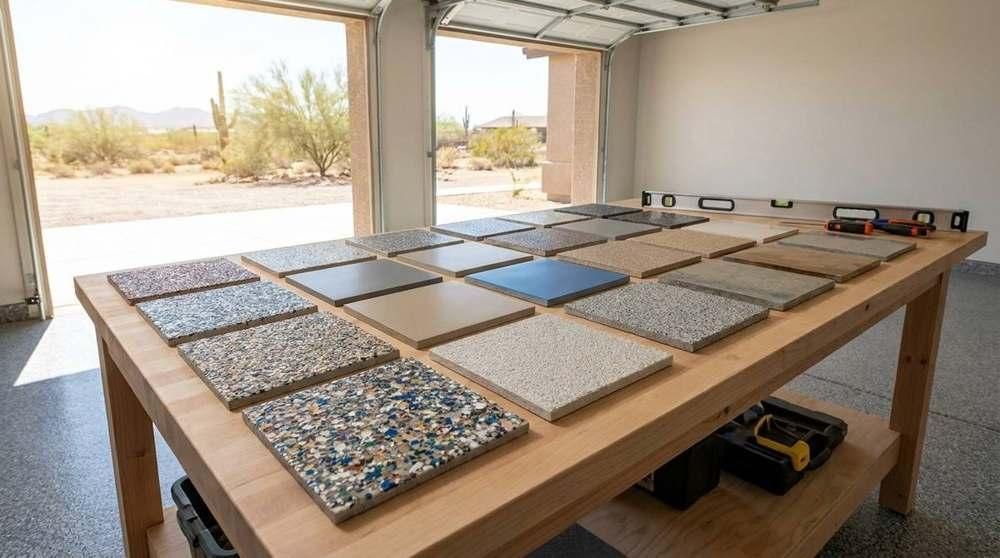
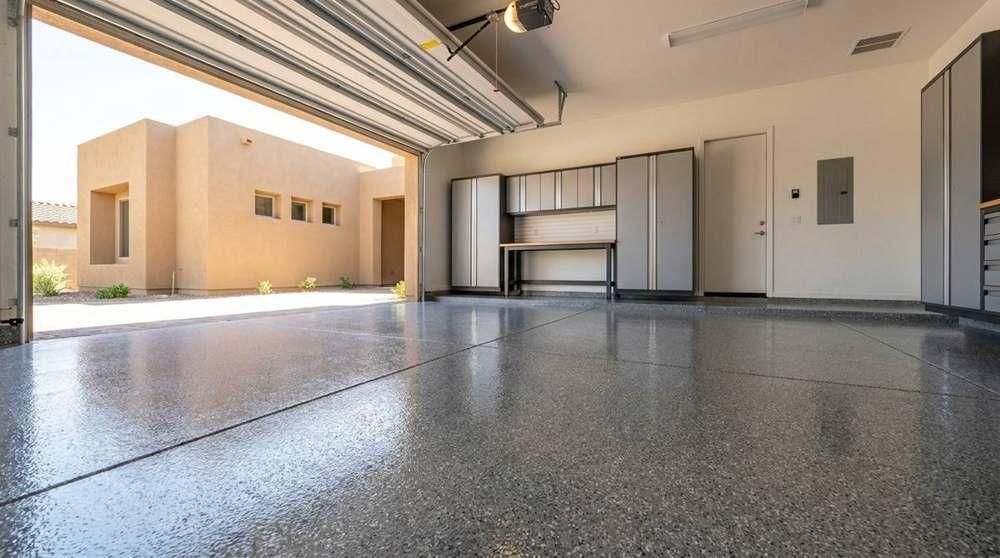
 Polyaspartic uses aliphatic resins. Aliphatic structures don't absorb UV, which eliminates yellowing and UV-driven degradation entirely. Polyaspartic cures in 5–6 hours, which means same-day installation and same-day use. The solid color, clear coat, and flake floor systems Floor Shield Phoenix installs are all polyaspartic-based.

Performance in Arizona's Climate

Arizona's climate creates specific conditions that expose the performance gap between these two chemistries.

UV Resistance

Epoxy yellows under UV exposure. In Phoenix's 299 sunny days per year, visible discoloration can appear within weeks near garage door openings. Polyaspartic maintains its original color indefinitely because aliphatic resins don't react to UV light.

Heat and Hot Tire Performance

Epoxy softens at the temperatures Arizona tires regularly reach (150–180°F), causing hot tire pickup where the rubber pulls coating off the concrete. Polyaspartic maintains hardness at these temperatures, eliminating hot tire damage entirely.

Cure Time

Epoxy requires 24–72 hours before parking vehicles, with full cure taking up to a week. Polyaspartic cures in 5–6 hours. For Phoenix homeowners , this means the garage is back in service the same day instead of being unavailable for days during Arizona's hottest months.

Cost, Cure Time, and Long-Term Value

Epoxy's upfront price advantage disappears when you calculate the total cost across the coating's actual lifespan in Arizona.

A professional epoxy installation on a standard two-car garage costs roughly $1,200–$2,500. With a 2–5 year lifespan in Arizona, that means two recoats over a 15-year window, bringing the total to $3,600–$7,500 plus the downtime of each multi-day installation.

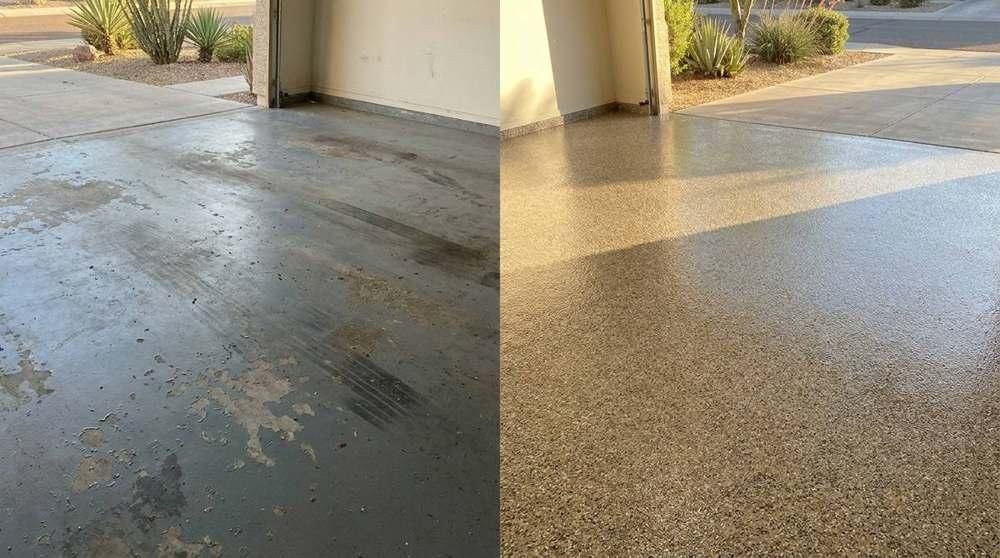
A professional polyaspartic installation costs $1,800–$4,500 for the same garage. With Floor Shield Phoenix's 15-year warranty, that's one installation, one day of disruption, and zero recoats. The warranty covers peeling, delamination, and adhesion failure.

Floor Shield Phoenix does not install epoxy. We chose polyaspartic exclusively because the long-term math, combined with Arizona's UV and heat conditions, consistently favors polyaspartic for both the homeowner and the installer's reputation.

Frequently Asked Questions

Is polyaspartic stronger than epoxy?

Yes. Polyaspartic coatings are rated at approximately 4x the abrasion resistance of standard epoxy. They also maintain that strength at higher temperatures, which is critical in Arizona garages where coated surfaces regularly absorb heat from parked vehicles and direct sunlight.

Does epoxy have any advantage over polyaspartic?

Epoxy's main advantage is lower upfront cost. Professional epoxy runs $2–$4 per square foot compared to $3–$6 for polyaspartic. In mild climates with minimal UV exposure, that price difference can make epoxy reasonable. In Arizona's conditions, the shorter lifespan and recoat cycle erase that savings within a few years.

Can polyaspartic be applied over old epoxy?

In many cases, yes. Floor Shield Phoenix assesses the existing epoxy's adhesion and condition before recommending an approach. If the old epoxy is still bonded and in acceptable condition, polyaspartic can be applied over it after proper surface preparation. If the epoxy has failed, it needs to be removed first.

Polyaspartic: The Only Chemistry That Survives Arizona

The polyaspartic vs. epoxy comparison comes down to climate. In moderate regions with limited UV, epoxy can be a reasonable budget choice. In Phoenix, where UV intensity ranks among the highest in the country and surface temperatures exceed 160°F for months, polyaspartic's aliphatic chemistry is the only formulation that delivers reliable long-term performance. It costs more on day one and less over 15 years.

For a free estimate on a polyaspartic garage floor coating, contact Floor Shield Phoenix at (602) 890-3194 .

Recent Posts

By Corey Parker May 25, 2026
Epoxy garage floors yellow from UV exposure. Learn the chemistry behind epoxy yellowing, why Arizona accelerates it, and which coatings don't turn yellow.
By Corey Parker May 21, 2026
Are coated garage floors slippery? Learn how slip resistance works, what DCOF means, and which coating systems provide the best traction in Phoenix.
By Corey Parker May 18, 2026
Hot tire pickup peels garage floor coatings when heated tires park on softened epoxy. Learn why Phoenix garages are vulnerable and how to prevent it.
By Corey Parker May 15, 2026
Compare DIY epoxy kits vs. professional polyaspartic garage floor coating in Phoenix. Learn their costs, lifespans, and what Arizona heat does to each option.
By Corey Parker May 10, 2026
Learn what Floor Shield Phoenix's 15-year floor coating warranty covers, what can void it, and how it compares to epoxy warranties in Arizona.
By Corey Parker May 6, 2026
Find out if concrete coatings are worth the cost for Phoenix homes. Compare polyaspartic's pricing, lifespan, and long-term value vs. bare concrete.
By Corey Parker May 2, 2026
Concrete coating lifespan in Arizona depends on chemistry. Compare epoxy vs. polyaspartic's durability, UV resistance, and heat performance in Phoenix.
Garage with several bicycles, white walls, and a split epoxy floor of smooth gray and speckled tan.
By Corey Parker April 29, 2026
Get an honest review of polyaspartic coating's drawbacks, including its cost, fast cure challenges, and DIY limits. Here's what Arizona homeowners should know.
Cracked concrete floor with a large broken patch and water puddles in a garage or driveway
By Corey Parker April 21, 2026
Epoxy garage floors fail fast in Arizona. Learn why yellowing, peeling, and hot tire pickup happen, and which coating lasts in our desert heat.
Worker smoothing concrete floor in an open garage, with tools and equipment nearby.
By Corey Parker April 10, 2026
Learn about Floor Shield Phoenix polyaspartic coating costs, installation steps, and system options. Offering one-day installations with a 15-year warranty.
Show More