Disadvantages of Polyaspartic Coatings: An Honest Look for AZ Property Owners

Corey Parker • April 29, 2026

Share this article

The disadvantages of polyaspartic coatings include their higher upfront cost compared to epoxy, a fast cure window that requires professional installation, and limited availability as a DIY product. These trade-offs are worth understanding before committing. Floor Shield Phoenix installs polyaspartic systems across the Valley and believes homeowners deserve the full picture before choosing a coating.


After years of installing polyaspartic coatings in Phoenix garages, pool decks, and commercial spaces, we've learned that this product isn't perfect for every situation. It's the best performer in Arizona's heat and UV, but that performance comes with trade-offs that are worth considering depending on your budget and project scope.

Higher Upfront Cost Than Epoxy

Polyaspartic coatings cost roughly 30% to 50% more than standard epoxy for the same square footage. A two-car garage that might cost $1,200 to $2,000 with epoxy typically runs $1,800 to $3,600 with a professional polyaspartic system.

Where the Extra Cost Goes

The material itself is more expensive to manufacture than epoxy resin. Diamond grinding (required for proper adhesion) adds labor cost that acid-etch prep for DIY kits doesn't. And because polyaspartic cures fast, the installation crew needs to be experienced enough to work within that window without mistakes. For Phoenix, AZ homeowners comparing quotes, a lower epoxy price often reflects cheaper materials and minimal prep rather than a better deal.

When the Cost Difference Matters Less

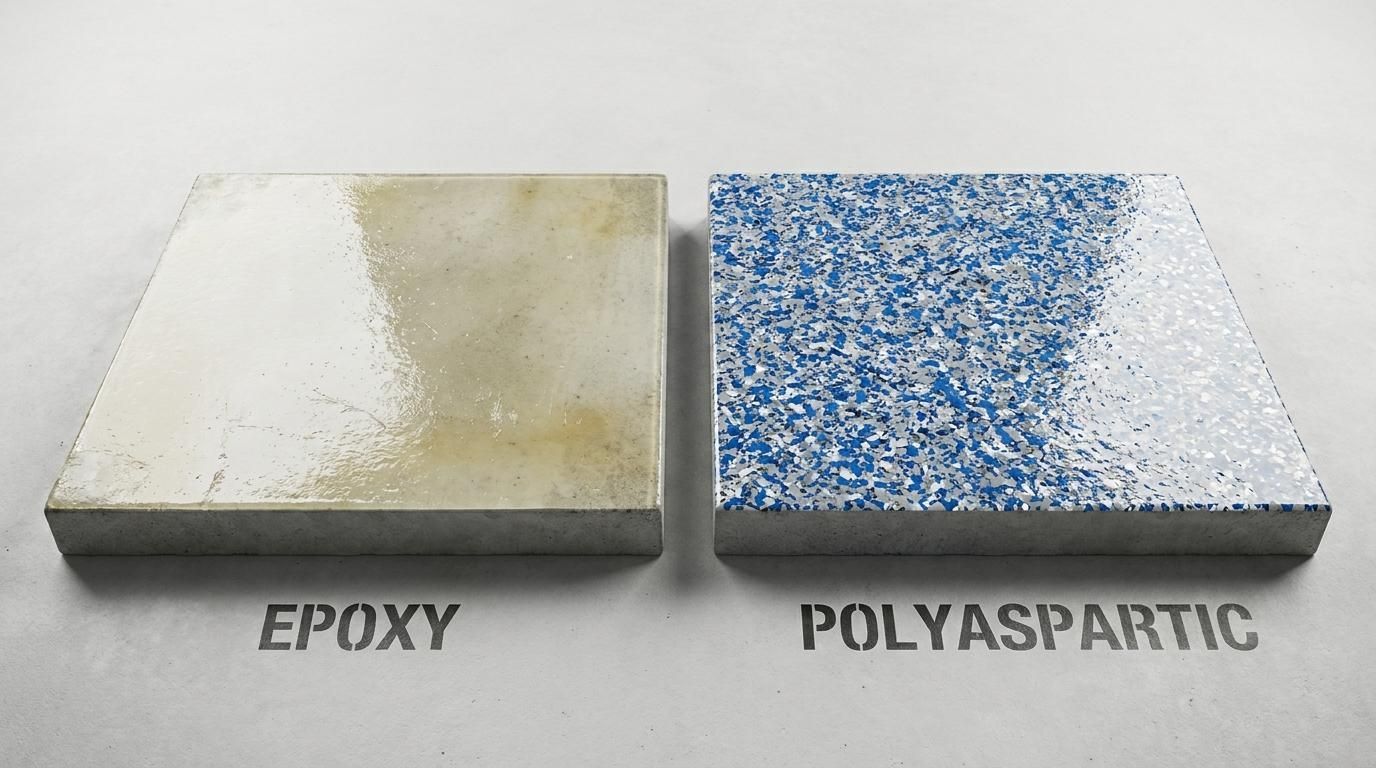
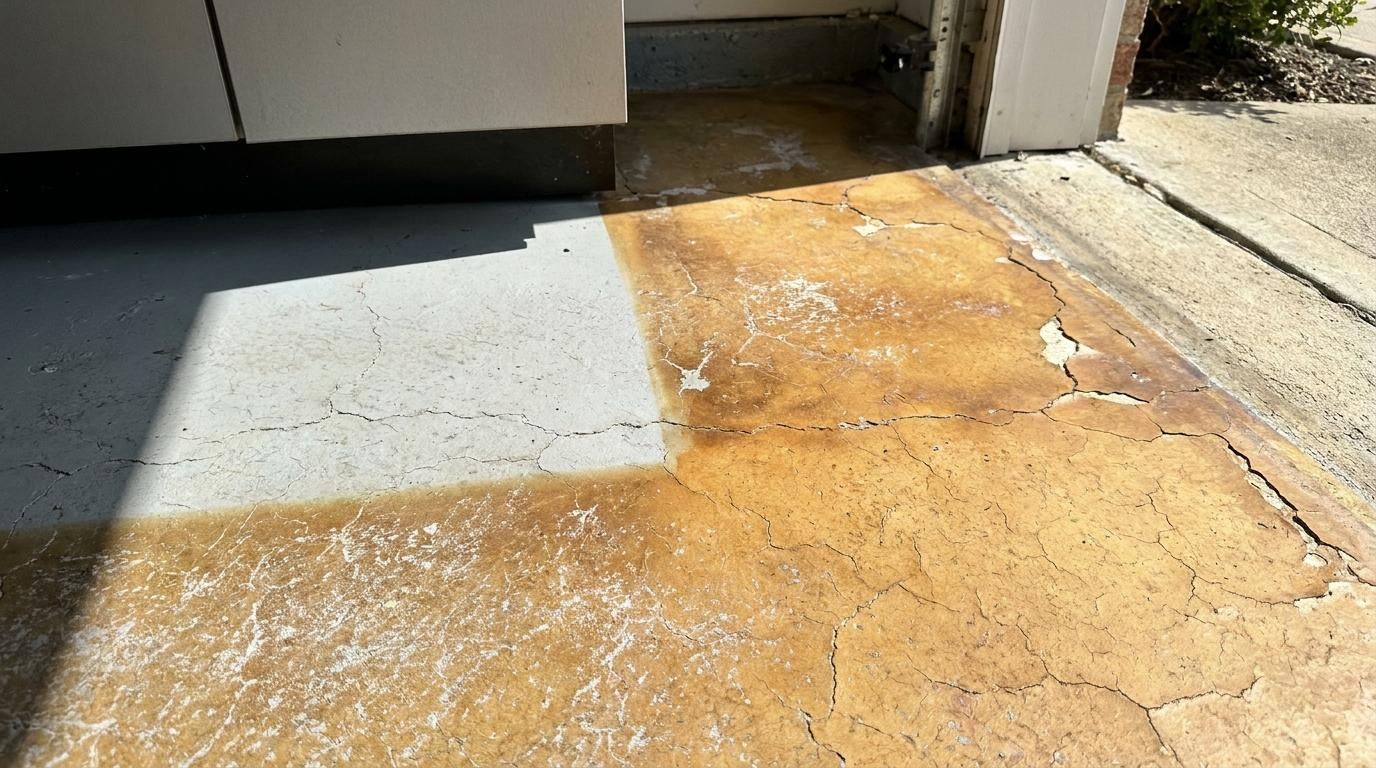
Epoxy in Arizona commonly needs replacement within two to three years due to UV yellowing and hot tire pickup. A polyaspartic system backed by a 15-year warranty eliminates that repeat expense. Over a decade, the polyaspartic investment typically costs less than two epoxy installations.

Fast Cure Time Demands Professional Application

Polyaspartic's biggest strength in Arizona is also its biggest challenge during installation. The coating cures in 5 to 6 hours at Phoenix temperatures, which means the installer has a narrow window to roll the material, broadcast flake or aggregate, and apply the topcoat before the base starts setting. Concrete coating contractors train specifically for this timing. The difference between a seamless, long-lasting floor and one with visible lap marks often comes down to minutes.

What Happens When Timing Slips

If the base coat begins to gel before the flake is fully broadcast, you'll get bare spots or uneven texture that can't be fixed without grinding the floor down and starting over. This isn't a forgiving material for slow or inexperienced applicators. In Phoenix's summer heat, the cure time accelerates further, shrinking the work window to as little as 30 minutes per section.


The trade-off is clear: you get a floor that's ready for vehicle traffic the same day, but only if the crew knows how to work at that pace without cutting corners on prep or coverage.

DIY Is Effectively Impossible

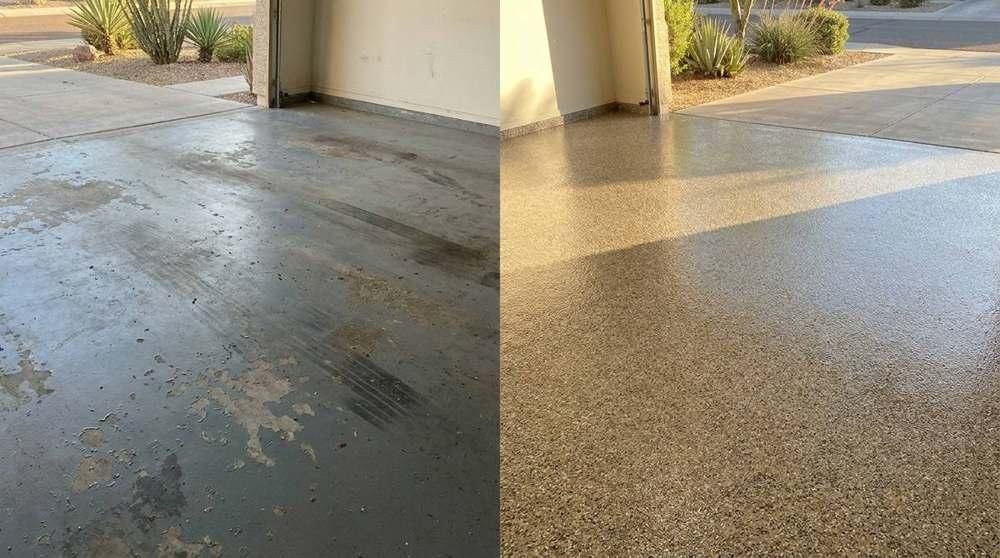
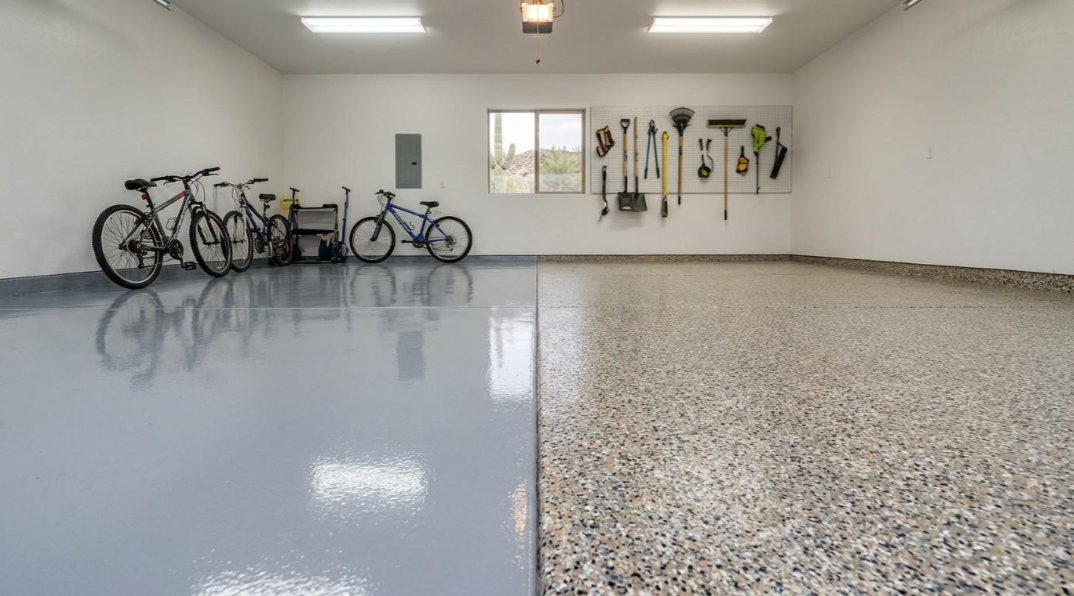
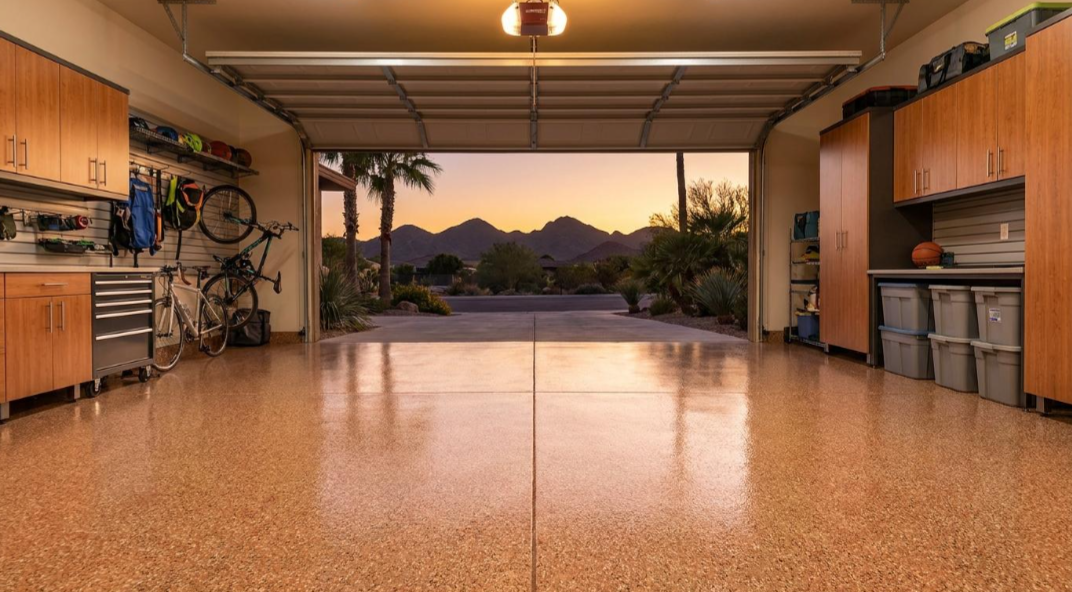
Bright garage with bicycles on the left and a smooth concrete floor showing a speckled finish on the right.

You won't find professional-grade polyaspartic coatings at Home Depot or Lowe's. The formulations used by professional coatings contractors in Phoenix are sold through commercial distributors, not retail channels. A few consumer-grade polyaspartic kits exist online, but they use diluted formulations with lower solids content that don't match professional results.


This matters because the DIY path that works reasonably well with epoxy (buy a kit, acid-etch, roll it on over a weekend) simply doesn't translate to polyaspartic. The fast cure window, the need for diamond grinding equipment, and the material's sensitivity to application thickness all require professional tools and training.


For homeowners with a tight budget who want to coat a garage floor themselves, epoxy kits remain an option. Just understand that in Arizona's climate, a DIY epoxy floor is likely a two- to three-year solution. Quartz floor coatings and other polyaspartic systems are longer-term investments that require a professional installer.

Frequently Asked Questions

Do polyaspartic coatings scratch easily?

Polyaspartic coatings are highly scratch-resistant but not scratch-proof. Heavy furniture dragged across the surface, or sharp metal tools dropped point-first, can leave marks. Floor Shield Phoenix's polyaspartic systems are rated 4x harder than standard epoxy, so normal garage use, including vehicle traffic and tool carts, won't cause visible scratching.

Are polyaspartic fumes stronger than epoxy during installation?

Polyaspartic coatings have a mild odor during application that dissipates within hours. Standard epoxy often produces stronger fumes that linger for 24 to 72 hours while curing. Because polyaspartic cures in 5 to 6 hours, the total fume exposure time is significantly shorter than with epoxy systems.

Can polyaspartic coatings be applied in Arizona's extreme summer heat?

Professional installers apply polyaspartic coatings year-round in Phoenix, including during summer months when temperatures exceed 110°F. The curing time shortens with heat, which requires faster application but doesn't affect the final result when the crew is experienced. Early morning starts help manage the accelerated cure window.

Weigh the Trade-Offs Before You Choose

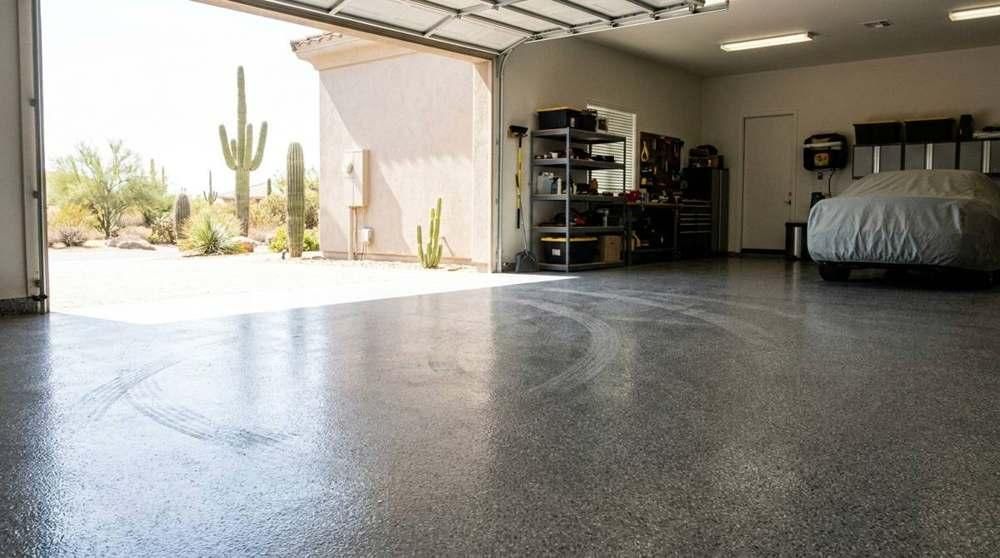
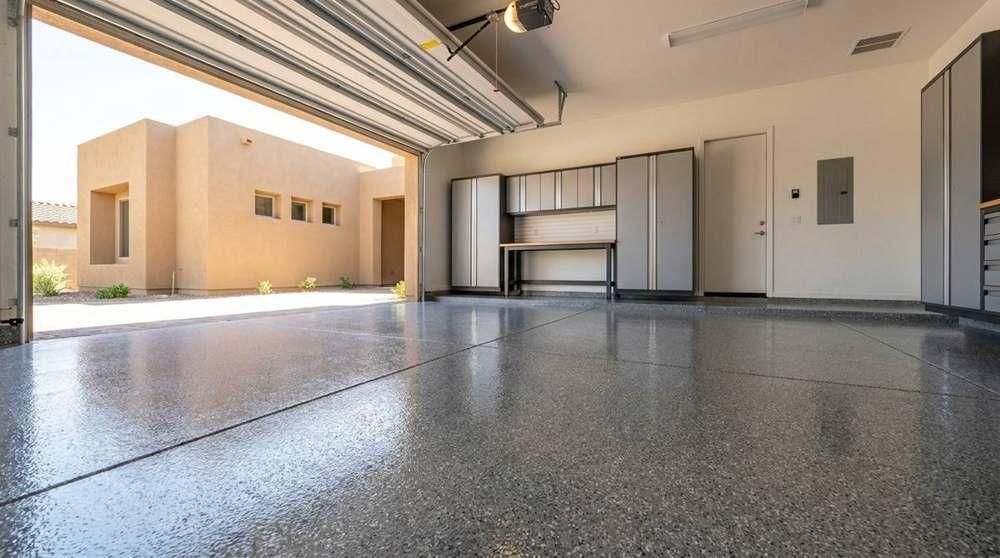
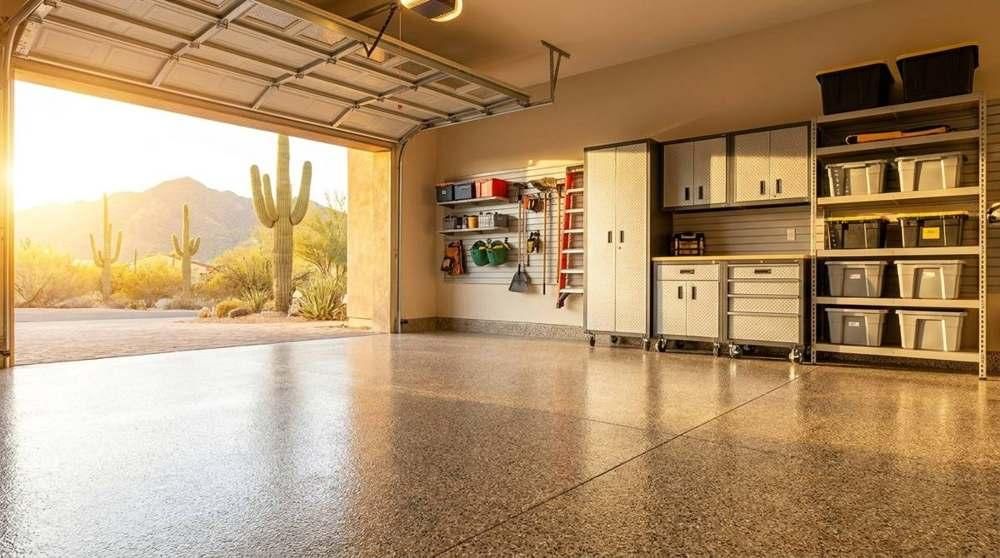
Open garage with polished floor, built-in cabinets, and desert mountains at sunset beyond the open door

Polyaspartic isn't perfect, but for most Arizona property owners it's the right system for the climate. Knowing the disadvantages helps you set realistic expectations and choose an installer who can deliver results despite the application challenges. Floor Shield Phoenix has the experience and equipment to install polyaspartic systems correctly the first time.

 Contact Floor Shield Phoenix or call (602) 890-3194 for a free assessment and an honest recommendation on which coating system fits your property and budget.

Recent Posts

Cracked concrete floor with a large broken patch and water puddles in a garage or driveway
By Corey Parker April 21, 2026
Epoxy garage floors fail fast in Arizona. Learn why yellowing, peeling, and hot tire pickup happen, and which coating lasts in our desert heat.
Worker smoothing concrete floor in an open garage, with tools and equipment nearby.
By Corey Parker April 10, 2026
Learn about Floor Shield Phoenix polyaspartic coating costs, installation steps, and system options. Offering one-day installations with a 15-year warranty.
By Corey Parker April 1, 2026
See how we installed a polyaspartic garage floor coating in Phoenix, AZ for a 1,750 sq ft shop. UV-stable and durable, the floor returned to use in 5–6 hours.
By Corey Parker January 5, 2026
Upgrade your property with professional Phoenix concrete coatings. Our polyaspartic system is significantly stronger than epoxy and perfect for the Arizona sun.