A restaurant kitchen floor has to do more than look clean. It has to meet health code sanitation rules, handle constant water and grease exposure, and hold up to heavy foot traffic without becoming a slip hazard. Before choosing a coating system for a Phoenix commercial kitchen, it helps to understand what the floor itself is required to do and what a documented coating system typically includes.
What Arizona Food Code Requires of Kitchen Floors
The Arizona Food Code sets the baseline for indoor floors in food-operation areas. Floors in these spaces are required to be:
- Smooth, durable, and easily cleanable
- Nonabsorbent in areas subject to moisture, including food preparation, walk-in refrigeration, and warewashing
- Graded to drain where water-flush cleaning methods are used, with drains in place
- Coved and sealed at floor-to-wall junctures, closed to no more than 1 mm where floors are not water-flushed
Beyond the food code, the Occupational Safety and Health Administration requires walking-working surfaces to be kept clean, orderly, sanitary, and dry to the extent feasible, with spills and hazards corrected or guarded. These two standards together frame why kitchen floor sanitation and traction are treated as connected issues, not separate ones.
Site Conditions a Coating Alone Can't Fix
A common decision mistake is specifying a seamless coating without first confirming that the existing drains, floor slope, cove base, cracks, and cleaning methods actually meet the needs of the kitchen. A floor finish can improve cleanability and traction, but it cannot correct a drainage problem or a missing cove base on its own. Confirming these site conditions before a coating project helps set accurate expectations for scope and avoids treating a finish upgrade as a substitute for addressing structural drainage or wall-junction issues.
What a Commercial Kitchen Coating System Typically Includes
Floor Shield Phoenix's documented build for commercial kitchen floor coatings addresses both the surface finish and the concrete underneath it. The system includes:
- Diamond grinding to prepare the concrete surface
- Joint and crack repair before coating application
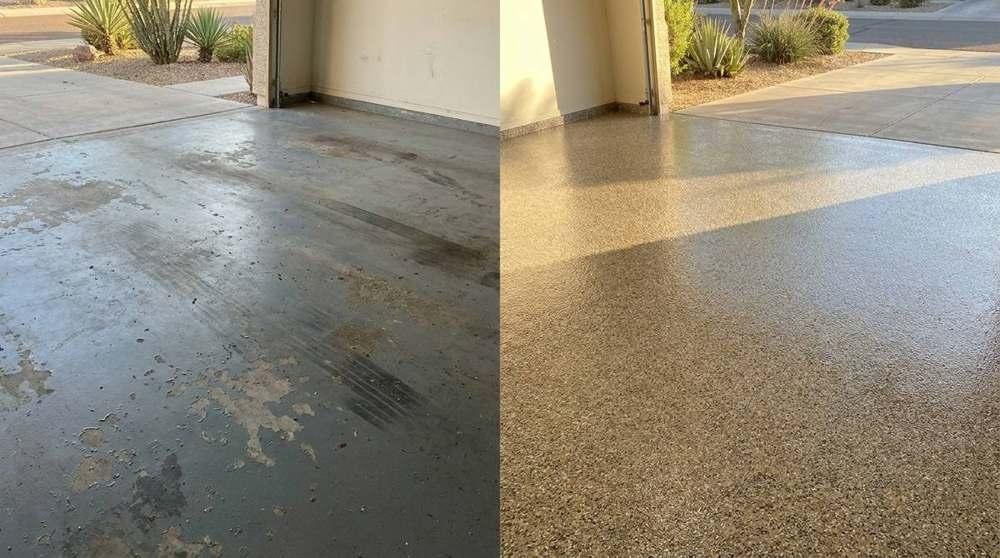
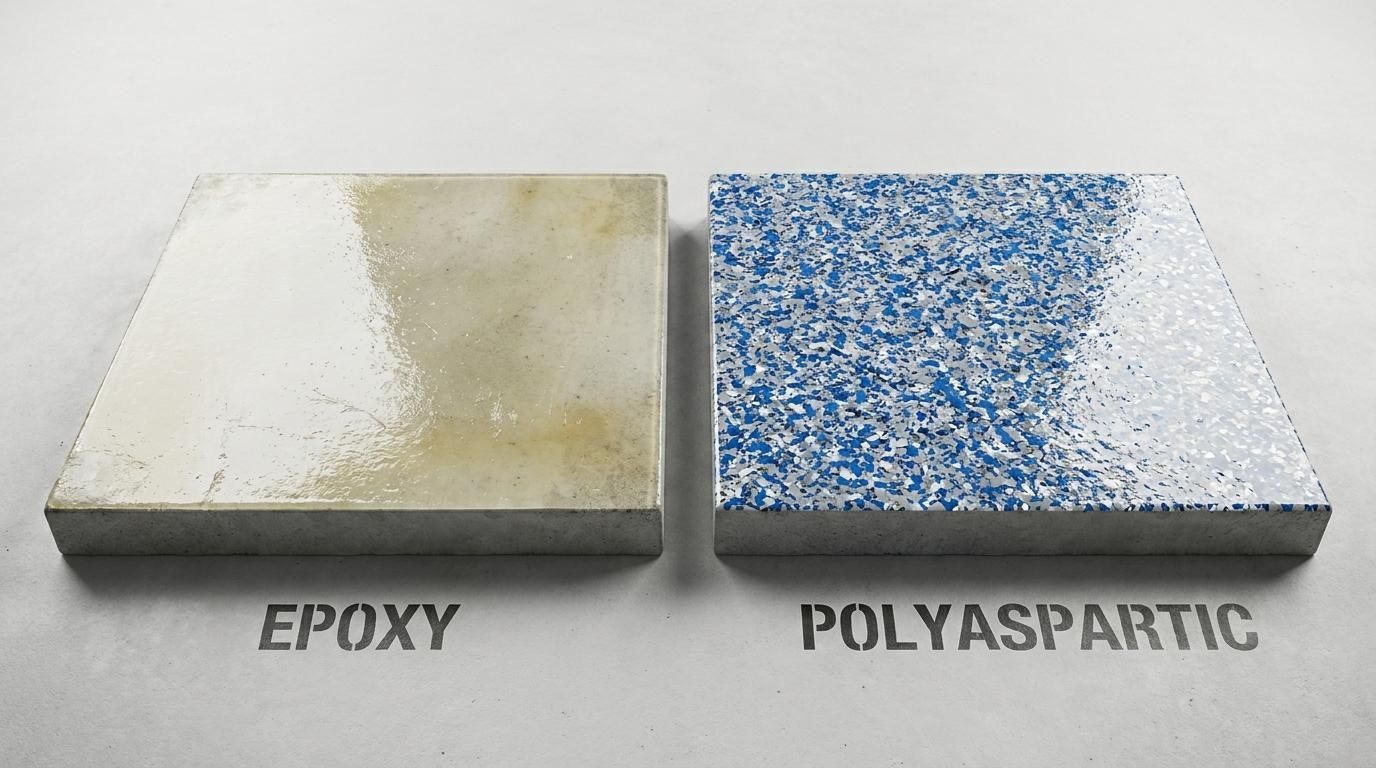
- A polyaspartic base coat for a seamless, non-porous surface
- Broadcast quartz for traction in wet areas
- A grease-resistant clear topcoat
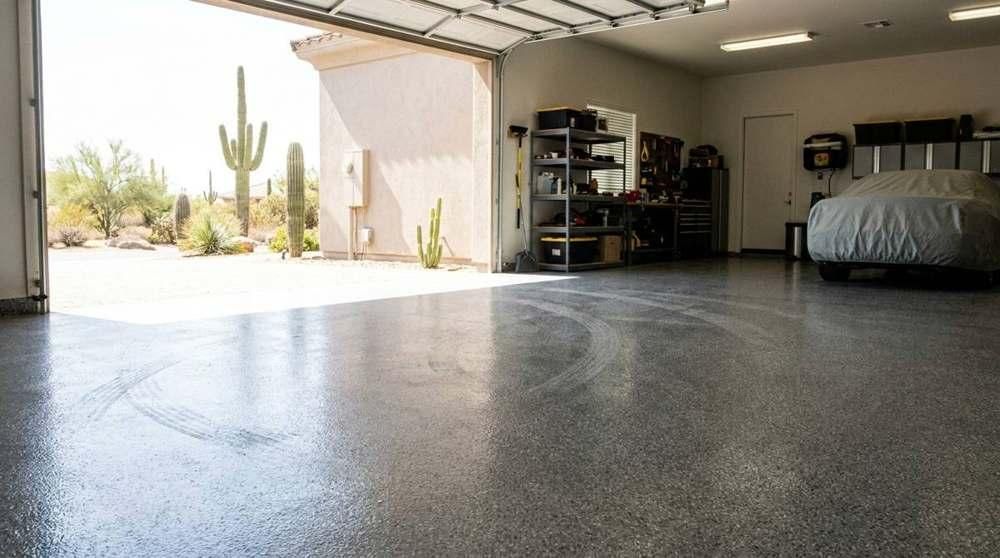
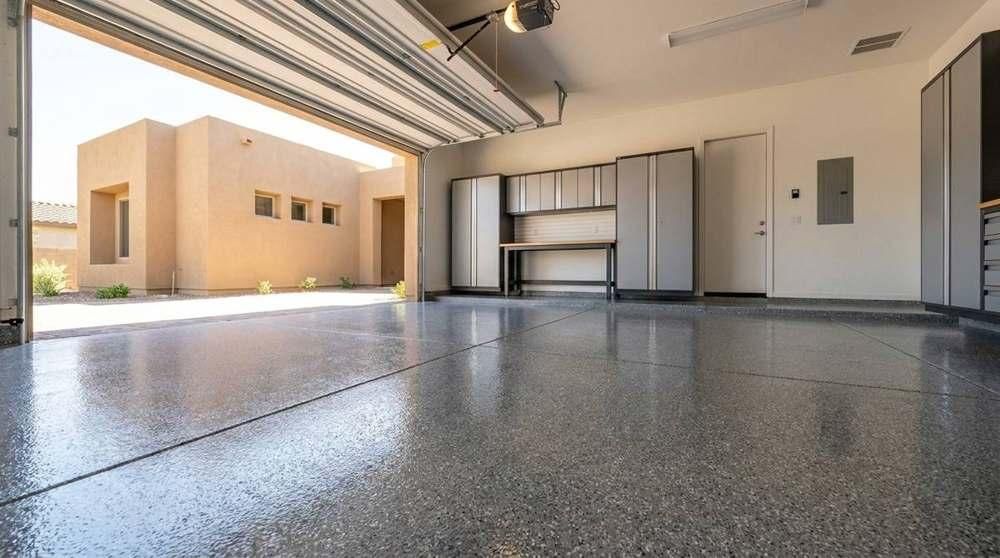
The finished surface is seamless and non-porous, with a slip-resistant texture built to resist oils, cleaning agents, acidic spills, heat, cold, impact, and abrasion, the conditions a working restaurant kitchen produces daily.
Matching Traction to a Wet, Greasy Kitchen Environment
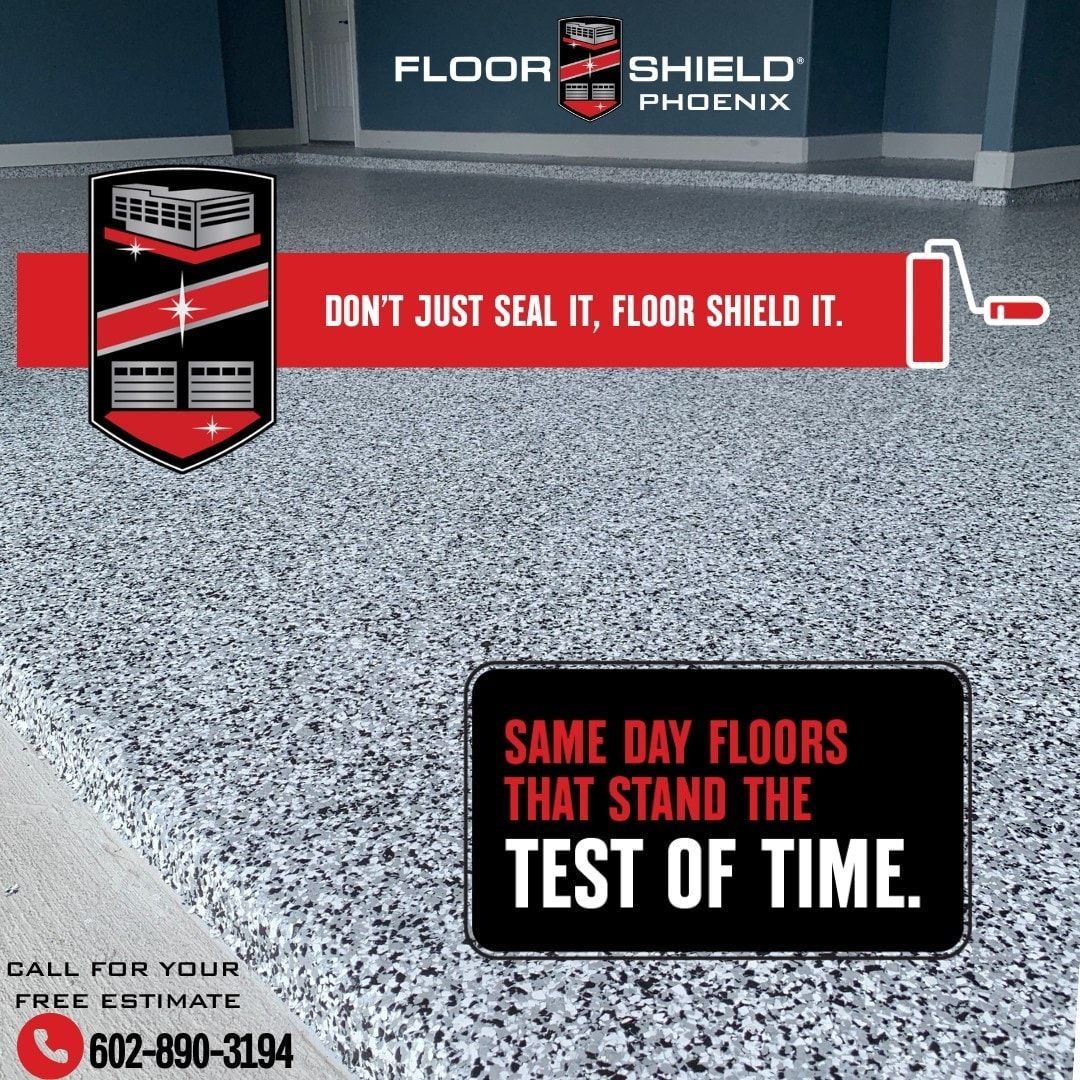
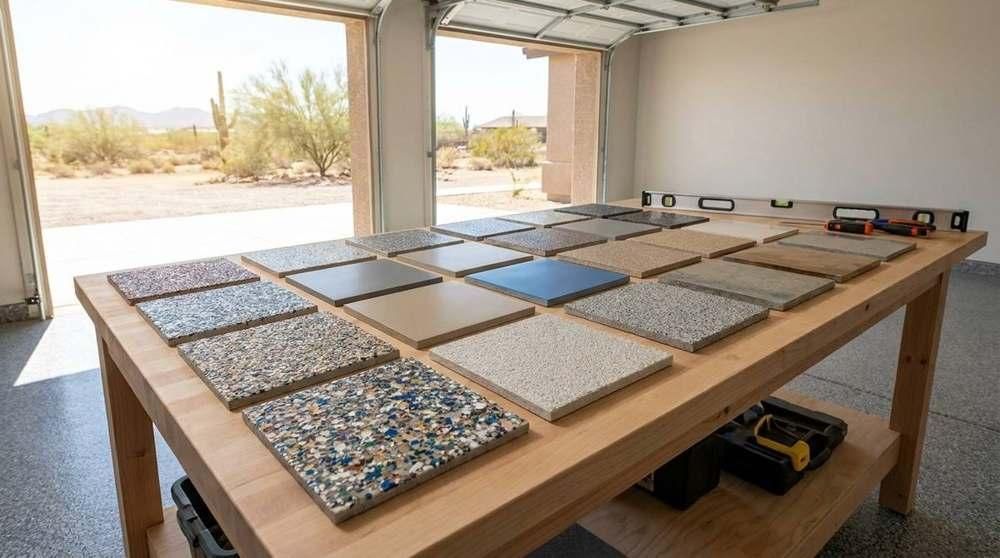
Not every area of a kitchen needs the same texture. Floor Shield Phoenix's quartz floor coating system, built from a polyaspartic base coat with embedded quartz granules and a protective topcoat, is the company's maximum-traction option for wet, high-traffic areas like prep lines and warewashing stations. A smoother finish may suit lower-moisture areas, but wet zones generally call for the added grip quartz provides. Texture should still be practical to clean under the restaurant's actual washdown routine, which is worth discussing before a system is finalized. For more on how coating texture affects slip resistance, see Floor Shield Phoenix's guide to coating traction.
Installation Timing and Returning to Service
Most documented kitchen installations are completed in one day, with commercial floors described as ready for use within hours rather than days. For a restaurant, that timing still needs to be coordinated around prep schedules, kitchen access, and curing time before the space returns to full service, but it allows downtime to be planned in a single block rather than spread across multiple days.
Frequently Asked Questions
Does a commercial kitchen coating solve drainage or floor-slope problems?
No. A coating improves the surface finish, but existing drains, slope, and cove conditions need to be confirmed separately before a project begins.
When is a quartz broadcast a better fit than a smoother finish in a restaurant kitchen?
Quartz broadcast is the documented maximum-traction option and is typically suited to wet, high-traffic areas such as prep and warewashing zones, while smoother finishes may fit lower-moisture areas.
Get a Quote for Your Phoenix-Area Kitchen
Floor Shield Phoenix provides commercial kitchen floor coatings backed by a 15-year manufacturer warranty, and the company is licensed, bonded, and insured. Service is available throughout Phoenix, Gilbert, Chandler, Tempe, Mesa, and the surrounding East Valley. To discuss your restaurant's kitchen floor, call (602) 890-3194.