What Is Hot Tire Pickup? Why It Matters for Phoenix Garages
Hot tire pickup is a coating failure where heated tires lift, peel, or leave permanent marks on a garage floor coating as they cool and contract after parking. Tires returning from Arizona asphalt in summer can reach 150–180°F, which softens epoxy-based coatings enough for the rubber to bond to the surface and pull it away. Floor Shield Phoenix installs polyaspartic coatings specifically because they resist these temperatures without softening.
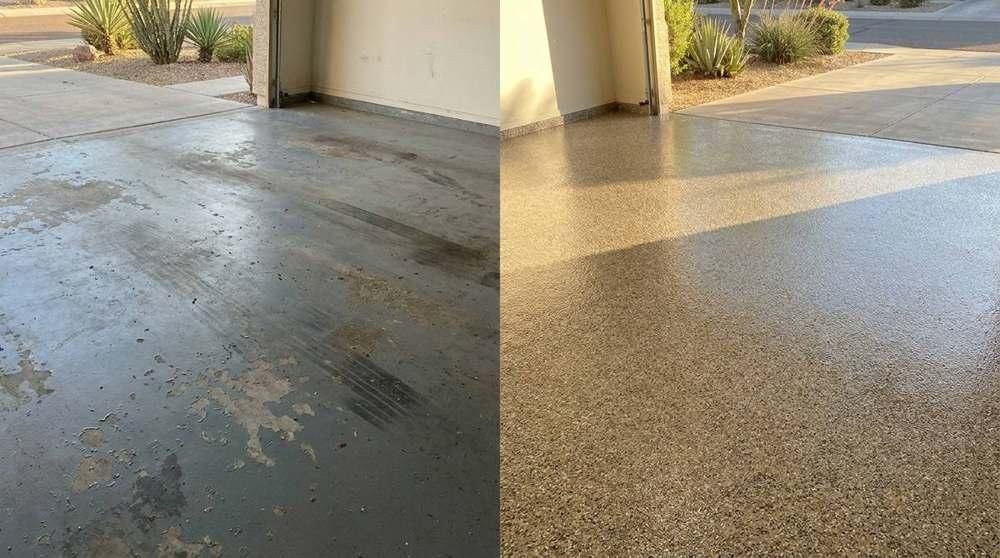
A Gilbert homeowner parked in their freshly coated garage after a July grocery run. Two hours later, the tires had pulled quarter-sized pieces of epoxy off the concrete. The coating was three months old. The failure wasn't the installer's workmanship. It was the coating chemistry reacting to Arizona's temperatures.
How Hot Tire Pickup Happens
Hot tire pickup, one of the most common problems with epoxy garage floors , follows a predictable sequence.
The Four-Step Sequence
First, the tires absorb heat from road surfaces that exceed 160°F during Arizona summers. Second, the heated rubber parks on the garage floor coating. Third, the coating softens under the sustained contact heat. Fourth, as the tire cools and contracts, the rubber's grip pulls the softened coating away from the concrete.
Sustained Contact and Cumulative Damage
The process isn't instantaneous. The tire sits in contact with the coating for hours while the garage temperature fluctuates. Coatings with low heat thresholds soften slowly, and each parking cycle weakens the bond a little more. The visible damage shows up as tire-shaped peeling, usually after a few weeks of daily parking.
The Role of Tire Compounds
Plasticizers in rubber interact chemically with certain coatings, accelerating the softening. This chemical reaction combined with physical heat creates a double attack that low-grade coatings can't withstand.
Why Phoenix Garages Are Especially Vulnerable
Phoenix's road surface temperatures are among the highest in the country. Asphalt in direct sun regularly exceeds 160°F from May through September, and tire temperatures track closely with road temperature. A 10-minute drive home from the store is enough to heat tires well above 150°F.
Garage floor temperatures add to the problem. Even in shaded garages, the concrete slab retains heat from the surrounding environment. A coating that might survive a warm tire in Michigan can't survive the same tire in Gilbert or Mesa where the slab itself starts at 100°F+ before the hot tire ever touches it.
Every Phoenix homeowner who drives and parks in their garage is testing their floor coating against hot tire pickup daily for at least five months of the year. Coatings that can't handle that test fail visibly and permanently.
Coating Types and Hot Tire Resistance
Not all garage floor coatings respond to hot tires the same way. The difference comes down to the coating's heat tolerance and chemical composition.
Epoxy Coatings
Standard epoxy coatings soften at temperatures that Phoenix tires routinely reach. DIY epoxy kits are the most vulnerable because they use thinner applications of less heat-resistant formulations. Even professional-grade epoxy can develop hot tire pickup in sustained Arizona heat. Floor Shield Phoenix does not install epoxy coatings because of this limitation.
Polyaspartic Coatings
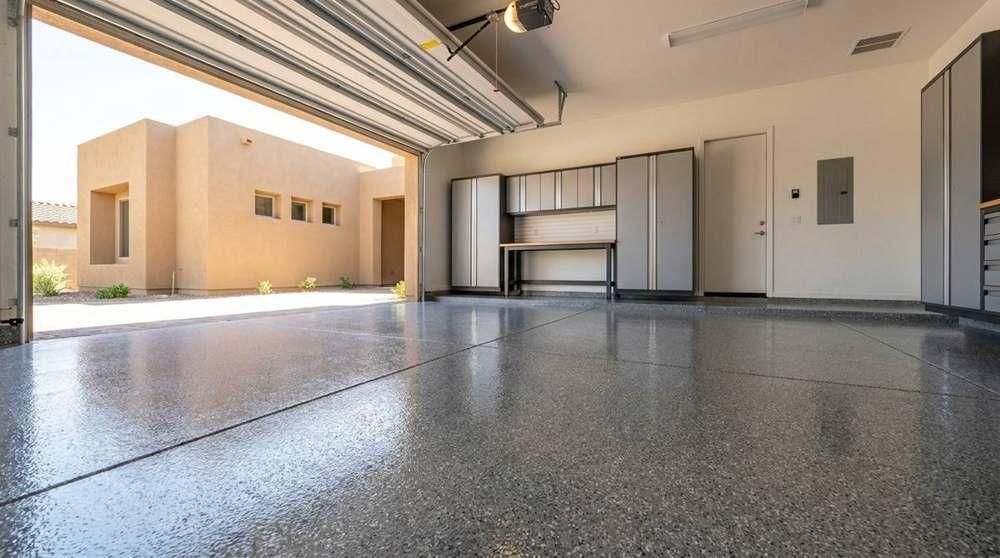
Polyaspartic coatings maintain their hardness and adhesion at temperatures well above what Arizona tires produce. The flake floor coating systems Floor Shield Phoenix installs are polyaspartic-based, which means hot tire pickup is engineered out of the product. The coating doesn't soften, so the tire has nothing to grab onto when it cools.
Frequently Asked Questions
Can hot tire pickup be repaired?
Spot repairs are possible, but they rarely match the original surface in color or texture. The better approach is prevention. If hot tire pickup has already damaged your floor, a full recoat with a polyaspartic system eliminates the problem permanently instead of patching individual spots that will keep failing.
Do all garage floor coatings have hot tire pickup issues?
No. Hot tire pickup primarily affects epoxy-based coatings and acrylic sealers. Polyaspartic coatings resist it because they don't soften at the temperatures tires reach. Floor Shield Phoenix's polyaspartic systems are backed by a 15-year warranty that covers adhesion failure, including damage that epoxy warranties typically exclude.
Does parking in the shade prevent hot tire pickup?
Shade reduces road surface temperature but doesn't eliminate tire heat from driving. In Arizona's summer, even a short drive heats tires above 150°F. The only reliable prevention is choosing a coating chemistry that doesn't soften at those temperatures, not changing parking habits.
Protect Your Garage Floor From Hot Tires
Hot tire pickup is a chemistry problem. No amount of cleaning or careful parking prevents it if the coating softens under heat. In Phoenix, where tires routinely exceed 150°F for five months of the year, the only reliable solution is a coating that doesn't soften at those temperatures. Polyaspartic coatings meet that threshold. Epoxy doesn't.
To protect your garage floor from hot tire damage, contact Floor Shield Phoenix at (602) 890-3194 for a free estimate on a polyaspartic system built for Arizona conditions.