Are Concrete Coatings Worth It? What Phoenix Homeowners Need to Know

Corey Parker • May 6, 2026

Share this article

 Concrete coatings are worth the investment for most Phoenix homeowners. A professionally installed polyaspartic system costs $3–$6 per square foot and protects garage floors, pool decks, and patios from UV damage, chemical stains, and hot tire pickup for 15 years or more. Floor Shield Phoenix installs UV-stable polyaspartic coatings across the East Valley, with every job backed by a 15-year warranty and same-day turnaround.

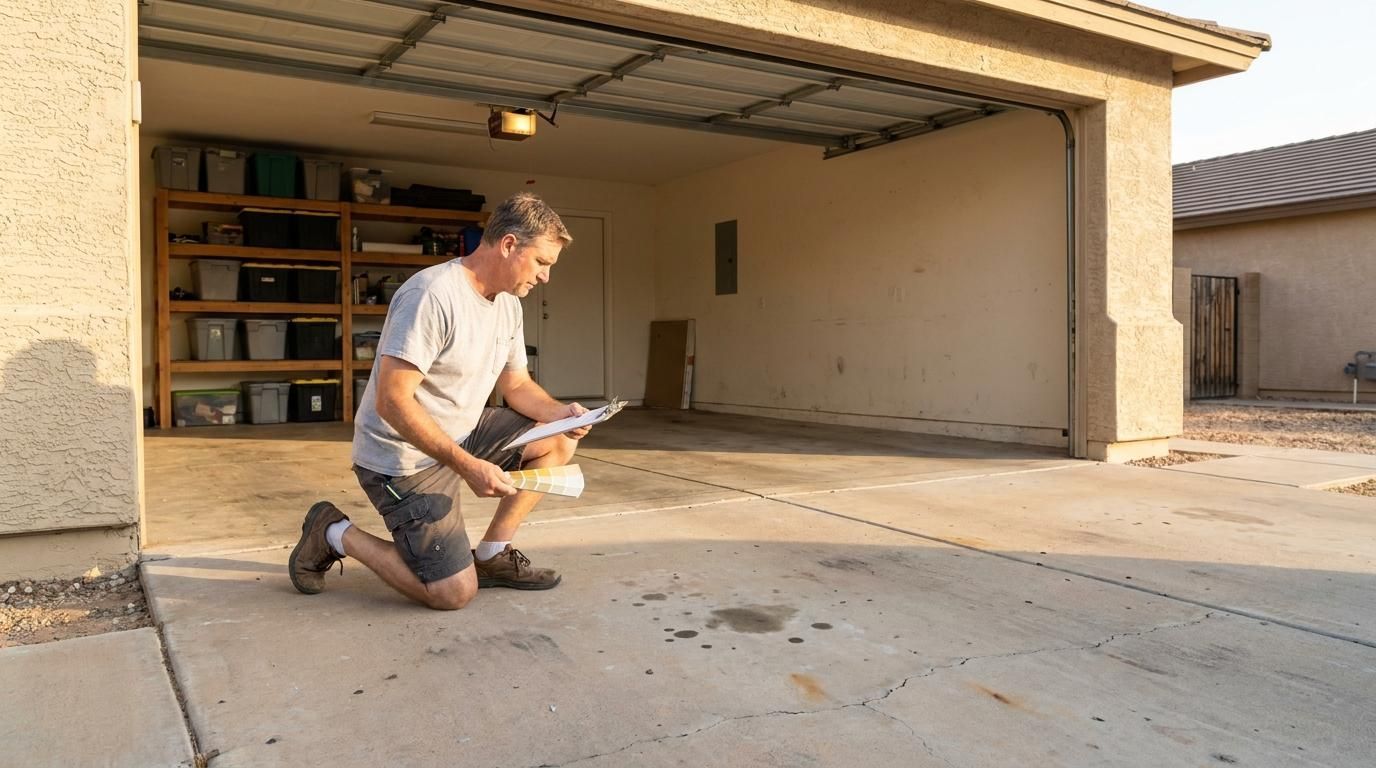
Bare concrete in Arizona takes real punishment. Oil stains set permanently, UV exposure creates surface dust that tracks into your house, and summer heat accelerates cracking in unprotected slabs. The upside: a single coating solves all three problems at once and eliminates years of patching and resealing.

What a Concrete Coating Actually Does for Your Floor

A concrete coating is a chemical bond applied directly to the slab surface. It seals the pores that make bare concrete vulnerable to stains, moisture, and dusting.

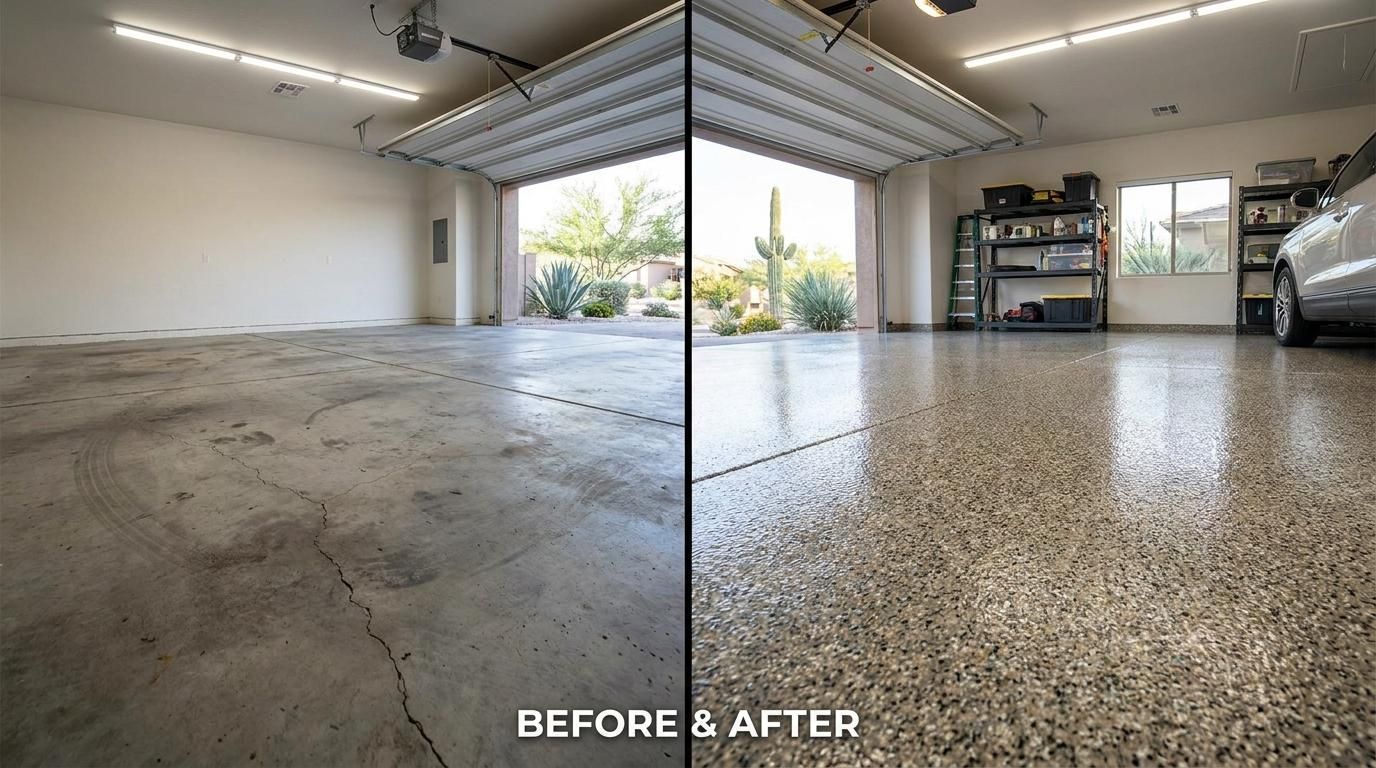
In Phoenix, that seal matters more than in most markets. Bare concrete absorbs oil dripping from vehicles, and once oil penetrates the pores, it doesn't come out. Dust storms push fine particulate into unsealed surfaces, creating a layer of grit that's impossible to fully sweep clean. A polyaspartic coating eliminates both problems by creating a seamless, non-porous barrier across the entire floor.

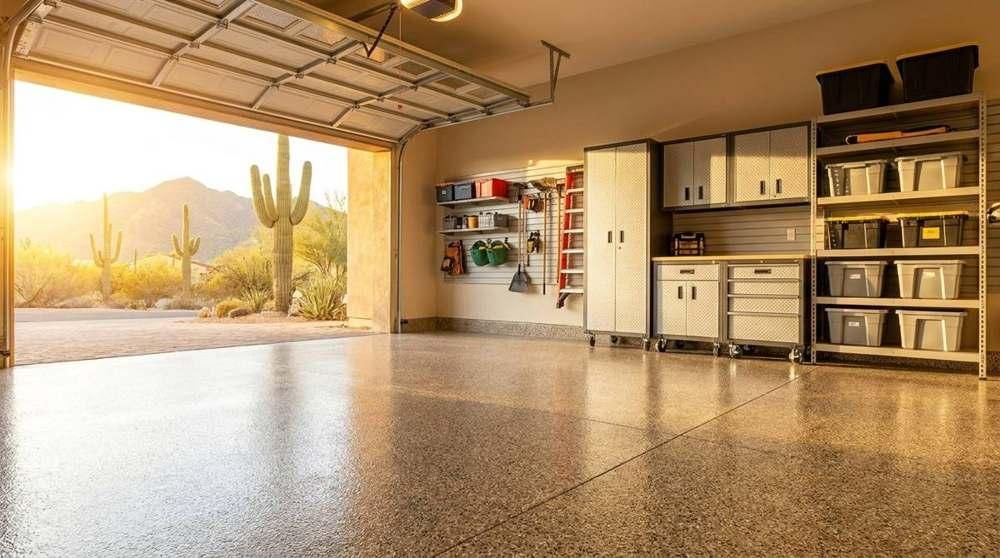
Beyond protection, coatings add slip resistance when wet, reflect light that brightens dark garages, and resist chemical spills from household cleaners, pool chemicals, and automotive fluids. Our flake coating system is the most popular option because the textured vinyl flakes add traction and visual depth to the surface.

Cost vs. Value Over 15 Years

The upfront cost of a professional polyaspartic coating for a standard two-car garage in the Phoenix metro area typically runs $1,800–$4,500, depending on concrete condition and finish type.

What Bare Concrete Costs Over Time

Uncoated garage floors need annual sealing ($200–$400 per application), periodic crack repair ($150–$500 per fix), and stain removal that rarely works completely. Over 15 years, maintenance on bare concrete can exceed $3,000–$6,000 without ever improving the floor's appearance or function.

Why Epoxy Costs More Long-Term

Epoxy runs lower upfront at $2–$4 per square foot, but its 2–5 year lifespan in Arizona's UV and heat means two to three recoats over the same 15-year window. Floor Shield Phoenix does not install epoxy because the recoat cycle erases any initial savings. Polyaspartic's one-time installation and 15-year warranty make it the lower total cost over the life of the floor.

When Coatings Pay for Themselves in Arizona

Arizona's climate makes the payback window shorter than in most states because the damage coatings prevent happens faster here.

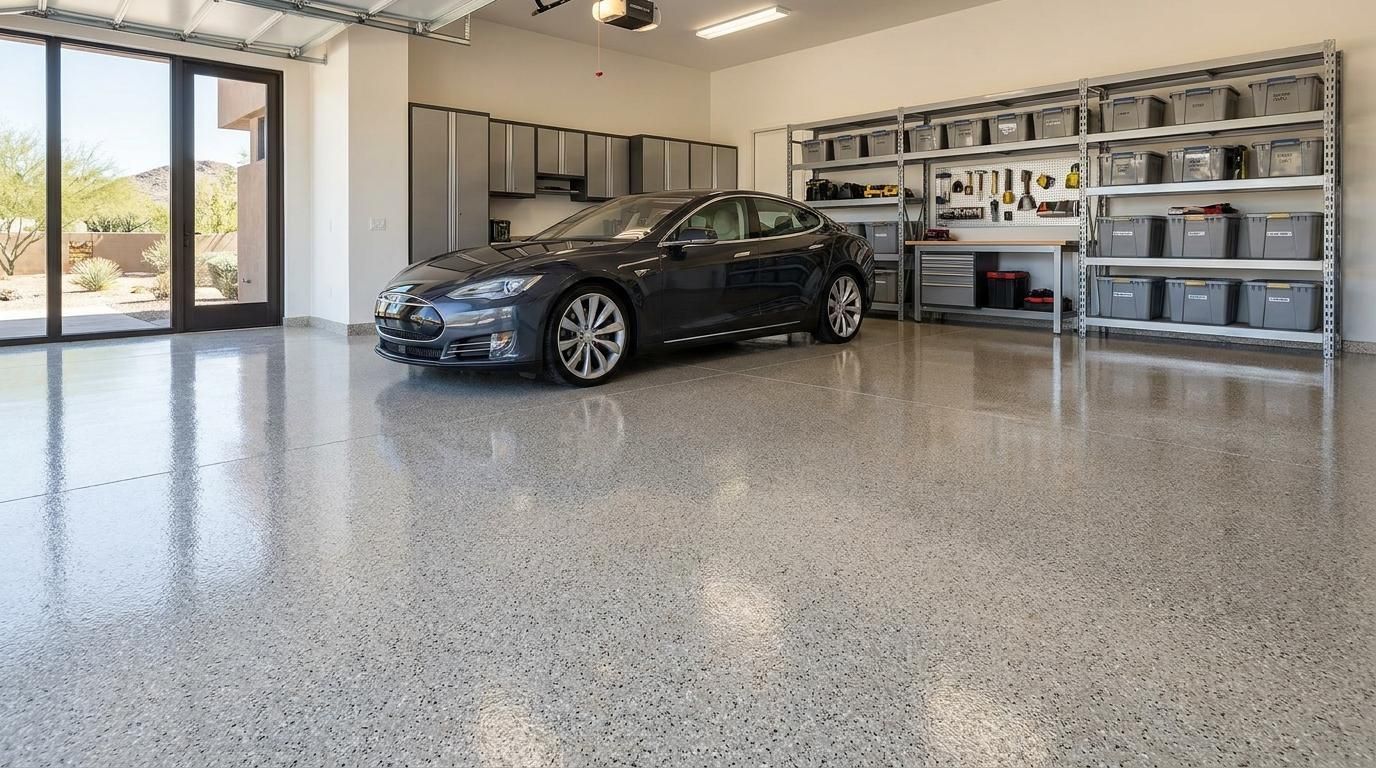
Garage floors see the fastest return. Hot tire pickup destroys bare concrete and epoxy surfaces within one or two Arizona summers. A polyaspartic coating eliminates that damage entirely. For homeowners planning to sell, a coated garage floor signals a well-maintained home to buyers who've seen what unprotected concrete looks like after a few years of Valley heat.

 Coated pool decks offer enhanced safety and comfort. Slip-resistant, UV-stable coatings replace scorching, slippery concrete with a surface that stays cooler underfoot and drains safely. Patios follow the same logic: protected surfaces last longer, look better, and require almost no maintenance compared to bare concrete exposed to 299 days of direct sun per year.

Frequently Asked Questions

Do concrete coatings increase home resale value?

A coated garage floor or pool deck signals care and quality to potential buyers. While exact ROI varies, real estate professionals in the Phoenix metro consistently note that finished garage floors make homes show better. The floor itself doesn't appraise separately, but the overall impression of the property improves.

How long before a polyaspartic coating pays for itself?

For most Phoenix homeowners, the break-even point comes within 3–5 years. That's the window where bare concrete maintenance costs, potential epoxy recoats, and stain damage would otherwise accumulate to match or exceed the one-time cost of a polyaspartic system from Floor Shield Phoenix.

Are concrete coatings worth it for a rental property?

Yes, especially in Arizona's rental market. A coated garage floor resists tenant-caused stains, reduces turnover cleaning costs, and holds up to vehicle traffic without showing wear. The 15-year warranty outlasts most lease cycles, so the floor stays protected through multiple tenants.

Make Your Floor Investment Count Long-Term

The question isn't whether your concrete floor will deteriorate in Arizona. It will. The question is whether you'll spend more money maintaining bare concrete over 15 years than you'd spend coating it once. For most Valley homeowners, the math favors a single polyaspartic installation with a 15-year warranty over a cycle of sealing, patching, and recoating inferior products.

To get a specific estimate for your garage, pool deck, or patio, contact Floor Shield Phoenix at (602) 890-3194 .

Recent Posts

Why polyaspartic fits Phoenix garages
By Corey Parker June 29, 2026
See why Phoenix homeowners choose polyaspartic garage floor coatings: UV stability, hot-tire resistance, a 5-6 hour cure, and a 15-year warranty built for Arizona.
What patio coatings need to handle in Phoenix
By Corey Parker June 25, 2026
See the best concrete patio coating options for Phoenix outdoor living. Compare flake, quartz, solid, and clear finishes built to handle Arizona sun, dust, and wear.
What Arizona pool decks need from a coating
By Corey Parker June 21, 2026
Learn what an Arizona pool deck coating needs to handle heat and UV: UV stability, slip resistance, and chemical resistance. See how to choose the right finish.
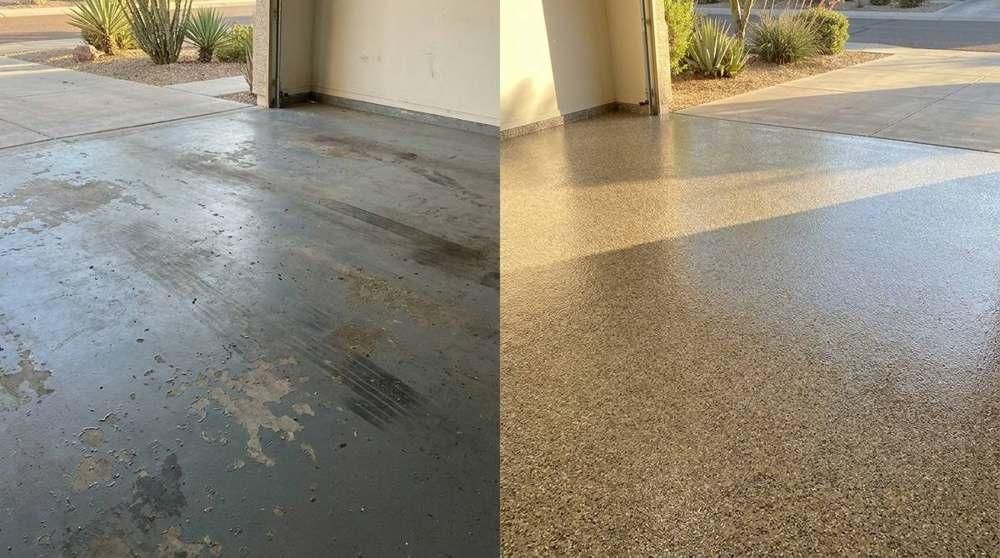
Paint, epoxy, and coating are not the same product
By Corey Parker June 18, 2026
Garage floor paint vs epoxy vs polyaspartic coating in Phoenix. See how each handles heat, UV, and hot tires, and why the coating upgrade pays off in Arizona.
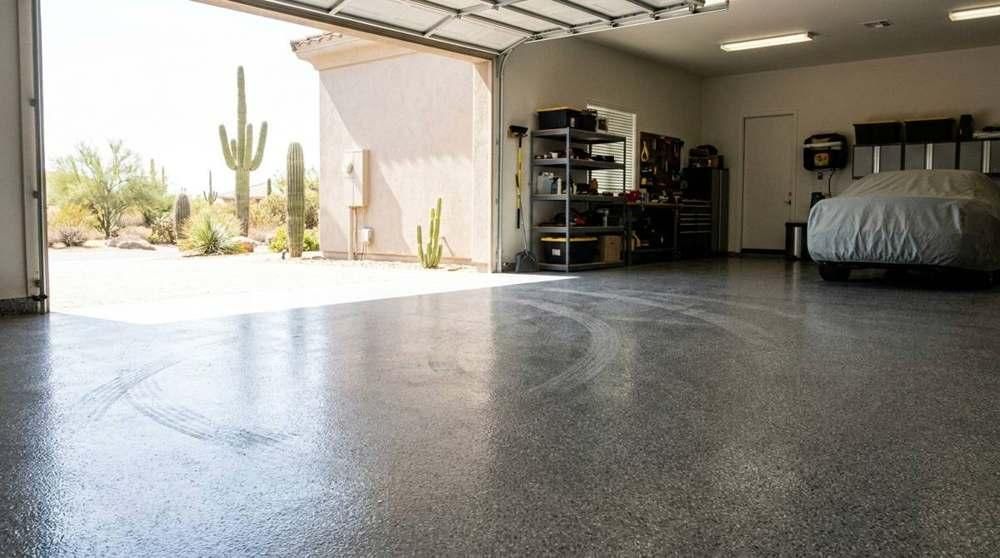
What makes a coating best for Phoenix
By Corey Parker June 15, 2026
Find the best garage floor coating for Phoenix homes. See why polyaspartic beats epoxy on UV, heat, and hot-tire stress, and how to match the finish to your garage.
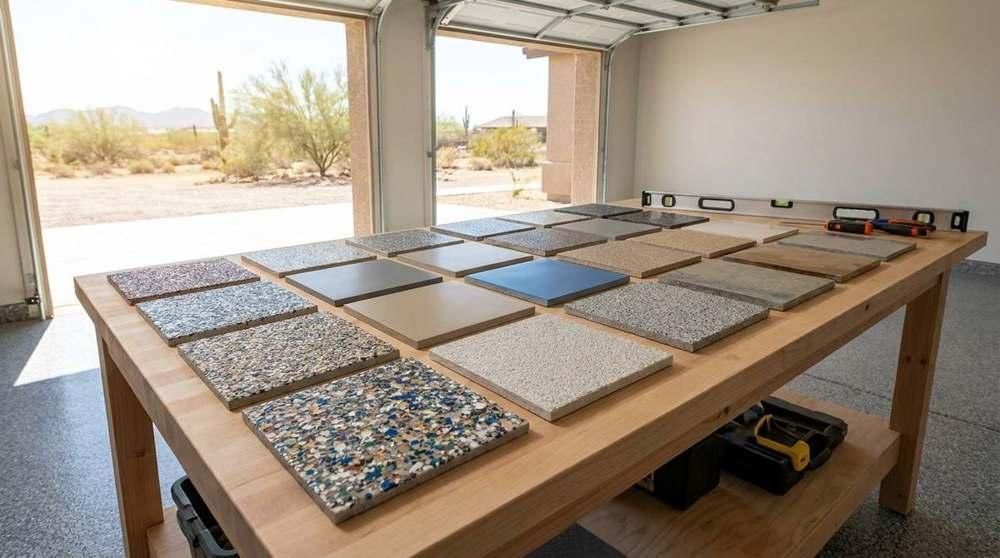
Coating chemistry comes before color
By Corey Parker June 10, 2026
Explore the main types of garage floor coatings for Phoenix homes, from epoxy and polyaspartic to flake, quartz, and clear finishes. Learn which fits desert heat.
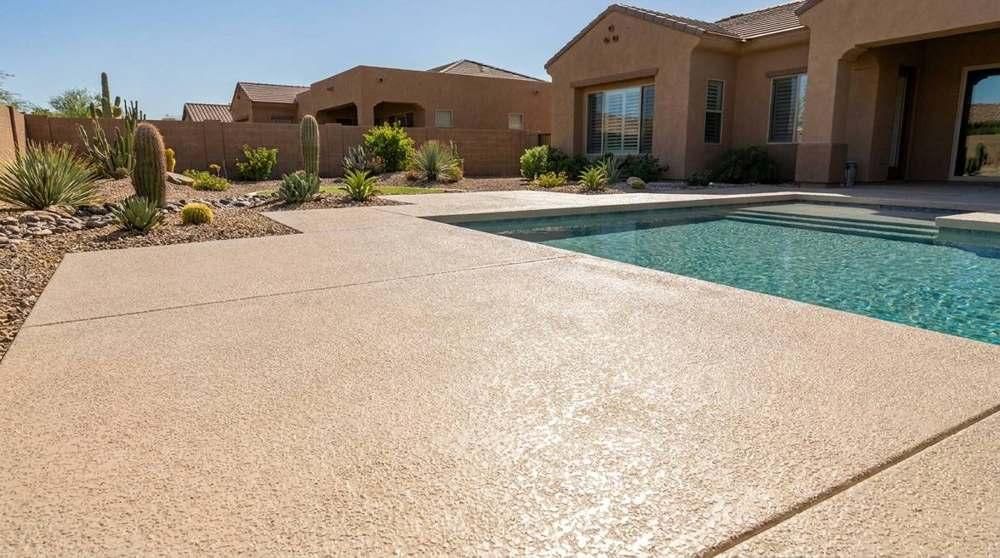
How the main pool deck options compare
By Corey Parker June 6, 2026
Compare Phoenix pool deck resurfacing options, including acrylic overlays, coatings, and replacement. See costs, heat and traction trade-offs, and when to use each.
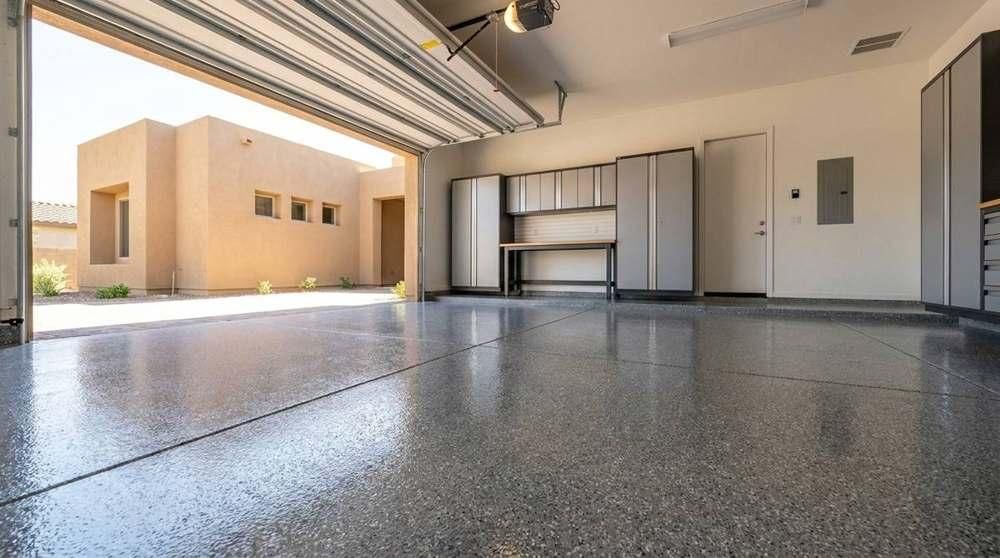
What drives garage floor coating cost in Phoenix
By Corey Parker June 3, 2026
See garage floor coating cost ranges in Phoenix for 2026, including prep, coating type, warranty, and how coatings perform in Arizona’s heat.
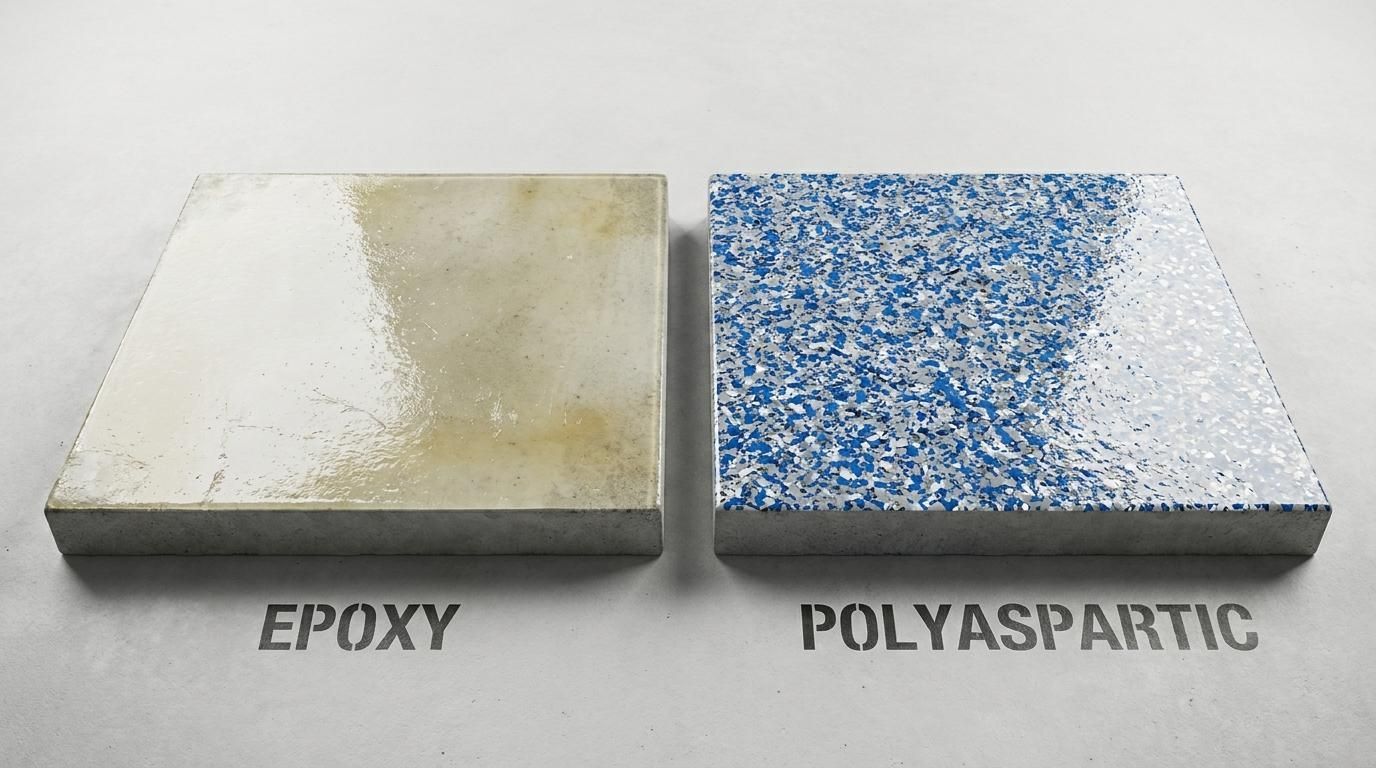
By Corey Parker May 28, 2026
Compare polyaspartic vs. epoxy garage floor coatings for Arizona homes. Weigh their UV resistance, cure times, costs, and heat performance side by side.
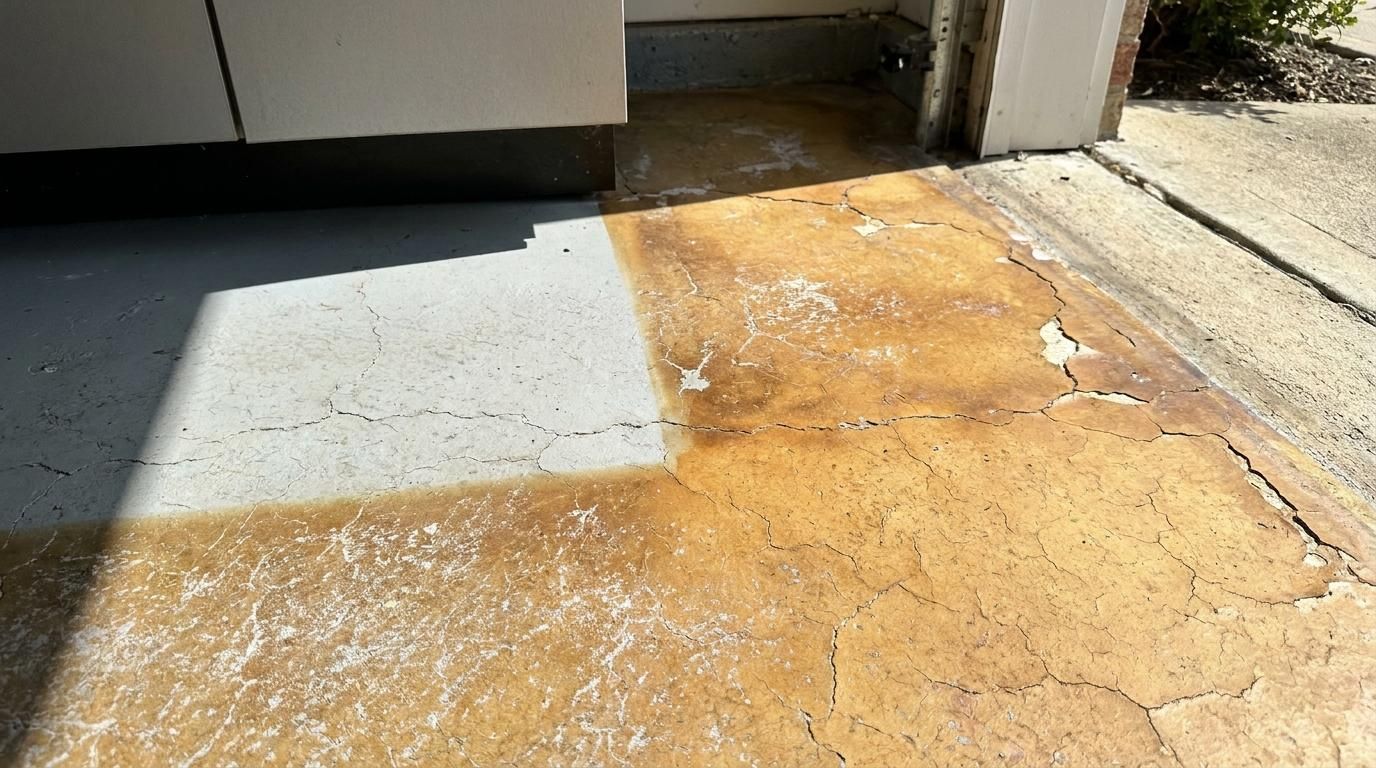
By Corey Parker May 25, 2026
Epoxy garage floors yellow from UV exposure. Learn the chemistry behind epoxy yellowing, why Arizona accelerates it, and which coatings don't turn yellow.
Show More