How Long Do Concrete Coatings Last in Arizona's Extreme Heat?
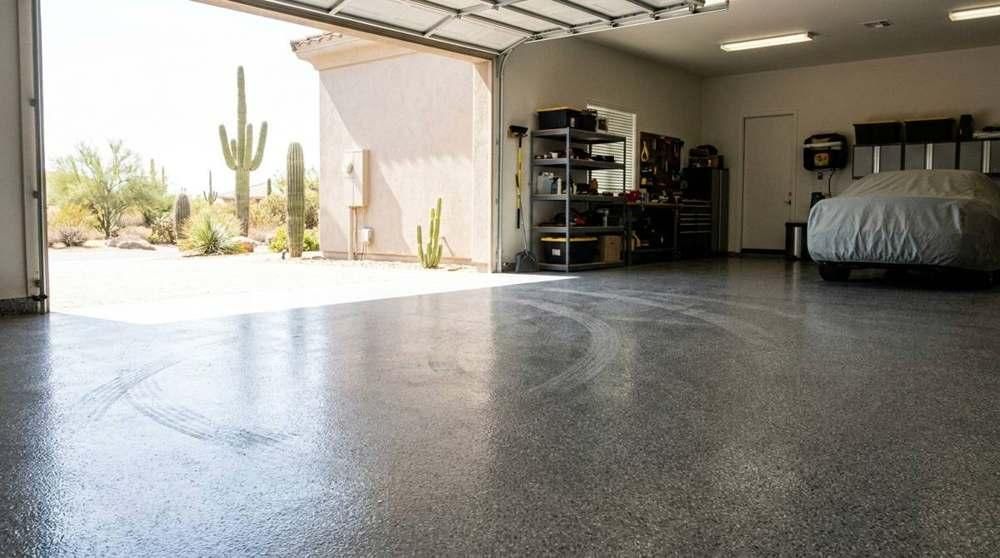
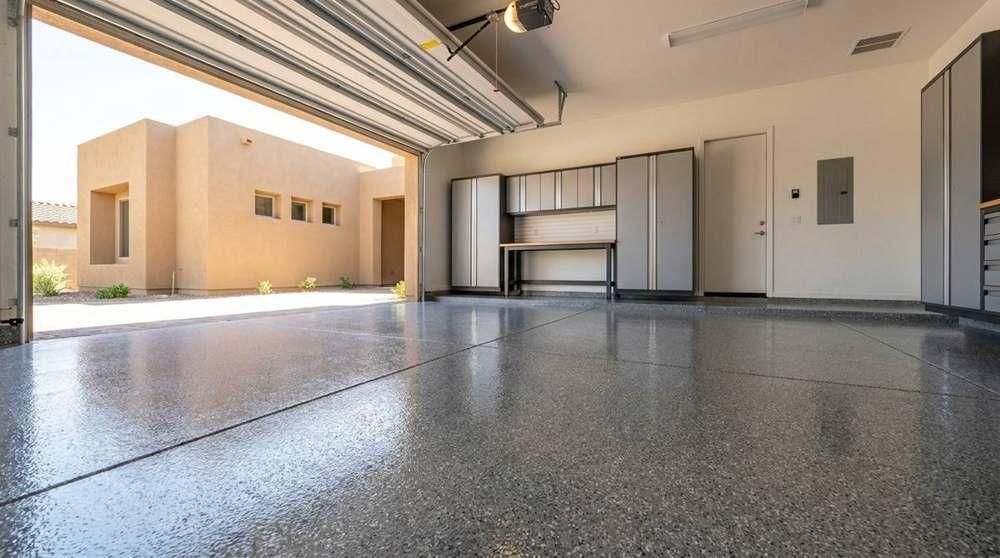
Concrete coatings in Arizona's extreme heat last from 2–3 years to 15 years or more, depending on coating chemistry. Standard epoxy breaks down under constant UV and 160°F surface temperatures. The polyaspartic garage floor coatings Floor Shield Phoenix installs across the Valley hold their bond, color, and finish for well over a decade.
Many homeowners assume all floor coatings perform the same way. That belief costs Phoenix homeowners thousands in premature recoating. The difference isn't thickness or color. It's whether the chemistry can survive Arizona's UV index without breaking down.
What Determines Coating Lifespan in Arizona?
Arizona's desert climate puts two specific stresses on floor coatings that milder regions don't: relentless UV radiation and extreme surface heat.
Relentless UV Radiation and Photodegradation
Phoenix averages 299 sunny days per year. That constant UV bombardment triggers photodegradation in coatings built with aromatic resins, the same resin type found in most epoxy products. The coating's molecular bonds break apart, causing chalking, yellowing, and eventual peeling.
Extreme Surface Heat
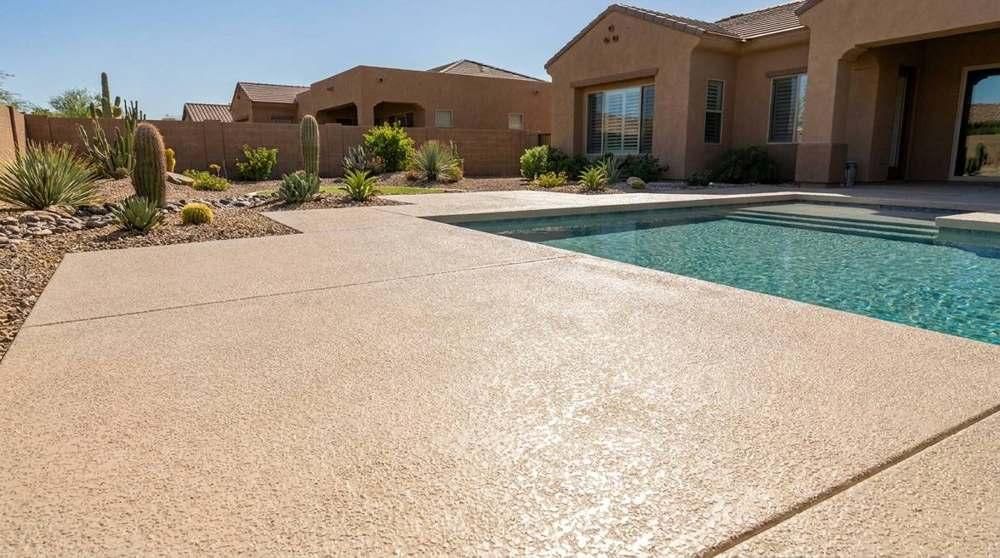
Concrete in direct Arizona sun regularly exceeds 160°F during summer months. Coatings that soften at high temperatures lose adhesion, blister, or develop hot tire pickup, where warm tires literally pull the coating off the concrete when a vehicle parks.
Thermal Cycling
Phoenix garages swing from cooled interior air to extreme exterior heat daily. Rigid coatings crack under repeated expansion and contraction. Flexible coatings absorb the movement without losing their bond.
Why Standard Epoxy Falls Short in Desert Conditions
Epoxy's core weakness in Arizona is its aromatic chemical structure. Aromatic resins absorb UV light, which starts breaking the polymer chains within weeks of sun exposure. In moderate climates, professionally installed epoxy can last 10–15 years indoors. In Phoenix garages that get direct sunlight through windows or open doors, that timeline shrinks to 2–5 years before visible yellowing and surface failure appear.
Hot tire pickup accelerates the problem. Tires returning from Arizona asphalt reach 150–180°F. When those tires park on softened epoxy, the coating lifts. Peeling usually starts at the tire contact patches and spreads outward.
Floor Shield Phoenix does not install epoxy for exactly this reason. The chemistry doesn't match the climate conditions across Phoenix and the East Valley.
How Polyaspartic Coatings Handle Arizona's Heat
Polyaspartic coatings use an aliphatic chemical structure, the opposite of epoxy's aromatic base. Aliphatic resins don't absorb UV light, which means no photodegradation, no yellowing, and no chalking regardless of how many hours of direct sun the surface gets.
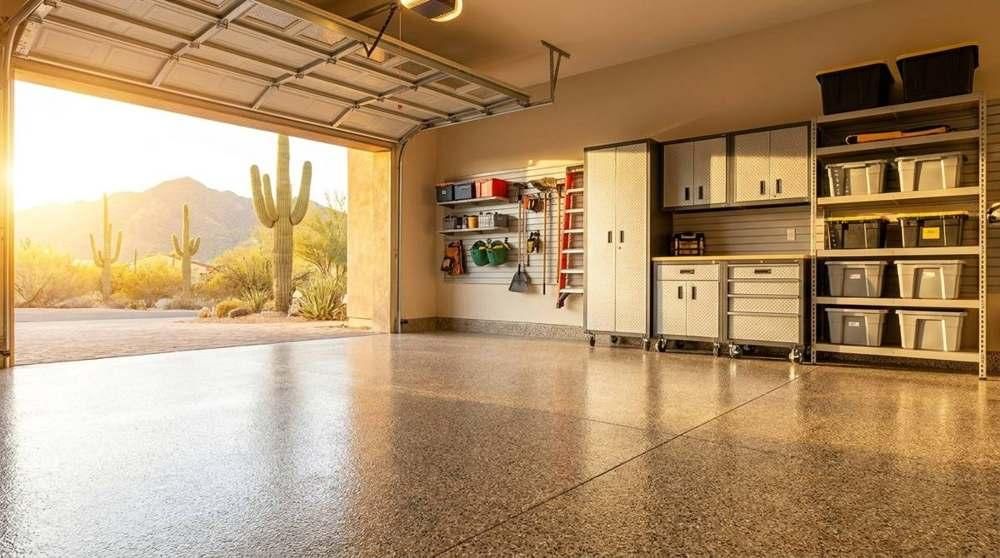
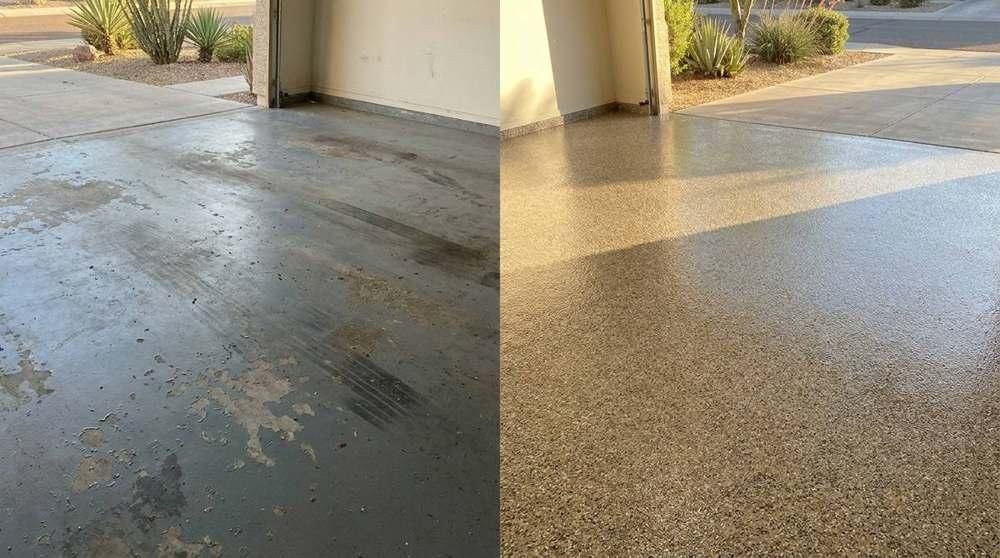
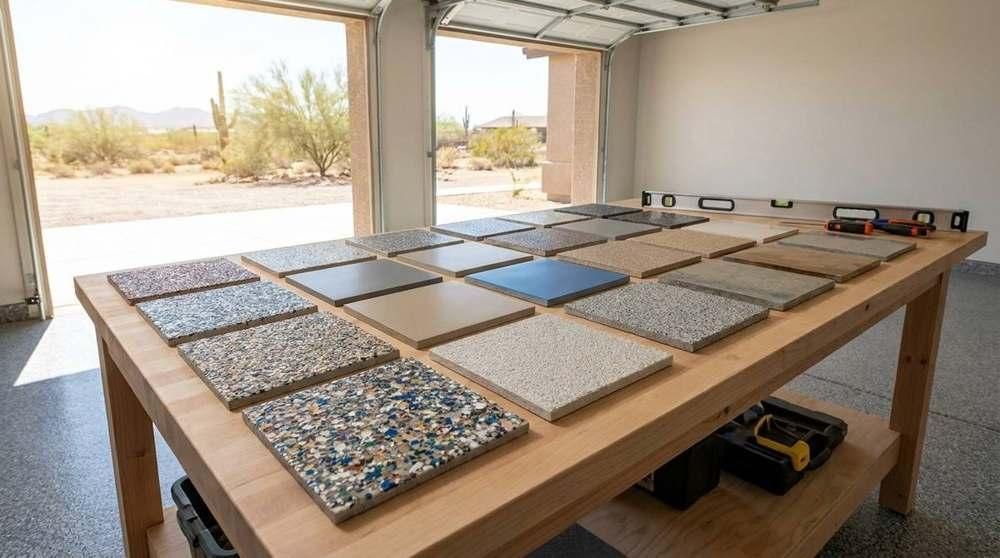
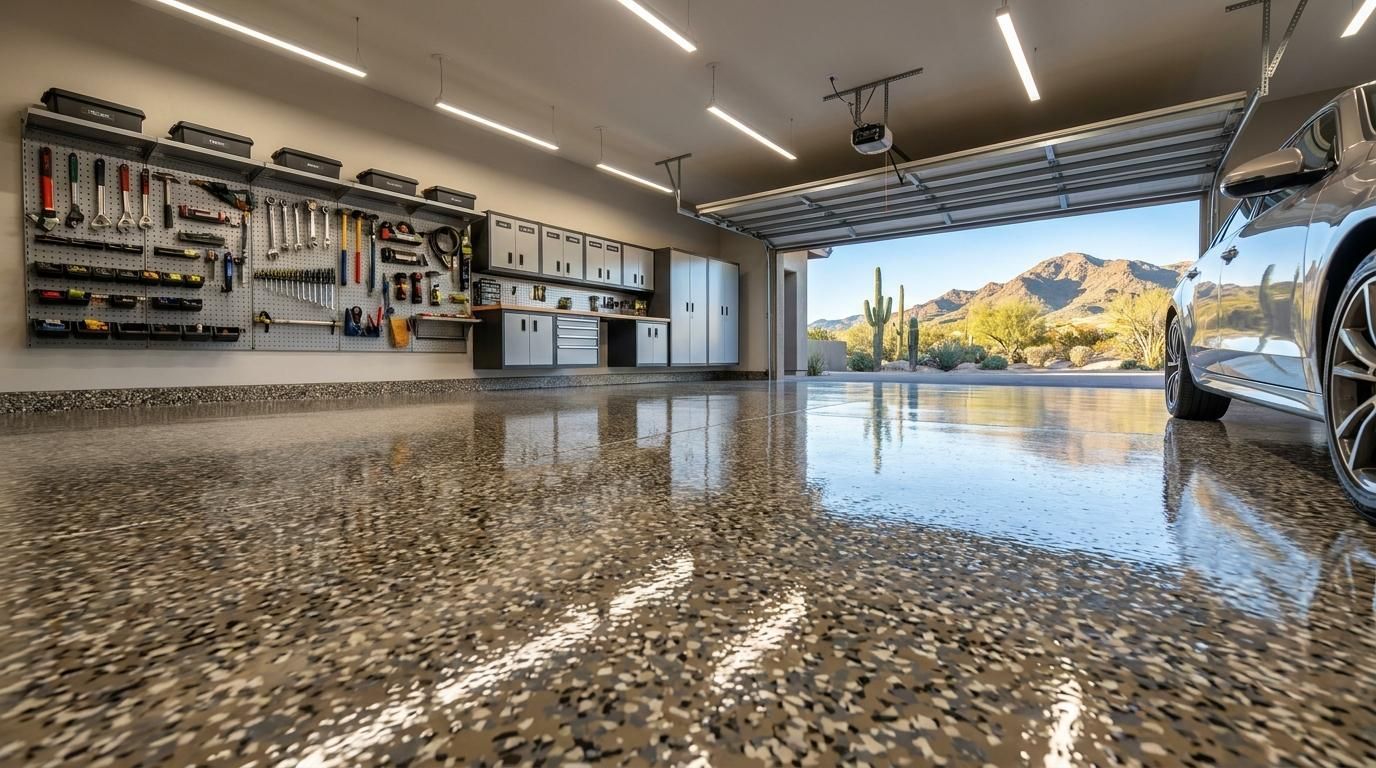
Floor Shield Phoenix's polyaspartic systems, including our popular flake floor coatings , are engineered to maintain adhesion at temperatures well above what Arizona concrete reaches. The coating stays rigid where epoxy softens, which eliminates hot tire pickup entirely.
The practical result: a polyaspartic floor installed today in Gilbert , Mesa, or Scottsdale is backed by a 15-year warranty against peeling, delamination, and adhesion failure. That warranty reflects the chemistry's actual performance, not marketing optimism. Installation takes one day, and floors are ready for vehicle traffic in 5–6 hours.
Frequently Asked Questions
Do concrete coatings crack in extreme heat?
Rigid coatings like epoxy can crack from thermal cycling as Arizona temperatures swing between daytime highs and cooled garage interiors. Polyaspartic coatings have built-in flexibility that absorbs this movement without cracking or losing adhesion to the concrete underneath.
How often do polyaspartic coatings need to be reapplied?
A professionally installed polyaspartic system rarely needs recoating within its warranty window. Floor Shield Phoenix backs every installation with a 15-year warranty. With basic maintenance like occasional sweeping and mopping, the coating holds its finish and bond for the full warranty period and often beyond.
Can you coat a garage floor during an Arizona summer?
Yes. Polyaspartic coatings cure across a wide range of temperatures, including Arizona's summer extremes. The 5–6 hour cure time means installation starts and finishes in a single day, even in July. Epoxy, by contrast, cures slowly in heat and humidity, which increases the risk of adhesion failure.
Choose a Coating Built for the Desert
The difference in lifespan between coating types isn't subtle in Arizona. Epoxy's aromatic chemistry makes it a poor match for a climate that delivers 299 sunny days and triple-digit surface temperatures year after year. Polyaspartic's aliphatic structure handles exactly these conditions: UV-stable, heat-resistant, and flexible enough to survive daily thermal cycling without cracking.
If your garage floor needs a coating that can handle Arizona's climate for more than a few seasons, contact Floor Shield Phoenix at (602) 890-3194 for a free estimate on a polyaspartic system backed by a 15-year warranty.